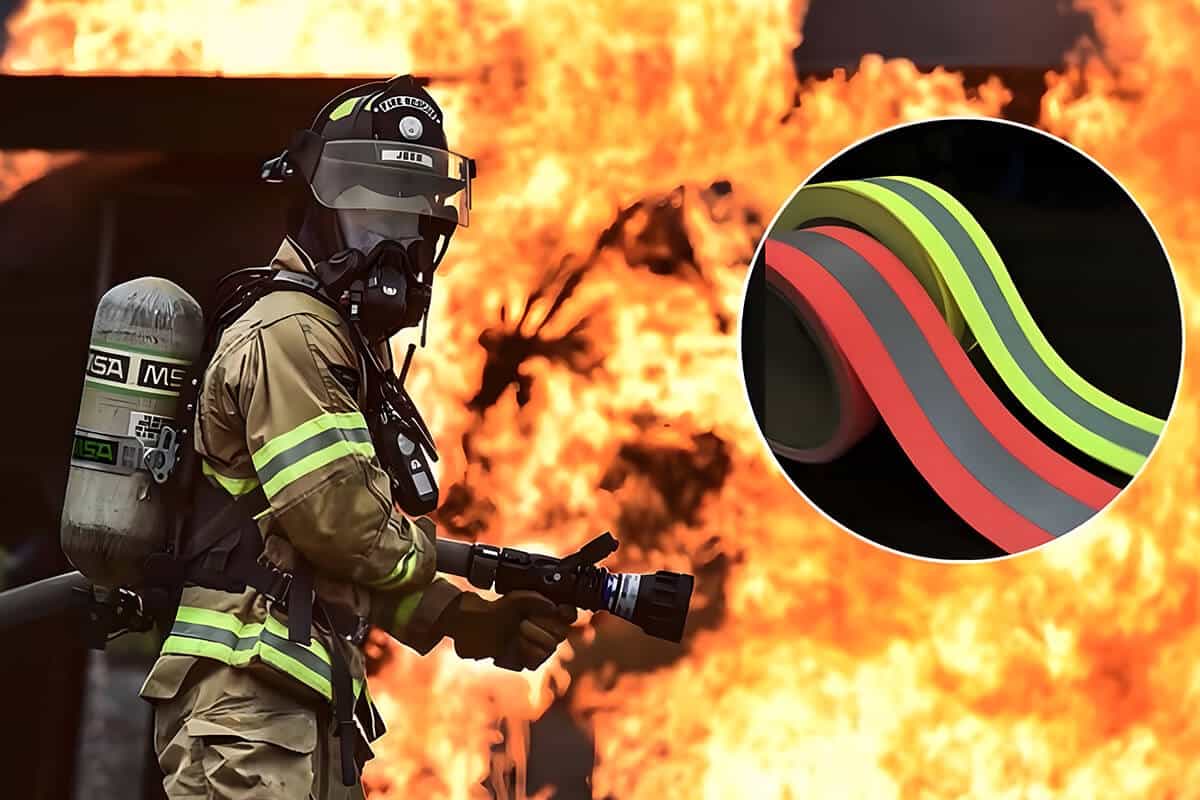
The reflective tape vs piping decision involves exposed reflective area, seam construction and assembly requirements. In technical outerwear and safety workwear design, reflective tape and reflective piping are frequently treated as interchangeable visual accents. Both trims utilize micro-glass bead or micro-prismatic optics to return light to nighttime observers, and both can be color-matched to brand palettes.
However, in the cutting and sewing room, reflective tape and flanged piping represent two fundamentally different manufacturing, structural, and regulatory disciplines. Tape is a two-dimensional surface ribbon engineered for broad photometric coverage and automated sewing. Piping is a three-dimensional composite edge trim engineered for anatomical contouring and structural seam integration.
Attempting to substitute one format for the other without recalculating garment surface area math, sewing labor minutes, and seam presser foot clearances routinely leads to regulatory non-compliance or severe production bottlenecks.
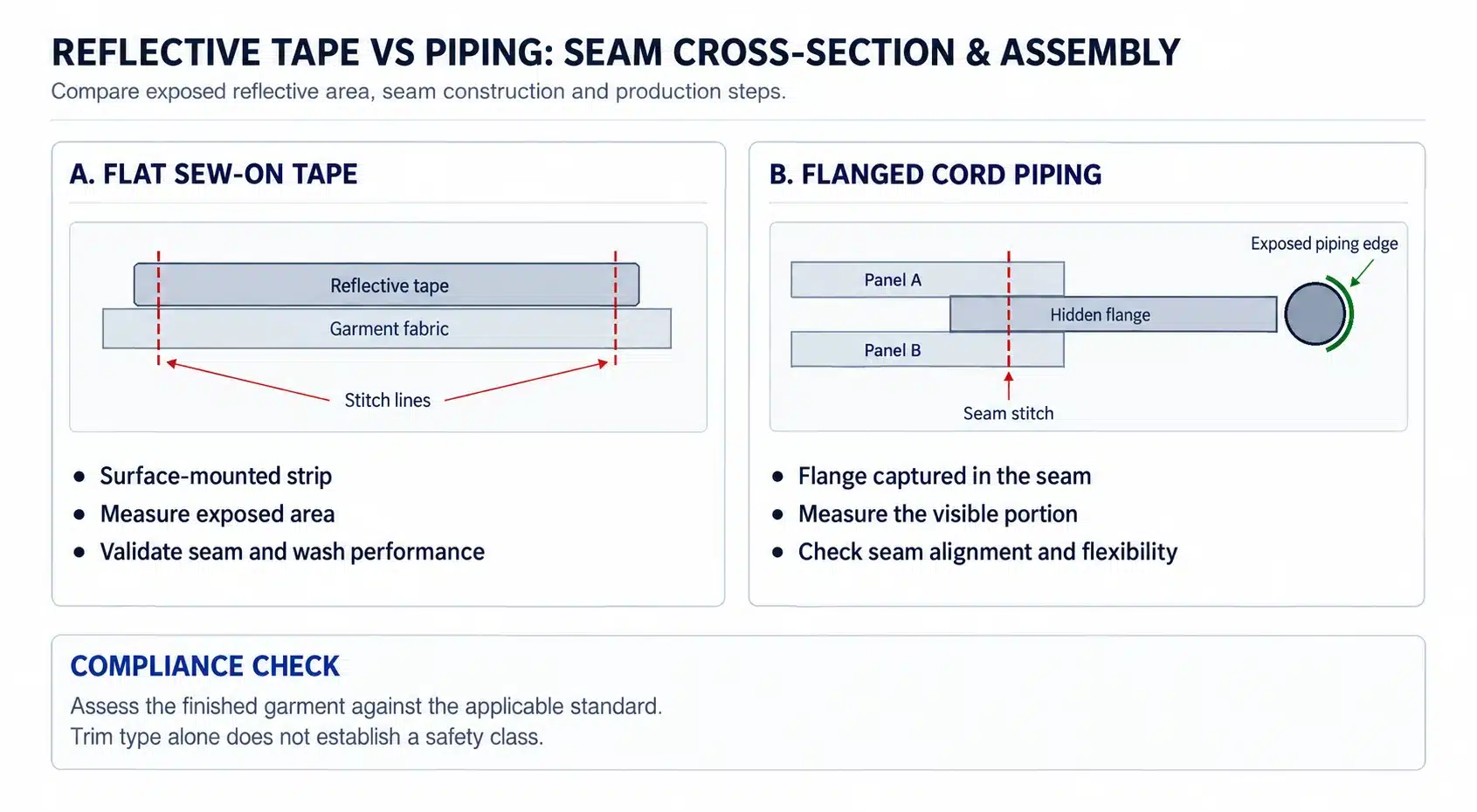
Reflective Tape vs Piping: Flat Ribbon and Cord Construction
Understanding the pricing and installation divergence begins at the trim cross-section:
Flat reflective tape architecture
Reflective tape is a single continuous planar ribbon:

- Purchased Width = Active Width: A 50 mm roll provides an uninterrupted 50 mm width of exposed retroreflective area across the garment panel.
- Backing Construction: A single woven or knit backing (polyester, 65/35 TC, or aramid) supports the micro-glass bead resin layer.
- Attachment: Positioned flat against the shell fabric face and secured along both edges with twin-needle lockstitches or fused via thermal hot-melt adhesive.
Flanged cord piping architecture
Reflective piping is an assembled, three-component composite profile:

- The Reflective Face Lip (10–13 mm exposed): A bias-cut reflective strip folded over the internal cord.
- The Internal Core Cord (1.5–3.0 mm diameter): Typically extruded polypropylene (PP) monofilament or braided cotton cord. The cord provides dimensional stability, roundness, and edge firmness.
- The Flange Insertion Tape (15–20 mm hidden): A polyester mesh or woven textile flange that is trapped entirely within the garment's internal seam allowance.
Technical Note on Purchasing Yield: When buying 30 mm reflective piping (e.g., 10 mm face + 20 mm insertion flange), over 60% of the purchased material width is permanently concealed inside the garment seam. Purchasing managers comparing the linear meter price of 50 mm tape ($0.11/m) vs. 30 mm piping ($0.12/m) often overlook that piping delivers less than one-third of the active retroreflective surface area.
Regulatory compliance: the EN ISO 20471 surface area equation
The decisive factor governing format selection in occupational apparel is regulatory safety compliance:
| Garment class | Minimum retroreflective area |
|---|---|
| Class 1 | 0.10 m² |
| Class 2 | 0.13 m² |
| Class 3 | 0.20 m² |
These area figures are only one part of garment assessment. EN ISO 20471 also specifies background-material areas, material performance and design requirements, including band width and placement. Its classes are not a simple low-, medium- and high-risk ladder. See 3M’s ISO 20471 material-area and design summary.
The linear meter calculation for Class 3 high-visibility coveralls
The following is a geometric comparison using the 0.20 m² retroreflective-area figure for EN ISO 20471 Class 3. It does not establish garment compliance: narrow piping does not become an acceptable primary band simply by adding more length.
- Using Standard 50 mm Flat Tape: Required length = 0.20 m² ÷ 0.05 m = 4.0 linear meters Four linear meters are easily distributed across the torso circumference, sleeve bands, and lower trouser legs.
- Attempting to Use 12 mm Exposed Piping: Required length = 0.20 m² ÷ 0.012 m ≈ 16.7 linear meters Installing nearly 17 meters of piping onto a single jacket or coverall would usually be impractical, and the narrow exposed width would still need to satisfy the applicable design requirements.
Regulatory conclusion
- Reflective Tape: Broad, suitably tested bands are commonly used for primary high-visibility designs. The complete garment must meet the applicable EN ISO 20471 or ANSI/ISEA 107 material, area and layout requirements.
- Reflective Piping: Often used for lifestyle activewear, cycling jerseys and supplementary accents. Any claim under EN 17353 Type B or Type AB requires assessment of the specific equipment, including the relevant area and placement requirements; piping is not automatically certified by its format.
Garment factory assembly economics & sewing labor
The difference in assembly labor between tape and piping is substantial, directly impacting the garment cut-and-make (CMT) cost.
Flat tape assembly (automated pre-assembly stage)
- Sewing Phase: Flat tape is attached to flat, disassembled pattern pieces prior to garment panel joining.
- Tooling & Velocity: Garment factories utilize automated synchronized twin-needle lockstitch machines equipped with mechanical folder guides. The operator feeds the cut panel while the machine simultaneously folds and stitches both outer edges in a single pass.
- Standard Time: Approximately 15 to 25 seconds per panel band, with negligible defect or rejection rates.
Flanged piping assembly (multi-step seam sandwiching)
- Sewing Phase: In the seam-insertion construction discussed here, the piping flange is captured as two structural shell panels are joined in a three-layer sandwich; it may first be positioned or basted to one panel: Seam sandwich = top shell panel + piping flange + bottom shell panel
- Tooling & Skill Requirement: Operators must install a specialized single-welt or grooved cording presser foot. The foot must ride precisely against the internal core cord to hold it tight to the seam edge without the needle penetrating the cord itself.
- Labor Impact: Sewing piping increases labor cycle time by 40% to 60% per seam.
- Rework Penalty: If the sewing operator wavers by 1.0 mm, the needle either pierces the core cord (causing irregular bunching) or pulls away from the cord, exposing the raw white mesh flange on the outside of the garment. Rectifying this defect requires unpicking the entire structural seam of the finished garment.
Ergonomics, hand feel, and anatomical articulation
While tape wins in photometric surface area and sewing speed, flanged piping dominates in wearer ergonomics and dynamic garment articulation:
- The "Barrel / Cardboard" Effect of Continuous Tape: Sewing continuous 50 mm woven reflective tape around sleeve cuffs or across the torso creates a localized band of zero elasticity. On lightweight running jackets, softshell jackets, or stretch fleece, wide tape restricts arm flexion and causes the fabric to billow unnaturally.
- 3D Contour Following of Flanged Piping: Because piping is bias-cut and stabilized by a flexible internal cord, it flows effortlessly along curved raglan sleeve seams, articulated elbow darts, curved shoulder yokes, and pocket flaps. It bends in three dimensions with zero localized fabric bunching.
- 360-Degree Profile Definition: The rounded profile of cord piping projects outward from the garment seam, catching light at acute grazing angles and defining the wearer's physical human silhouette in motion.
Technical comparison matrix: tape vs. piping
| Engineering Parameter | Flat Sew-On Reflective Tape | Flanged Cord Reflective Piping |
|---|---|---|
| Active Exposed Width | Full purchase width (20 mm, 25 mm, 50 mm) | 10 mm to 13 mm (remainder trapped in seam) |
| Core Structural Element | Planar woven / knit textile backing | Core cord (polypropylene / braided cotton, 1.5–3.0 mm) |
| Garment Assembly Stage | Pre-assembly flatbed panel operation | Structural seam-joining operation |
| Sewing Equipment | Automated twin-needle lockstitch with folder | Single-needle lockstitch with cording / welting foot |
| Sewing Labor Premium | Baseline (Fastest production cycle) | +40% to +60% per linear meter |
| Curved Seam Capability | Limited (causes edge ripples on tight radii) | Excellent (flows smoothly along raglan/yoke curves) |
| Regulatory Standing | Primary bands where the complete garment meets its specified standard and class | Supplementary accent; EN 17353 suitability requires equipment-specific assessment |
| Waterproof Sealing | Requires 3-layer seam tape over rear stitches | Hidden flange seam easily sealed with standard tape |
| Dynamic Flexibility | Moderate (stiff unless segmented HTV film) | High (zero restriction along articulated seams) |
The hybrid engineering strategy
The most effective high-end technical garments avoid choosing between tape and piping, adopting a hybrid zoning architecture:
- Torso & Lower Limbs (The Primary Visibility Zone):
- Utilize 50 mm flat reflective tape (or segmented heat transfer film) across the chest, waist, and lower pant legs as part of a garment design assessed against the applicable EN ISO 20471 Class 2/3 area, layout and material-performance requirements.
- Shoulders, Hoods, Raglan Seams & Pockets (The Articulation Zone):
- Integrate 12 mm exposed flanged piping along raglan shoulder lines, hood visor perimeters, and pocket welts to provide dynamic 360-degree contour definition without compromising garment stretch and hand feel.
Frequently asked questions
Can reflective piping alone certify a jacket to EN ISO 20471 class 2?
Not for the narrow piping construction discussed here. EN ISO 20471 Class 2 includes a minimum retroreflective area of 0.13 m², along with background-material, band-width, placement and performance requirements. A 10–12 mm exposed strip would need about 10.8–13.0 linear meters to reach that geometric area, but adding length alone does not satisfy the band-design requirements. EN 17353 certification is also specific to the equipment and its tested design; piping is not automatically certified under that standard.
What causes the internal cord of reflective piping to bunch and ripple after washing?
This defect is caused by differential wash shrinkage between the internal core cord and the outer reflective composite lip. If a supplier utilizes untreated natural cotton cord inside a synthetic polyester reflective sheath, the cotton core shrinks by 3% to 5% during hot laundering, while the polyester outer remains dimensionally stable. The core draws tight like a drawstring, causing severe exterior rippling. Sourcing teams must specify pre-shrunk braided polyester or extruded polypropylene (PP) monofilament core cords.
Why is reflective piping priced per meter similarly to wide reflective tape despite being narrower?
Piping is an assembled, three-step secondary manufactured product. Producing piping requires: 1) precision bias-cutting of the reflective roll goods; 2) continuous roll-folding and adhesive/stitch lamination around the core cord; and 3) ultrasonic welding or stitching of the polyester mesh flange insertion strip. The additional processing labor, specialized equipment run time, and multiple component inputs equal or exceed the material volume savings of narrow width.
Can reflective piping be applied via heat transfer instead of sewing?
Conventional flanged cord piping is an insertion trim designed to be captured mechanically within a sewn structural seam. Because of its three-dimensional cylindrical profile, flat heat press platens cannot apply uniform pneumatic pressure across its curved surface without crushing the core cord. For stitch-free seamless garments, designers utilize flat bonded reflective films or ultrasonic welding rather than dimensional piping.

Related blogs
Custom Reflective Accessories RFQ Guide: 8 Technical Specs Suppliers Need Before Quoting
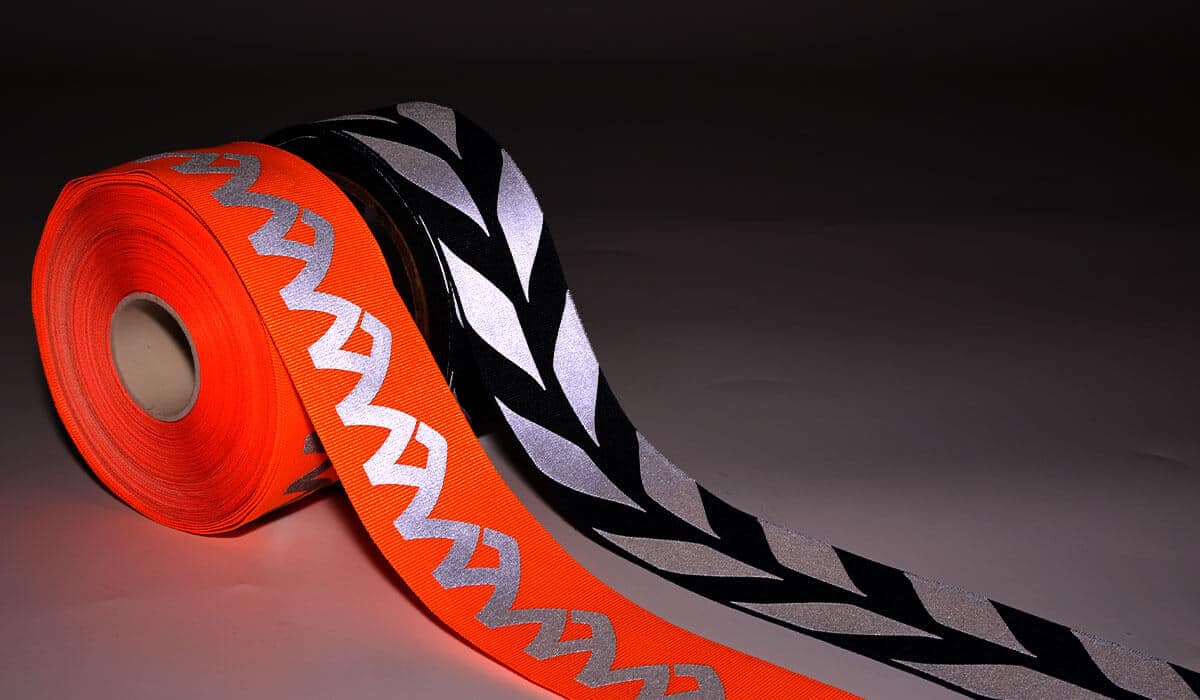
Custom Printed Reflective Tape
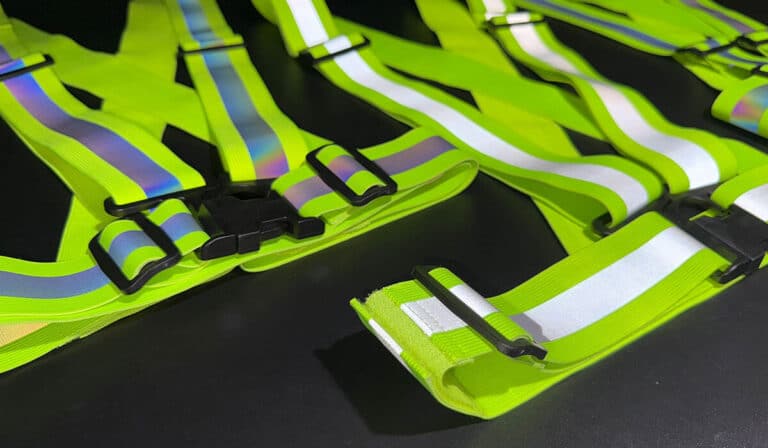
Custom Reflective Gear: Sew-On vs. Heat Transfer & The OEM Process
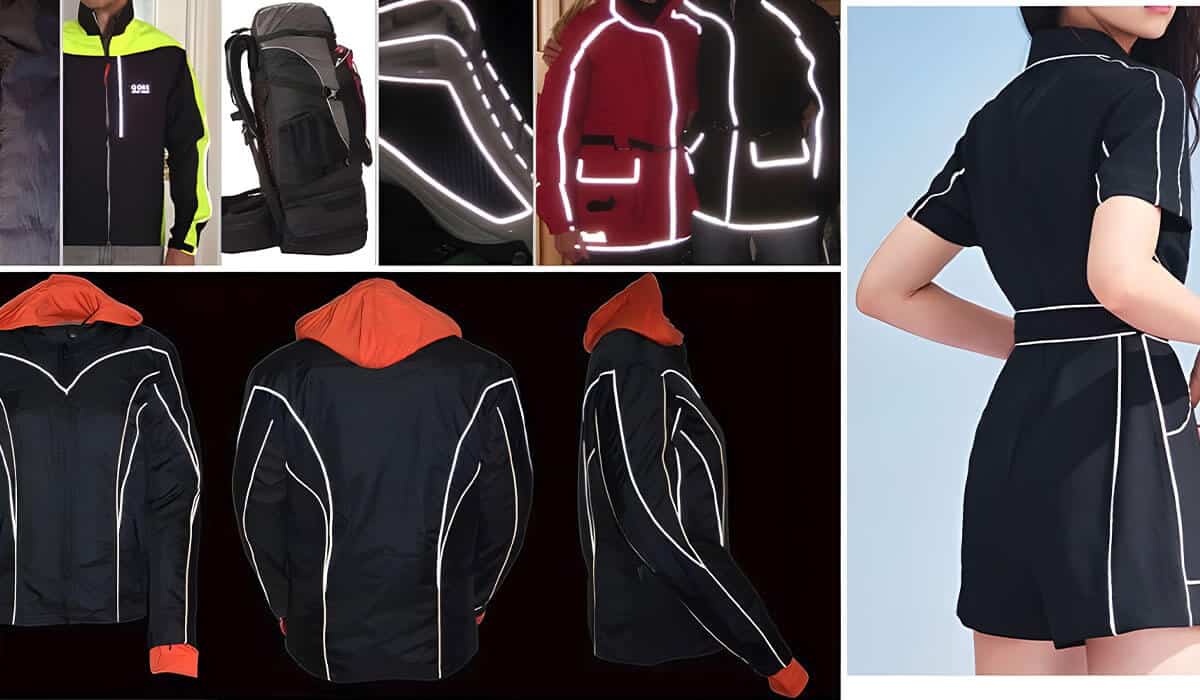
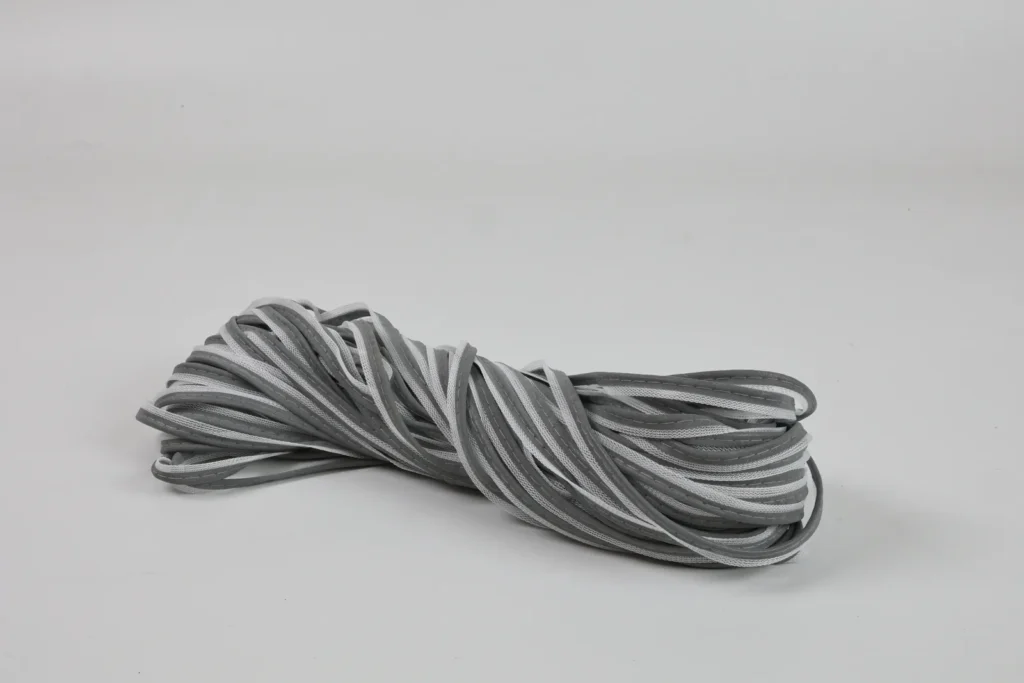
Reflective Piping for Clothing
Related products

Reflective piping

Reflective ribbon tape

PVC Reflective Tape