PVC vs. Reflective Fabric for Fog Flags: A Material-Selection Case Study
The Application Started With a PVC Request
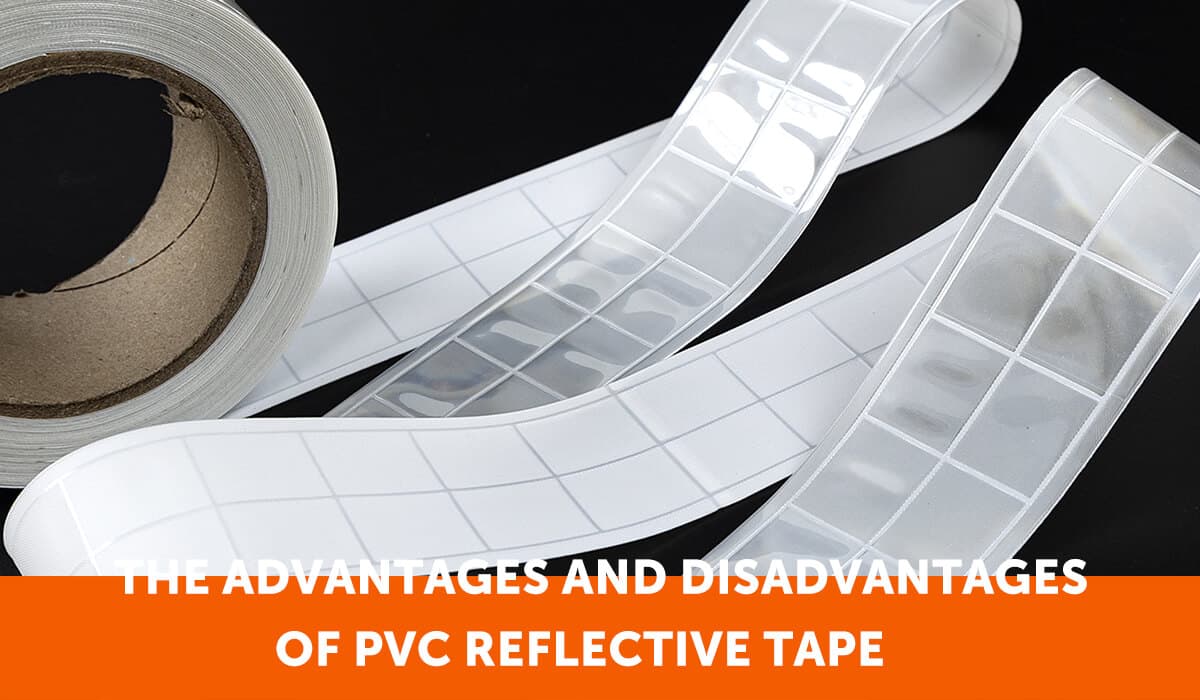
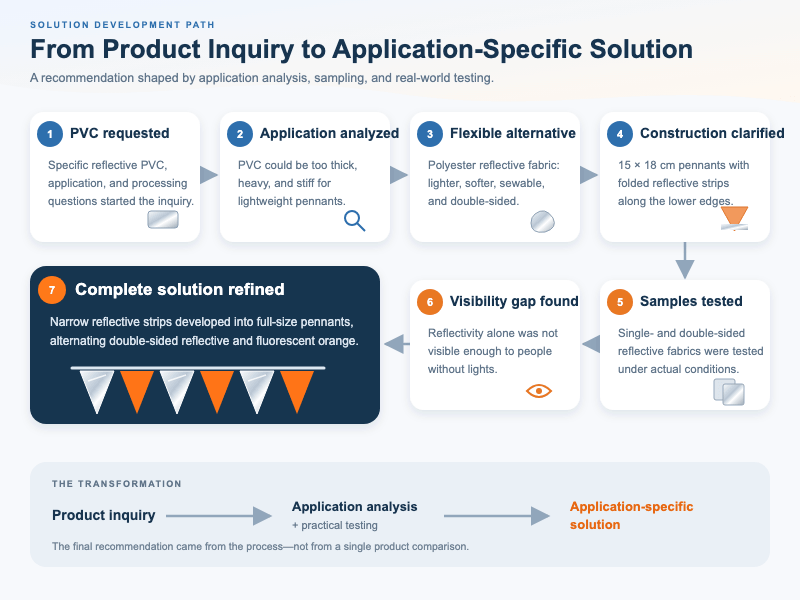
MAX first received a German enquiry requesting reflective PVC fabric for fog flags. The customer asked whether MAXREFLECT MPVC011 could be supplied as roll goods, which widths were available, and whether the material could be glued or sewn.
“Für die Ausrüstung unserer Nebelseile sind wir auf der Suche nach einem reflektierenden PVC-Gewebe … Kann man das Material kleben oder nur nähen?”
The requested material was specific, but the finished application governed the recommendation. A fog flag must move with the wind, be easy to sew into the finished construction, and remain clear in both low-light and daytime conditions. That is why the selection process began with the customer’s finished marker rather than the first material named in the enquiry.
Material Selection: Key Considerations
1. Why PVC Alone Was Not the Best Fit
We compared the two materials against the finished fog-flag application, rather than treating the original PVC request as the final specification.
| Criterion | Reflective PVC | Reflective Fabric |
|---|---|---|
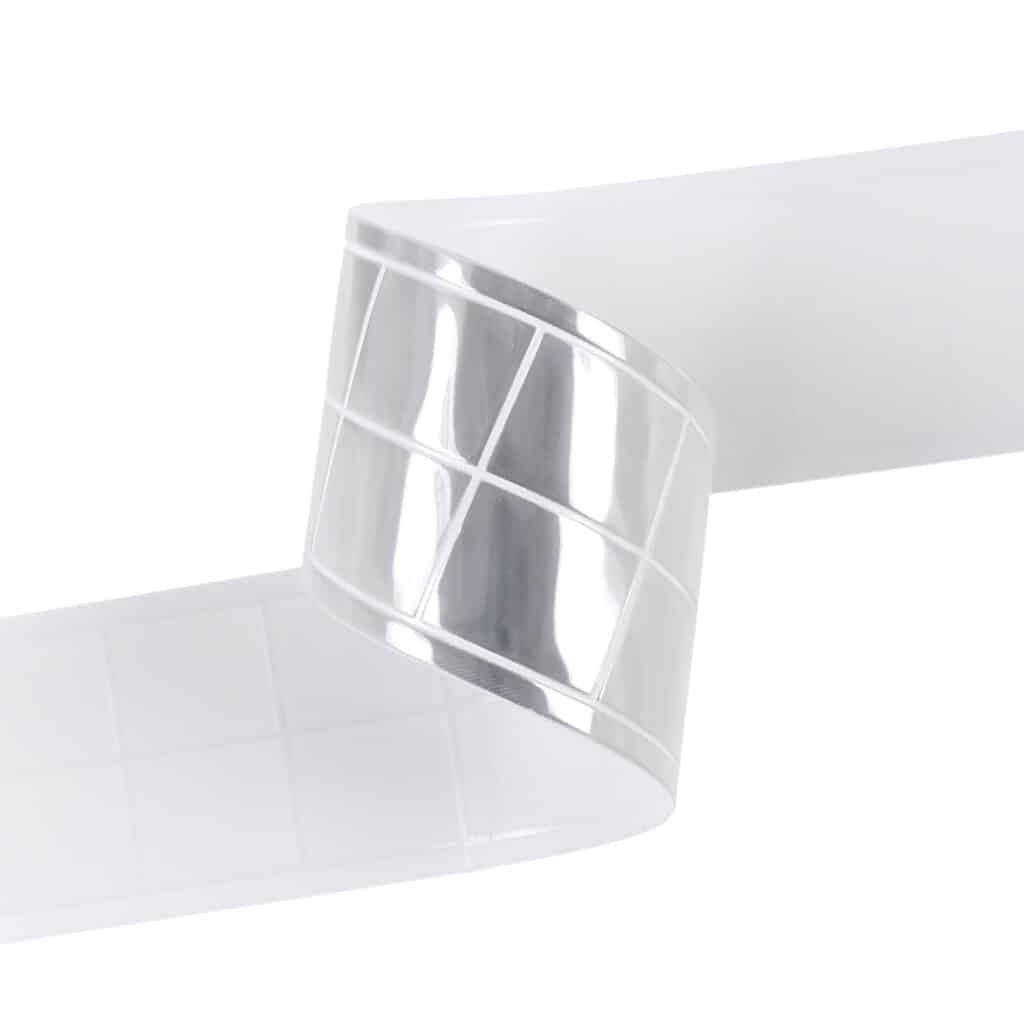
| Material composition | Microprismatic reflective layer with PVC/polymer film, white PVC film, and PVC backing | 100% polyester textile with coating and reflective glass beads |
| Thickness | 280–320 μm | 130–140 μm |
| Processing | Sewing | Sewing |
| Reflective surface | One side | One or both sides |
| Finished behaviour | Thicker, stiffer, heavier; not designed to flutter in wind | Thin, soft, flexible; suitable for a moving flag |
| Typical use | Garments, armbands, luggage and structured trims | Lightweight garments and flags |
The evidence did not mean PVC was a poor material. It meant that a flexible textile construction was a better fit for a flag that had to move, fold, and present a visible surface on both sides.
2. Surface Coverage Changes the Result
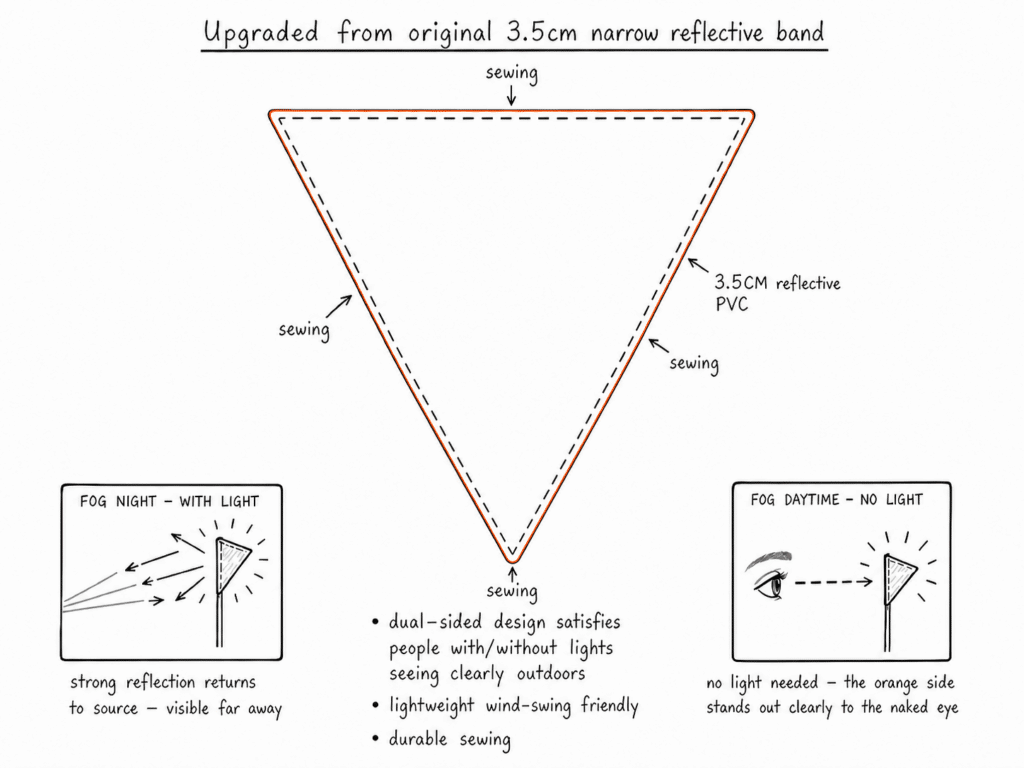
The customer then clarified the finished geometry: each pennant measured 15 × 18 cm. They planned to position a 7.5 cm strip at the lower edge, fold it over, and secure it with a seam so that approximately 3.5 cm remained visible on each side.
MAX recommended sewing rather than relying on adhesive for the moving flag construction. To test the solution in use, we sent free samples of 3.5 cm double-sided reflective fabric and single-sided reflective fabric by express courier.
3. Design for Daytime and Low-Light Visibility
The trials confirmed that the reflective fabric met the basic retroreflection requirement and was practical to sew. However, the exposed 3.5 cm strips had less visual impact in fog or at distance, and the ordinary daytime colour did not fully meet the customer’s visibility expectation.
That feedback changed the task from “make one narrow reflective strip work” to “build a two-sided flag that addresses two viewing conditions.”
The improved proposal uses a sewn two-sided composite: silver reflective fabric on one side and fluorescent-orange reflective fabric on the other. The silver side supports recognition when illuminated in low-light conditions; the fluorescent-orange side creates stronger daytime conspicuity for people outdoors without lights.
The customer confirmed the direction: one flag should be reflective on both sides, while another should use fluorescent orange; the rope installation would alternate sets of 10 flags. MAX will send reflective fabric wider than 15 cm so the customer can produce finished samples and validate the completed marker before production.
PVC and Reflective Fabric: Choose by the Finished Application
PVC: A Defined, Structured Surface
Microprismatic PVC tape is well suited to safety trims, garments, accessories, and equipment details where a defined reflective strip is the right construction choice.
Reflective Fabric: A Flexible, Sewn Surface
Textile-based reflective fabric flexes with the host construction and can be integrated into a sewn flag, garment, or other visibility component that needs to move.
For Fog Flags: Movement Is a Design Requirement
A wind-responsive marker needs enough drape to perform as a flag. Material selection must consider not only the reflective surface, but also the final construction and exposed area.
Select the Material Around the Finished Product
The best choice depends on viewing conditions, attachment method, colour strategy, surface area, and the way the finished component must move. A completed sample should be reviewed before production is confirmed.
The Recommended Two-Sided Construction
1. Build the Flag Around the Finished Construction
The concept was developed as a sewn, two-sided visibility component rather than a narrow strip. The construction is planned around practical fabric widths so the finished flag can retain the movement expected in its installation.
2. Use Each Side for a Different Visibility Need
One side uses silver reflective fabric to support low-light recognition. The opposite side uses fluorescent-orange reflective fabric to strengthen daytime conspicuity. Together, the two surfaces address complementary viewing conditions.
3. Approve a Finished Sample Before Production
The physical sample is the release gate. Review the final sewn flag in its intended installation, lighting, weather, and background conditions before confirming production width, colour, and construction.
Related PVC Products
Related Information
Need a Material Recommendation for a Moving Safety Marker?
Response within 24 hours.
Customised Visibility Materials for Every Need — MAX
The "discipline" of manufacturing is found in the daily process of solving specific problems. Reflective piping is just a microcosm of the countless challenges we face on the shop floor. We are grateful for our customers' support and their patience during delays. This journey has taught us that real cost reduction and efficiency gains come from deep mastery of every detail and a commitment to continuous improvement—a commitment shared by everyone here at MAX.
- [email protected]
- +86 19706839773