How to choose the right reflective zipper

Picture of Mary WANG
Mary WANG

MAX Reflective Accessories Design Director

Table of Contents
how-to-choose-the-right-reflective-zipper

Reflective zipper types often complicate projects by requiring a balance of visual integration, mechanical reliability, and low-light visibility. Choosing the right trim ensures performance without adding bulk, stiffness, or potential failure points to the final product.

Incorrect zipper selection leads to premature hardware wear, aesthetic mismatch, or reflective failure in real-world conditions. Buyers must look beyond surface appearance to evaluate the base construction beneath the reflective coating.

Reflective zippers impact safety, lifespan, and brand credibility. This zipper selection guide provides a framework for evaluating options against project demands to ensure confident specification and procurement.

Understanding reflective zippers

A reflective zipper integrates light-returning material into the tape, coating, or yarn to provide visibility in low-light conditions while maintaining core mechanical functions. Reflective effects are typically applied to the zipper tape to preserve performance.

Distinguish decorative reflectivity from safety-focused visibility; some zippers are selected for style and technical looks, but may not support certified high-visibility performance. From a manufacturing standpoint, this distinction should be clear before sampling begins, because a zipper that looks impressive in a showroom may not perform well enough for demanding end use.

How reflective technology is applied

  • Micro-glass bead technology: uses spherical beads for a soft, flexible finish ideal for apparel.
  • Micro-prism technology: uses prism structures for sharper, high-intensity reflection in safety markets.
  • Reflective film: laminated onto tape for a clean, technical look in water-resistant gear.
  • Woven reflective threads: integrated into the tape for a textile-like feel and flexibility.

Common applications

  • Shell jackets, hiking vests, and cycling gear for performance-driven aesthetics.
  • Workwear safety designs requiring compliance with occupational environment standards.
  • Backpacks, utility bags, and pet accessories without adding bulk.
narrow-strip-reflective-colorful-zipper

Types of reflective zippers

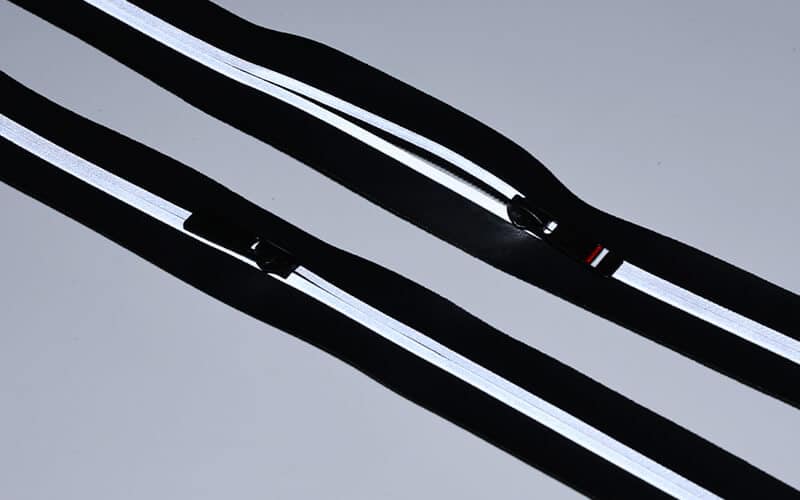
Water-repellent reflective zippers

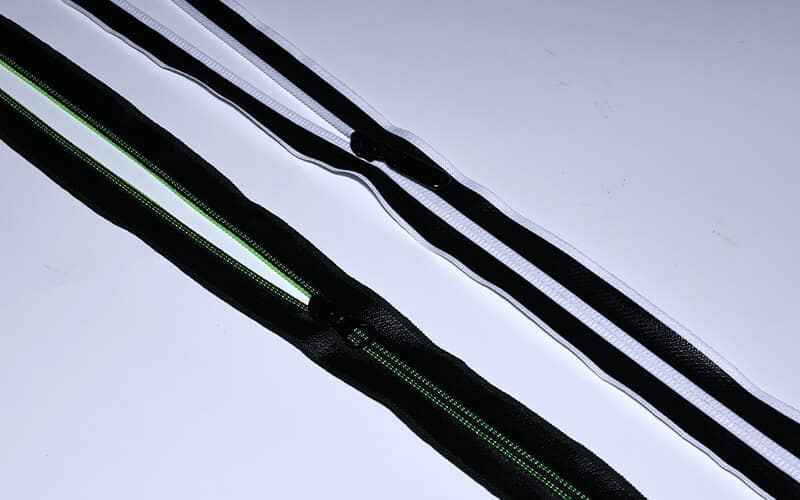
Use this type where moisture control matters. It combines a polyurethane coating with reflective elements, so the zipper line helps resist surface water while improving visibility.

Choose it for products exposed to rain and spray. In our production work, buyers often select this construction for hiking shells, raincoats, dry bags, and waterproof backpacks.

Specify PU-coated reflective zippers early to ensure they align with the fabric’s water-resistant concept in bag openings and front closures.

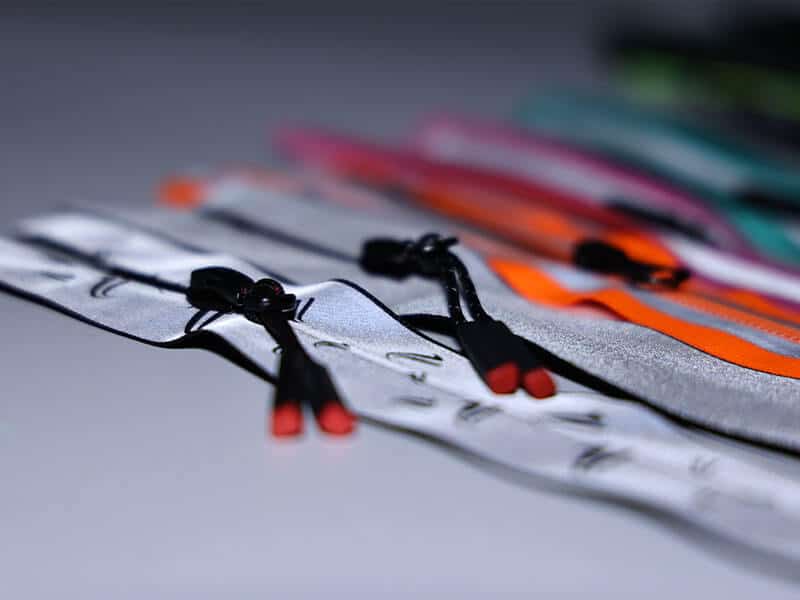
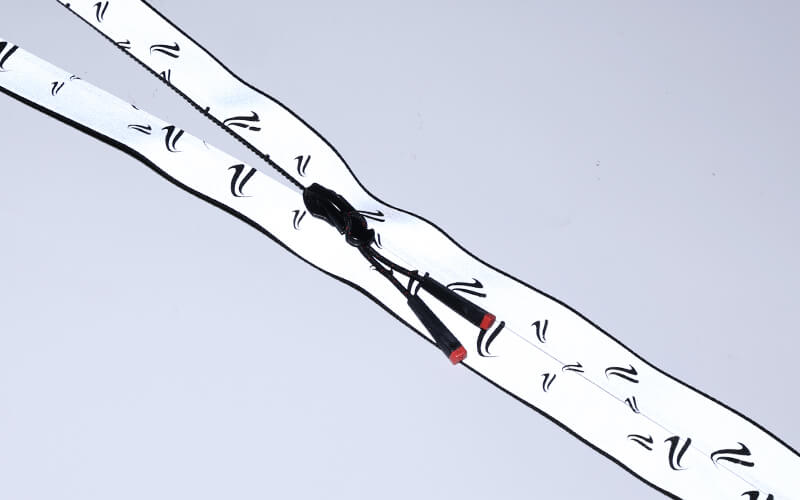
Zipper with fully reflective printing

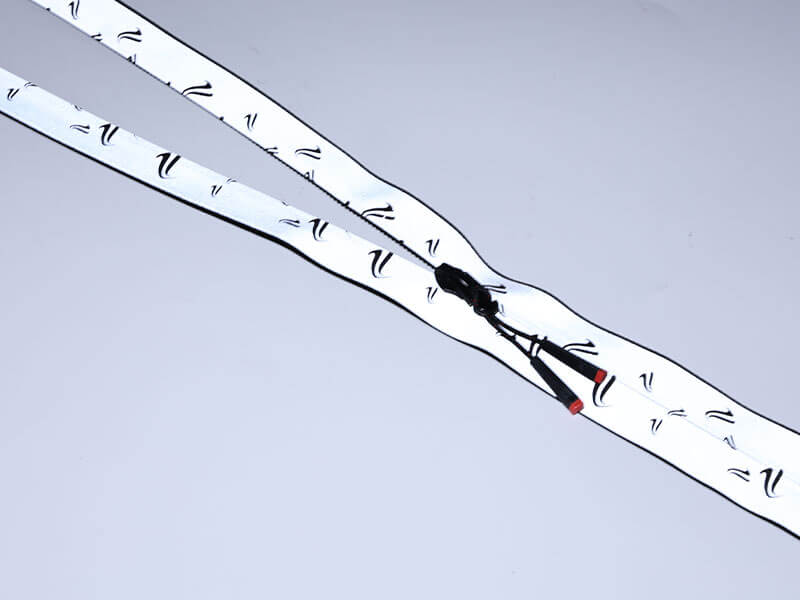
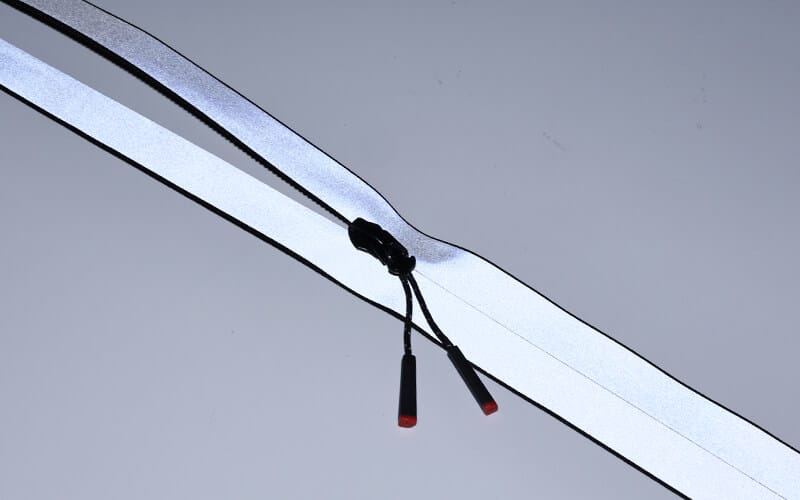
Engineered for high-visibility performance, the MAX Reflect fully reflective printing zipper delivers 360° retroreflective coverage across the entire zipper tape. Designed for OEM manufacturers in safety workwear, outdoor apparel, and performance sportswear, this zipper combines functional visibility with a clean, premium finish. The reflective printing is applied using advanced bonding technology to ensure durability through repeated washing, abrasion, and UV exposure — meeting the demands of industrial-grade production. Available in custom widths, tape colors, and print patterns to align with your brand specifications.

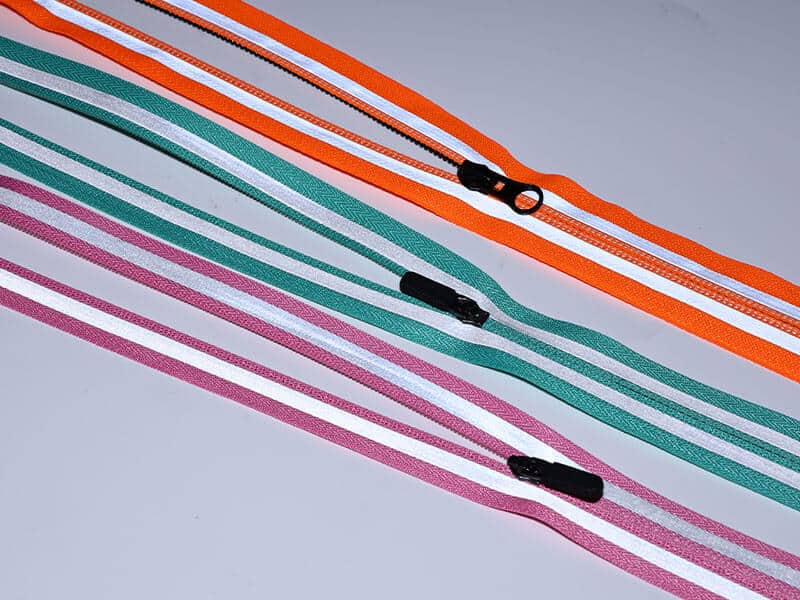
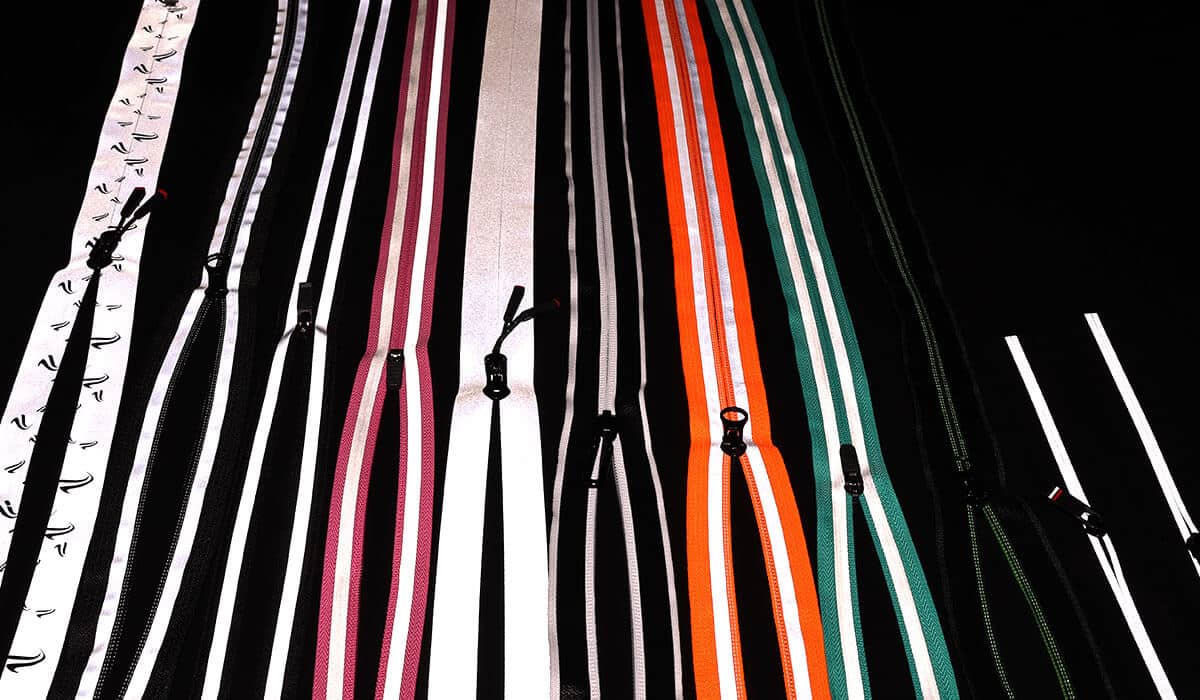
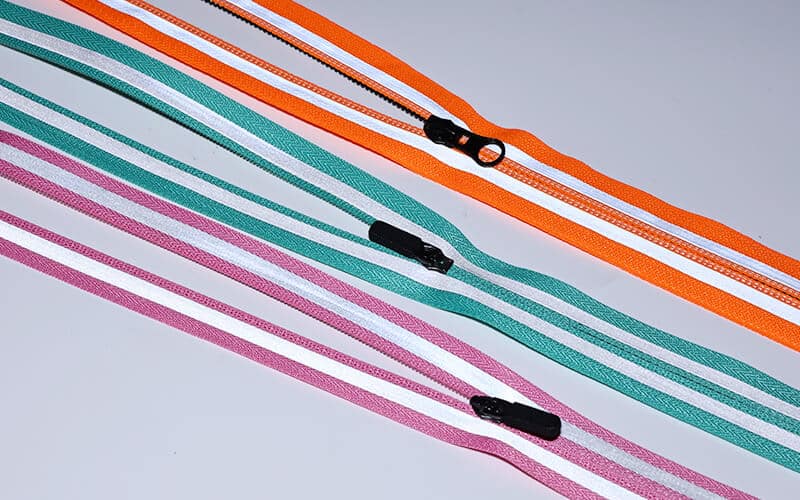
Narrow strip reflective colorful zipper

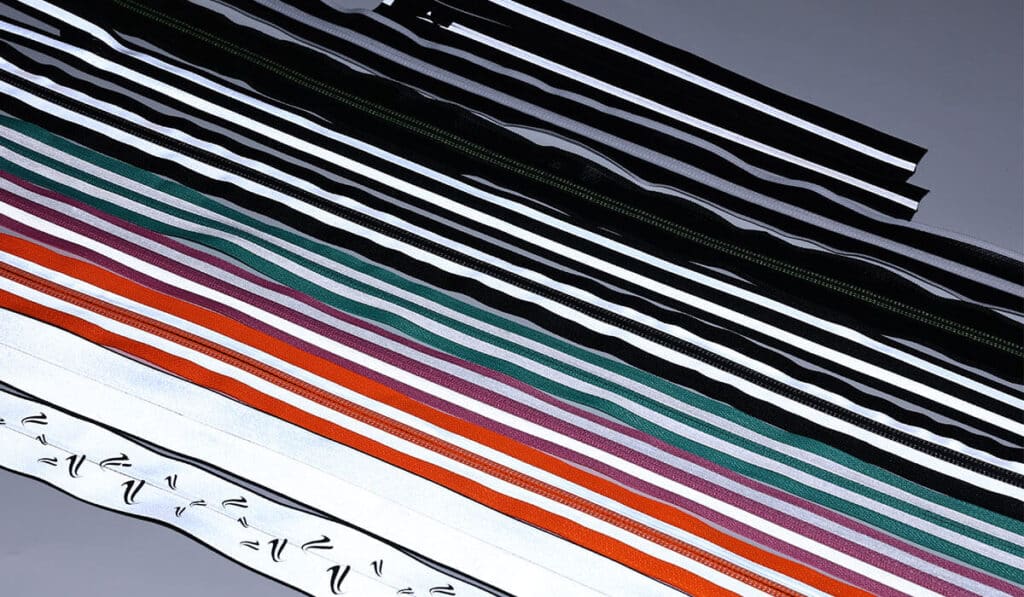
The reflective, narrow strip, colorful zipper redefines the balance between aesthetics and safety. Featuring a precision-placed reflective strip along the zipper tape in a vibrant range of colors, this zipper is purpose-built for fashion-forward activewear, cycling apparel, and lifestyle outerwear brands that refuse to compromise on visibility. The slim reflective strip delivers certified retroreflective performance in low-light conditions while maintaining a sleek, design-friendly profile. Available in multiple colorways and customizable strip widths to meet your collection’s design requirements.

Key factors to consider when choosing a reflective zipper

Zipper type and construction

Choose nylon coil if flexibility matters most. In our production experience, coil reflective zippers bend more naturally with the garment, run with less drag, and keep weight down for activewear and running jackets. Select molded plastic for products facing rough weather; this construction provides firmer tooth engagement for heavy outerwear. Use metal zippers for heavy-duty products and premium streetwear where strength and appearance are equally important. Match opening styles to patterns using closed-end for pockets and open-end or two-way versions for front openings.

Ensure tape width and tooth size match fabric weight to prevent distortion. Ask your supplier for the zipper’s intended load range. We usually guide B2B buyers to balance strength with garment weight, because overbuilding raises cost and bulk, while underbuilding creates claims later.

Visibility and reflectivity performance

Do not judge reflectivity by appearance; ask for reflective zipper specifications including retroreflectivity data in cd/lux/m² and compare it with the safety target. Field performance depends on low-light response, light angles, and the visible reflective area once worn.

Review tape layout carefully:

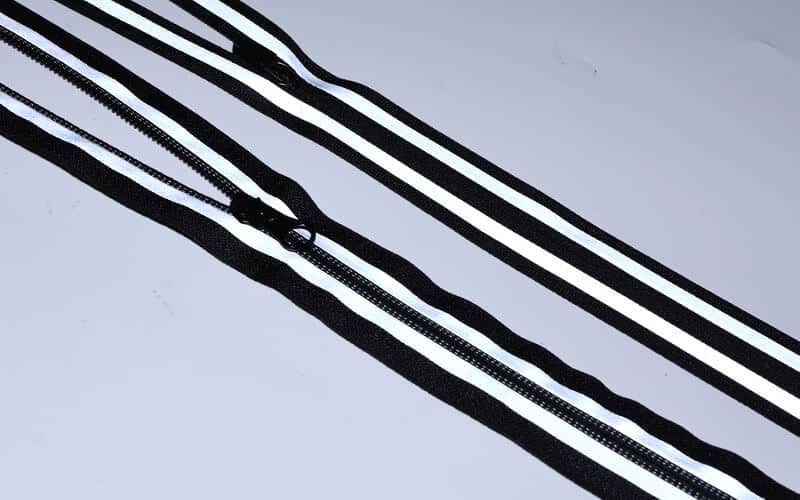
  • Center-coated tapes focus the reflective effect along the zipper line
  • Edge-coated tapes create a more subtle technical look
  • Fully reflective tapes deliver the largest visible reflective area

Reflective hardware for safety garments supports visibility but rarely replaces the surface area required for certified high-visibility workwear. Confirm standard compliance before bulk ordering. For occupational products under EN ISO 20471 or ANSI/ISEA 107, we recommend verifying both the reflective zipper material and its placement in the finished garment, not only the zipper component report.

Material quality and durability

Inspect the base fabric first, as low abrasion resistance shortens service life at high-wear points. Check tooth and slider wear through repeated cycling tests. On our line, poor slider plating and unstable tooth dimensions show up early as snagging, tooth jump, or loss of reflective surface near the chain. Distinguish between home and industrial laundering; few zippers maintain reflectivity after high-temperature commercial processing.

Ask for UV resistance data to prevent yellowing or coating brittleness. Verify resistance to moisture and repeated use under target environment conditions.

Comfort and flexibility

Maintain specifications for thickness and stiffness to avoid pressure points.

Ensure smooth chain movement and well-finished tape to reduce rubbing.

  • Consider the zipper’s sound profile in activewear and lifestyle products.

Aesthetic and design compatibility

Match the reflective zipper color to the product palette early, ensuring the daytime look fits the garment. The reflective zipper should support visibility goals while reinforcing the product’s market position.

evaluating-quality-specifications-and-mechanical-durability

Evaluating quality, specifications, and mechanical durability

Testing for abrasion and film peeling

Start with film adhesion. In our production checks, we flex, fold, and rub the reflective area after heat lamination to confirm the film stays bonded to the tape. Ask suppliers how they verify peel resistance through lamination process and temperature control.

Use a simple sample test before approval:

  • Bend the zipper tape sharply several times at the same point
  • Rub the reflective surface with firm, repeated hand pressure
  • Apply and remove adhesive tape on a small area
  • Check the edge line for lifting, silver dusting, or surface separation

Watch corners and tape edges first, as weak bonding shows there before full-surface failure. High-quality reflective zippers maintain surface stability, whereas low-grade films often crack or flake once sewn.

Size and length options

  • Choose size by load; smaller for lightweight garments, larger for outerwear.
  • Use standard sizes for apparel and custom widths for specific branding.
  • Pre-cut standard lengths reduce costs; custom cutting minimizes waste in assembly.

Slider and puller features

  • Select auto-lock sliders for apparel or non-lock sliders for fast bag access.
  • Check slider clearance to prevent scraping the reflective coating during use.
  • Ensure pullers match user grip requirements, including use with gloves.
  • Choose single or double sliders based on product length and access needs.

Tape and finish options

  • Select matte tape for technical looks or glossy tape for high contrast.
  • Inspect tape edges to ensure the zipper sits flat in the seam.
  • Specify coated or water-resistant versions for improved barrier performance.

Reflective material standards and quality indicators

Request reflective zipper specifications including performance data and material test records tied to actual production lots. Compare reflection consistency across multiple samples. From our production floor at Go4Mould, strong factories keep the reflective effect uniform from roll to roll, with no obvious dull zones, patchiness, or color shift. Look for process discipline in lamination, cutting, and chain alignment.

Supplier samples and testing

  • Request physical samples to verify film bonding and surface finish.
  • Test stitching compatibility and zipper operation within your actual process.
  • Verify consistency in color and quality across multiple production units.

Manufacturing capability

  • Confirm the manufacturer’s ability to customize sizes, colors, and pullers.
  • Evaluate minimum order quantities against your project requirements.
  • Confirm lead times based on capacity and mass production scheduling.

Cost vs value

In our experience supplying B2B buyers, price changes with materials, lamination quality, reflective zipper types, slider type, finish complexity, and compliance requirements — and custom lengths and custom pullers also increase processing cost.

Pay more when failure carries real risk, such as in workwear or outdoor gear. Cheap samples often fail after sewing and daily use, creating claims and brand damage.

Common mistakes to avoid

The most damaging mistake B2B buyers make is selecting a reflective zipper based on showroom brightness rather than verified retroreflective performance after sewing, washing, and repeated field use.

Choosing reflectivity without considering function

Many buyers choose a reflective zipper because it looks bright under showroom lighting. That is a visual decision, not a safety decision. In our production work, the better question is simple: how consistently does the reflective element return light after sewing and daily use?

Appearance can mislead, as some coatings perform poorly after handling. Ask for performance samples on finished products rather than loose zipper swatches to ensure real-world functionality.

Product category also matters. A zipper for a fashion jacket should not be copied directly into workwear, bags, or outdoor gear without consulting a zipper selection guide to check how the reflective part behaves in actual use. We often see projects delayed because the selected zipper fits the styling direction, but not the product function or use environment.

Ignoring durability and end-use conditions

Ensure zippers meet end-use stress requirements by reviewing abrasion, washing, and weather exposure before approving the reflective effect.

Our factory sees this most often in garments for repeated laundering or outdoor use. A reflective surface can lose value quickly if the structure cannot handle rubbing, folding, moisture, or cleaning cycles. Request testing under the same conditions your product will face, not a generic visual approval.

Material pairing is critical; incompatible sliders can scratch reflective surfaces or reduce smooth operation. Incorrect tape materials may shrink or distort the zipper line during processing and use.

Skipping compatibility checks

Reflective zippers must match the fabric weight and type to avoid puckering or seam pulling. Ensure the zipper support is appropriate for the specific shell or stretch garment used.

Review drape and alignment by sewing zippers into actual fabric during early sampling to catch compatibility issues faster than individual component approval.

Production issues often start at the sewing stage. Needle choice, seam allowance, tape handling, and finishing temperature can all affect reflective zipper performance. We advise buyers to confirm replacement feasibility at the same stage, especially for products with after-sales service requirements.

Summary

Choose reflective zippers that prove themselves in use, not just in reflective zipper specifications. Ask for physical samples, evaluate durability through washing, speak with certified zipper manufacturers about compliance requirements, and bring zipper decisions into prototyping as early as possible. If you need practical support, MAX can help with customized reflective zippers, bulk supplies, and technical guidance to move from concept to dependable production.

Share:

MAX business

Hot Blogs

how-to-choose-the-right-reflective-zipper

How to choose the right reflective zipper

maintenance-and-care-of-reflective-zippers

Maintenance and care of reflective zippers

reflective-piping-for-clothing

Reflective Piping for Clothing

Related blogs

maintenance-and-care-of-reflective-zippers

Maintenance and care of reflective zippers

Keep your reflective zippers bright and functional for longer. Discover MAX Reflect’s expert tips on cleaning, lubricating, and storing reflective zippers to maximize their lifespan and visibility.
sewn-type-vs-high-frequency-hot-pressing-type-reflective-piping

Sewn type VS High-frequency hot-pressing type reflective piping

In this blog, we explore the components, production steps, advantages, and disadvantages of these two types of reflective piping, helping you select the best option for your needs.
the-difference-between-reflective-and-retroreflective

The Difference Between Reflective and Retroreflective

This article will dive deeper into the nuances of reflective and retroreflective materials. You’ll discover their unique characteristics, applications, and the science that sets them apart.
why-reflective-piping-is-gaining-popularity

Why Reflective Piping (High-Visibility Piping) Is Gaining Popularity? Picture of Mary WANG Mary WANG

Its growing adoption across industries and consumer markets is no accident—reflective piping offers a unique combination of safety

Related reflective zipper products
zipper-with-fully-reflective-printing

Zipper with fully reflective printing
waterproof-reflective-zipper

Waterproof reflective zippers

normal-reflective-zippers

Normal reflective zippers

narrow-strip-silver-reflective-zipper

Narrow strip silver reflective zipper
narrow-strip-reflective-colourful-zipper

Narrow strip reflective colourful zipper
fully-reflective-zipper

Fully reflective zipper

Send Your Inquiry Now