

Rainbow reflective piping is a sew-on trim used along garment edges and seams. When evaluating rainbow reflective piping for safety apparel, compare daylight appearance separately from measured retroreflection and finished-garment requirements. Use this guide to prepare sample checks and supplier questions; it does not establish certification for the selected piping.
Understanding Rainbow Reflective Piping: What It Is and How It Works
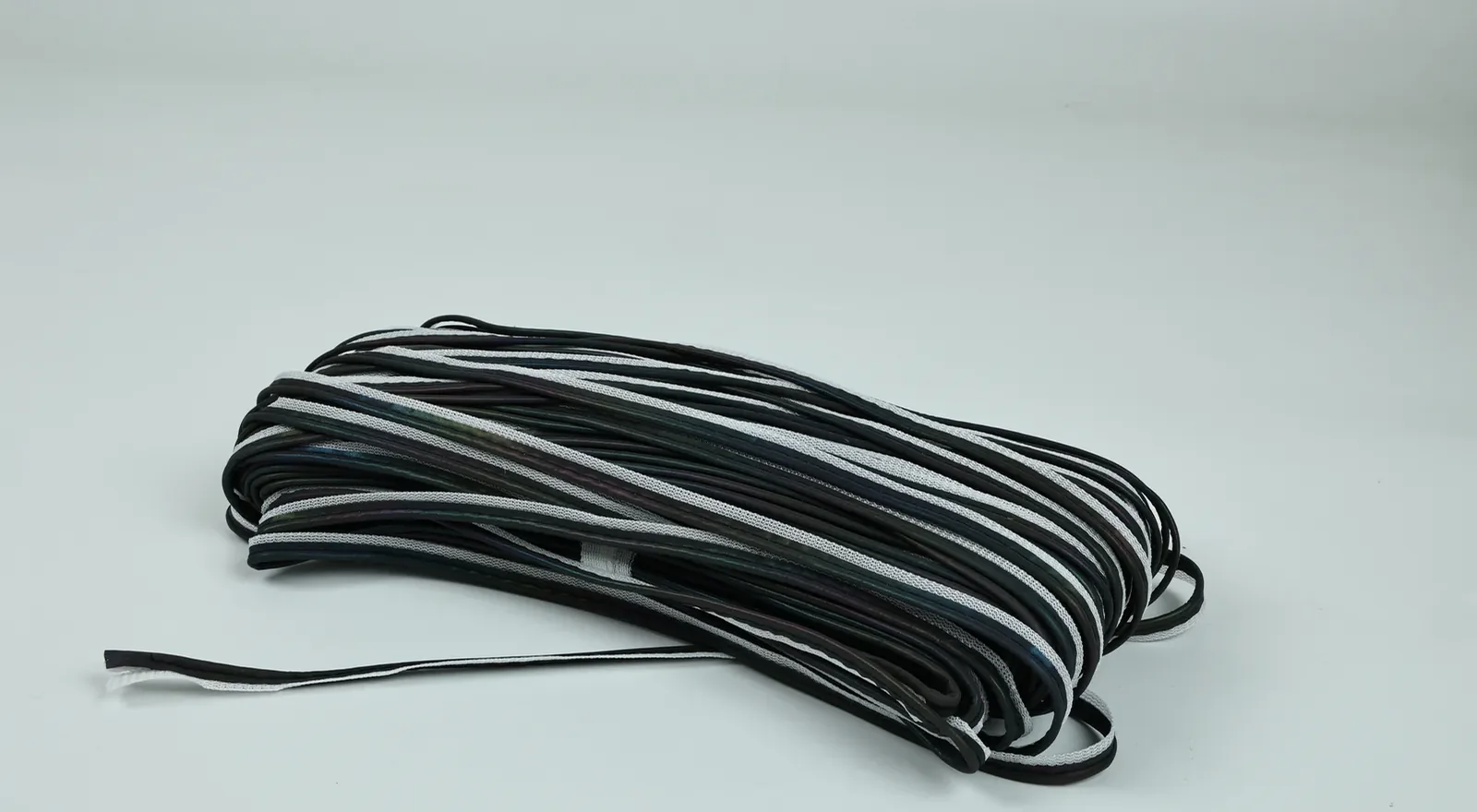
Defining Rainbow Reflective Piping in a B2B Context
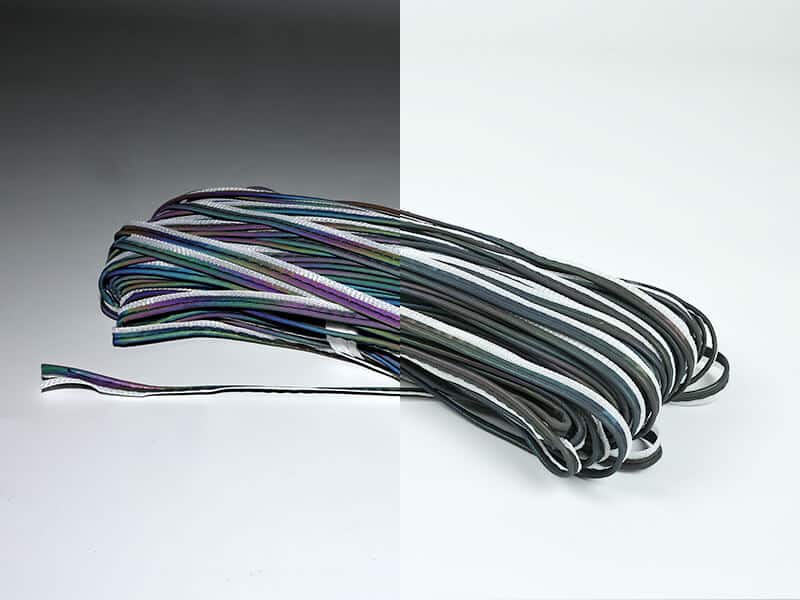
Rainbow reflective piping is a sew-on trim that combines retroreflection with an iridescent appearance for fabric edges and seams. Suppliers offer this material in several common formats:
- Cord piping for structural garment seams
- Flat tape-style piping for sleek profiles
- Sewn-in trim for durable outerwear integration
- Sew-on piping with heat-transfer film layers on fabric backings
For athleisure, cycling garments, or workwear, identify whether the intended piping serves a decorative purpose or is being proposed as part of a documented visibility design. Do not infer protective performance from the rainbow appearance.
The Science Behind the Rainbow Effect
Do not infer the mechanism behind the rainbow effect from appearance alone. Ask the supplier to document the optical construction used in the selected rainbow piping.
Viewing angle and light source angle together determine the exact color output, causing the same piping to appear gold, green, blue, or purple under different illumination conditions.
How Retroreflection Is Achieved Alongside the Color Effect
Ask the supplier to identify the retroreflective elements used in the selected piping rather than inferring its construction from the product category. Ask for a drawing or construction description identifying the backing, cord, reflective surface, and any protective treatment. Compare that description with the selected sample. Do not assume that every rainbow piping shares the same layer sequence or that a coating description establishes wash performance.
ANSI/ISEA 107 and EN ISO 20471: Compliance Requirements
Sourcing professionals must evaluate compliance against two primary standards depending on target market: ANSI/ISEA 107 for U.S. applications and EN ISO 20471 for European markets. High-visibility clothing requirements include color, retroreflective performance, visible material area, and garment design.
ANSI/ISEA 107: U.S. Standard Framework
ANSI/ISEA 107 includes garment types and performance classes. An industry supplier technical guide describes Class 2 for moderate-risk roadwork and utilities and Class 3 for higher-risk fast-moving traffic or low-light environments.
EN ISO 20471: European Standard Framework
ISO 20471 addresses color, retroreflection, visible material area, and placement.
Why This Matters for Procurement
U.S.-market buyers must confirm the exact Performance Class and Garment Type required before production—not simply that the garment carries a hi-vis label. Determine whether the rainbow piping is decorative accent trim, and verify the materials and finished garment against the target standard before counting the piping toward compliance. Customizing certified high-visibility clothing with large logos or repositioned reflective tape can invalidate certification by altering the visible surface area or deviating from the tested garment design. Conduct a pre-production compliance review before finalizing any OEM specification.
Fluorescent vs. Retroreflective: Complementary Mechanisms
Fluorescent backgrounds and retroreflective trim serve different lighting conditions; check the selected piping construction rather than assuming it provides both mechanisms.
Fluorescent Performance in Daylight and Early Twilight
Fluorescent materials in high-visibility apparel absorb ultraviolet and blue wavelengths from ambient light and re-emit that energy as longer-wavelength visible light through fluorescent fabric technology—typically bright yellow, orange, or lime green. This re-emission creates the characteristic "glow" that makes fluorescent piping and base fabrics highly conspicuous in daylight and early twilight conditions.
Retroreflection: The Twilight and Low-Light Solution
As ambient light diminishes during dusk and evening transitions, fluorescent materials lose their light source and their visibility advantage degrades rapidly. This is where retroreflective piping becomes the dominant safety mechanism. Retroreflectors return light back toward its source—a light beam from a vehicle headlight, for example—regardless of the observer's position relative to the wearer, provided the light source is aligned near the observer's line of sight.
Integrated System Design
High-visibility garment designs can combine both mechanisms by pairing fluorescent base fabrics with retroreflective trim; the piping itself should not be assumed to provide fluorescence.
Evaluating Daylight Color Consistency and Aesthetics
Assessing Base Color Under Natural Lighting
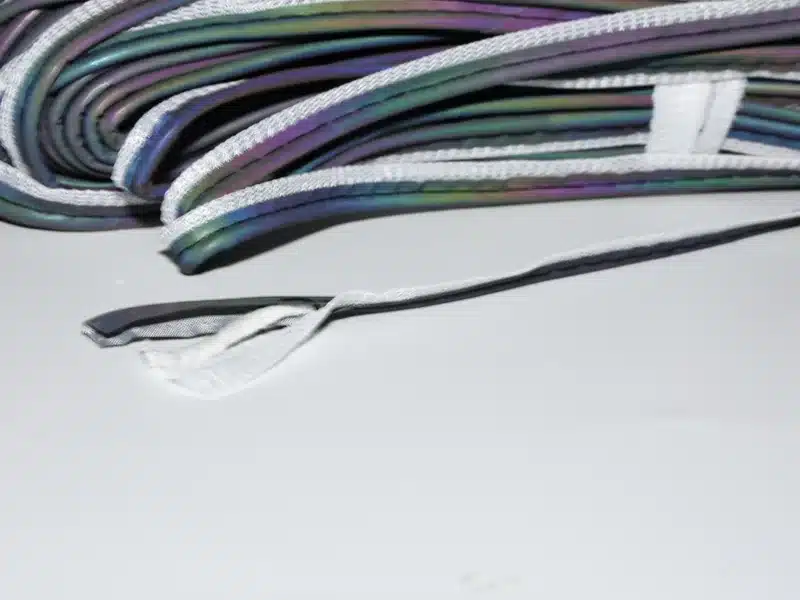
Unlit appearance drives brand identity. Lighting conditions alter color saturation and brightness significantly. A viewing sweep helps compare the sample from different directions. Observers perceive multiple distinct hues across the curved piping surface.
Viewing Angle Dependency and Its Practical Implications
Color appearance shifts based on the observation angle. Compare the sample face-on. Then compare its appearance from an oblique angle. Also inspect its edge profile.
Colorfastness and Durability
Request colorfastness results for the selected construction, with washing conditions matched to the item and finished garment care labels; do not treat test results as a durability guarantee. Compare sample appearance before and after testing, with the methods and exposure conditions stated.
Evaluating Multi-Angle Retroreflection for Safety Performance
Understanding Retroreflection Fundamentals for Safety Apparel
When reviewing a retroreflection report, confirm the stated quantity, unit, observation angle, and entrance angle before comparing results. Ask the laboratory to resolve any unexplained unit or geometry differences. Request the test report for the selected rainbow piping, including sample identification and measurement conditions. MAX lists MP0103, its Rainbow Reflective Piping model, at 100–350 cd/lx/m² on its website; confirm the applicable test conditions and specification per order. This site-stated range is not a performance guarantee. Buyers must set realistic expectations: rainbow piping cannot replace primary safety tape and serves a distinct market segment balancing aesthetic appeal with functional low-light visibility.
Multi-Angle Retroreflection: What to Test and Why
Request measurements at the observation and entrance angles specified by the applicable test method, including those relevant to the intended end-use environment. Piping structure affects light return. Assess retroreflection uniformity across the entire piping width. Compare the exposed edge and curved surface in the selected sample; request data before drawing a conclusion about differences in light return. Use a portable retroreflectometer during incoming quality control. Follow these measurement steps:
- Calibrate the device using the supplier reference block.
- Take multiple readings along the sample at the entrance angles specified by the applicable test method.
- Record individual readings and their test conditions; agree the sampling and acceptance method with the laboratory before using the results for batch approval.
Relevant Safety Standards and Certification Requirements
For garments intended to meet EN ISO 20471, confirm the applicable requirements with the responsible assessor. The supplier guide describes minimum surface area as defined by Class 1, 2, or 3 designations. Check the applicable garment standard rather than treating the piping’s RA value as a garment class. GoSafe gives 2 inches (50mm) as a typical reflective-strip width, explicitly noting that requirements vary by Type and Class. This is garment-strip guidance, not a minimum width for decorative piping. Do not assume that decorative rainbow piping meets the retroreflective-material requirements for certified high-visibility garments; verify the selected construction and its role in the finished garment.
Interpreting Supplier Test Data and Certificates
Check the key columns for observation angles and entrance angles. Verify the measured units and pass/fail thresholds. Watch for critical red flags in supplier documentation:
- Outdated test dates
- Non-accredited testing laboratories
- Missing entrance angle data
Request third-party test reports from ISO/IEC 17025-accredited laboratories. Agree which supplier checks and independent reports are required for the intended order, and record the scope and limitations of each.
Performance Across Weather and Lighting Conditions: Rain, Fog, and Artificial Light
Inclement Weather Impact on Retroreflection
Rain, fog, and snow each degrade retroreflective performance through different mechanisms. Request wet-condition retroreflection data for the selected construction rather than assuming how its optical elements respond to water.
Artificial Lighting Environments
Warehouses, supplier premises, and street-lit roadside environments present retroreflective performance variables distinct from vehicle headlight conditions. The intensity, spectral composition, and angular direction of artificial light sources directly influence how retroreflective materials respond. SEEN Safety describes retroreflective tape on a person in shadow near a doorway appearing bright to an outside observer when brighter daylight behind the observer is reflected back toward them. Check the proposed garment in its intended lighting arrangement; this example is not a performance result for rainbow piping.
Procurement Implications
B2B buyers should request field-condition performance data from suppliers, including retroreflection measurements under wet conditions and performance validation in the specific lighting environment where garments will be deployed.
Key Buying Criteria for B2B Procurement
Performance Tiers: Matching Product Grade to Application
Describe the intended use before issuing an RFQ. For certified workwear, request an assessment of the complete garment and identify the intended role of the piping. For corporate clothing or lifestyle products, agree the appearance and any required tests explicitly. Keep decorative selection, measured material performance, and garment classification as separate decisions; these purchasing categories do not create a protective class for the piping.
Construction and Substrate Compatibility
Trial the selected cord and flange in the actual garment fabric. Compare seam bulk, exposed trim width, and the appearance around curves before approving the construction.
According to MAX’s product page, MP0103 uses 100% polyester and lists 1.3 cm (width) × 2.0 cm (length) × 0.2 cm (thickness), with width, length and thickness customizable. Retain these dimensional labels in inquiries; MAX’s sizing guidance calls for a cross-sectional drawing before interpreting visible width, seam allowance, total width or core diameter. Separately, at the reflective-piping category level, MAX’s website FAQ lists custom colors and Logo/pattern printing, with custom colors subject to MOQ.
- Trial the selected backing in the actual garment fabric before approving its durability or handling.
- Compare seam stability and exposed trim width in a sewn sample rather than assuming compatibility from the backing name.
- Stretch options belong to other constructions, not MP0103's listed polyester specification. MAX describes MP0104 as polyester/spandex and suitable for activewear; confirm the selected model's material and stretch performance before specifying.
Minimum Order Quantities, Lead Times, and Supply Chain Considerations
Ask whether the requested color can be sampled in the selected construction. Obtain separate written confirmation of sample timing, production timing, and the conditions that start each schedule. Keep color approval and delivery approval as distinct decisions.
Pricing Structure and Total Cost of Compliance
Request an itemized quotation for the selected rainbow piping specification. Certification testing requires significant budget allocation. Re-testing and supplier audits add ongoing expenses. Procurement teams should calculate the total cost of compliance upfront to ensure sustainable sourcing strategies.
Matching Hi-Vis Piping Grade to Job Role
Role-Based Visibility Requirements
For construction, road maintenance, and utility work, confirm the required fluorescent background fabric and retroreflective trim for the finished garment rather than treating lime-yellow piping as the primary high-visibility material.
For railroad and emergency response roles, confirm the required garment background color and reflective configuration. Do not treat orange decorative piping as a substitute for the specified high-visibility background material.
For maintenance and machinery-service garments, document where workers will be seen, which lighting conditions matter, and what the workplace specification requires. Check the selected trim in the proposed garment layout rather than inferring suitability from the background color alone.
Procurement Alignment
When evaluating rainbow reflective piping suppliers, cross-reference your team's job roles against these environmental profiles before specifying a single grade across your fleet. A mixed workforce—combining roadside crews with maintenance technicians—may justify a tiered piping specification rather than a one-size-fits-all approach.
Comfort and Wearability Criteria for Daily Use in Safety Apparel
When piping is applied to daily-wear safety apparel, evaluate how the trim's bulk, flexibility, and seam placement affect comfort alongside the finished garment's overall wearability.
Key wearability attributes to evaluate include:
- Fabric weight and breathability – Lighter constructions reduce fatigue during full-shift wear, particularly in warm or humid environments
- Stretch panels and articulated seams – Enable natural movement during bending, reaching, and repetitive tasks without binding or tearing
- Moisture-wicking properties – Manage perspiration to prevent garment saturation and skin irritation
- Seam comfort – Inspect the trial seam where piping is installed for bulk, rubbing, and restricted movement.
Supplier Evaluation and Qualification Framework
Technical Capability Assessment
Assess the supplier's core manufacturing technology. Ask whether they use glass bead coating or microprismatic film lamination.
Evaluate their supplier quality control infrastructure next. Assess the specialized testing equipment available at the supplier's premises. They need spectrophotometers to measure daylight color consistency. They require retroreflectometers to verify multi-angle reflectivity.
Request wash-test results for the selected construction and intended care program; follow the care label for the selected item and finished garment.
Compliance and Certification Verification
Request documentation supporting the claimed EN ISO 20471 or ANSI/ISEA 107 conformity. Do not accept verbal assurances. Verify test reports and any certificates with their respective issuers, and confirm that their scope covers the supplied product.
Check the credentials of the accredited lab carefully.
Demand the Declaration of Conformity from the supplier for certified high-visibility clothing. Read this document carefully to understand its scope limitations. A certificate for standard silver tape does not automatically cover rainbow reflective piping. The specific product construction must appear on the official documentation.
If substance-restriction documentation is required for the end market, request current certificates covering the specific piping construction and confirm the certificate scope.
Sampling and Approval Process Best Practices
Define exact physical parameters when ordering initial samples. Specify the required flange width for sewing insertion. State the exact core cord diameter. Detail the minimum exposed reflective surface area.
Create a strict sample approval checklist. Evaluate the samples against four critical metrics:
- Daylight color consistency across the roll
- Initial RA value performance
- Compatibility with the care instructions: follow the care label for the selected item and finished garment.
- Overall physical construction and flexibility
Field and Lab Testing Protocols for Incoming Samples
Field Evaluation in Low-Light Conditions
Begin sample assessment in a dark or low-light environment, never in daylight or brightly lit rooms where retroreflective properties are masked. One supplier technical guide describes a visual check with the light source near eye level and 1.5 to 3 meters (5 to 10 feet) from reflective fabric. Use it for sample comparison, not certification. Observe the brightness and uniformity of the return light across the piping width, noting any dull spots, color shifts, or inconsistent reflection that might indicate manufacturing defects or material degradation.
Smartphone-Based Documentation Methods
The same guide also describes framing reflective fabric from 1.5–2 meters away for smartphone observations. Keep the distance consistent between comparison samples.
Laboratory Photometry
For high-volume or mission-critical orders, engage a certified testing laboratory to measure coefficient of retroreflection (RA) values across the required observation angles. Lab photometry eliminates subjective interpretation and provides quantitative data for compliance verification against ANSI/ISEA 107 or EN ISO 20471 thresholds.
Common Pitfalls and How to Avoid Them
Mistaking Visual Brilliance for Retroreflective Performance
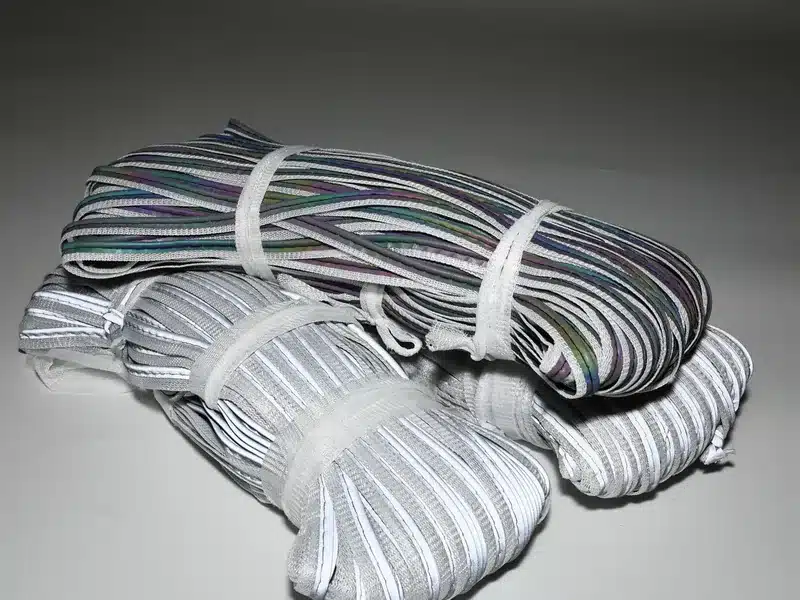
Vibrant daylight colors often deceive buyers. High iridescence does not guarantee high RA values at night. Visual inspections cannot replace photometric data. You must test retroreflection independently of aesthetic approval. Use a calibrated retroreflectometer for accurate verification.
Overlooking Garment-Level vs. Material-Level Compliance
Ask the responsible assessor to review the finished garment design, including the installed piping, seam allowances, and topstitching, against the applicable EN ISO 20471 requirements. Record which configuration the supporting test documentation covers.
Neglecting Long-Term Performance Under Real-World Conditions
Request laundering-resistance results for production prototypes from the selected batch, using conditions consistent with the item and finished garment care labels. Compare retroreflective performance before and after testing rather than assuming durability under industrial laundering.
Establish a periodic re-testing schedule for field garments. Pull worn samples from active duty on a defined schedule aligned to the garment's care program and operating conditions. Test these garments to verify ongoing compliance.
Care, Maintenance, and Service-Life Management
Garment Care Instructions
One supplier care guide recommends cold or lukewarm water, preferably ≤40°C or 104°F, for reflective fabric. Follow the selected garment care label; this is not an MP0103 wash rating. Select detergents according to the selected item and finished garment care instructions. The same guide advises avoiding direct high heat, including dryers exceeding 75°C / 167°F. Confirm the care instructions for the selected construction.
Inspection and Replacement Triggers
SEEN Safety describes maximum wash-cycle labels as commonly around 50 for standards-compliant PPE. Check the actual label; this is not a universal service life or an MP0103 durability claim. Establish regular inspection schedules for the intended use environment to assess surface contamination, visible wear, and retroreflective fabric degradation. For consistent visual comparisons, document sample appearance with the light near eye level at the same 1.5 to 3 meters distance described by the supplier guide. Replacement should be triggered when retroreflective return visibly diminishes, piping shows permanent soiling that resists laundering, or fabric abrasion exposes non-reflective substrate.
Service-Life Documentation
Maintain garment care records and service-life logs for each apparel batch. Track care-label compliance and inspection findings; these records do not establish or extend service life. This data informs future procurement decisions and demonstrates due diligence in safety compliance audits.
Summary: Key Takeaways for B2B Rainbow Reflective Piping Procurement
Before requesting a quotation, prepare a sample approval sheet that separates appearance, construction, testing, and commercial terms. Name the intended garment and use environment, then identify which questions belong to the designer, sewing team, test laboratory, and purchasing contact. Ask each reviewer to record an observation or a required document rather than a general “approved” comment.
For appearance, retain the chosen sample and record the viewing conditions used to compare alternatives. Describe the acceptable daylight appearance in words and images, including the part of the curved surface being compared. If photographs are used, retain the original files and note the lighting arrangement. Treat those photographs as comparison records, not as a substitute for a photometric report.
For construction, attach the agreed drawing to the sample record. Ask the sewing team to identify the exposed portion, seam allowance, and cord position in the trial garment. Mark any unresolved dimension on the drawing instead of interpreting a product-page dimension as a different measurement. Keep requested changes separate from the dimensions already confirmed by the supplier.
For testing, ask the laboratory which method and fixture are appropriate for the selected trim and its installed shape. Link each result to the sample, condition, and report revision. If a supplier offers a report for a different color or construction, record the difference and ask whether new testing is needed. Do not close the question by copying the result into the approval sheet without checking its scope.
For the commercial decision, request a quotation tied to the approved sample and drawing. Ask the supplier to state what is included, what remains provisional, and which changes would require a revised quotation. Record the agreed contact for resolving discrepancies before production. Keep order quantity, delivery timing, and packaging as written order terms rather than assumptions carried over from a different trim purchase.
Finally, separate unresolved information from rejection. A missing report is a question to resolve; it is not a measured failure. Record who will supply the document and which purchasing decision depends on it. Keep the sample, drawing, quotation, and test documentation together so that later changes can be reviewed against the same approval record.
Frequently Asked Questions
How does rainbow reflective piping maintain retroreflective performance after repeated laundering and exposure to UV light?
Rainbow reflective piping durability depends on substrate and coating quality. Ask suppliers to document the selected sample's substrate and coating construction. Request documented performance retention after accelerated weathering, with the test method and exposure conditions stated. Treat sample test results as evidence only for the documented construction and exposure conditions, not as a service-life guarantee. Compare the measured performance before and after laundering rather than inferring durability from price.
Why does a rainbow reflective piping sample appear brilliant in daylight but underperform at oblique angles in low-light conditions, and how do you test for this mismatch?
Daylight iridescence relies on thin-film interference, which peaks at specific viewing angles under direct sunlight. Retroreflection returns light toward its source; check its response across the relevant viewing geometry. Test this mismatch using photometric measurements at the observation and entrance angles required for the application. Require supplier photometric data at all angles. Visual assessment alone masks critical low-light failures that endanger workers in vehicle strike scenarios.
How do you verify that rainbow reflective piping meets the reflective requirements of the target standard?
Do not assign a garment performance class to a roll of rainbow piping. Review the finished garment design and supporting test documentation before making a compliance claim. Verify coefficients at the specific angles relevant to your end-use environment—urban versus highway applications demand different performance tiers.
How should buyers compare rainbow piping specifications for visitor vests and employee coveralls?
For temporary visitor vests, compare the selected piping specification and quotation against the workplace requirements. For employee coveralls, request durability data and a quotation matched to the intended care program and work environment. Assess both visitor and employee garments against their actual exposure and use conditions; temporary use does not by itself justify a lower safety requirement. Mixing specifications creates procurement complexity. Establish separate sourcing tiers aligned to garment lifecycle and regulatory exposure.
How should width, color tone, and placement changes be reviewed for garment compliance?
Review changes to width and placement against the tested garment design; unchanged material reflectivity alone is not sufficient. Color tone customization—shifting hue saturation or dominant wavelength—can alter performance if it compromises the reflective layer structure. Certification depends on the complete garment design, including background material, reflective performance, placement, and testing. Require suppliers to validate custom formulations against ANSI/ISEA 107 or EN ISO 20471 before production. Submit the proposed changes and updated sample to the responsible assessor before relying on the previous garment documentation.
How should buyers compare rainbow reflective piping quotations and order conditions?
Compare rainbow piping and silver trim quotations against the same specification and test requirements. Ask suppliers to quote the required order quantities and identify any minimum-order surcharges. Evaluate whether committed annual volumes or combined trim requirements can support more favorable terms. Confirm the lead time and pricing conditions for custom color formulations per order.
How do you verify that a supplier's rainbow reflective piping meets multi-angle retroreflection claims without access to a full photometric lab?
Request third-party photometric test reports identifying the tested sample, observation angles, entrance angles, and applicable method. Request the test reports and compliance documents applicable to the intended material or garment role, and check their sample identification and scope. For field comparison, use a calibrated instrument with documented accuracy and an appropriate measurement method. Require sample retention and traceability documentation. Record unresolved claims in the approval checklist and obtain the missing sample-specific documentation before relying on them.

Related blogs

Common Reflective Piping Problems and How to Avoid Them
Reflective Piping for Clothing

Sewn type VS High-frequency hot-pressing type reflective piping

Why Reflective Piping (High-Visibility Piping) Is Gaining Popularity?
Related products
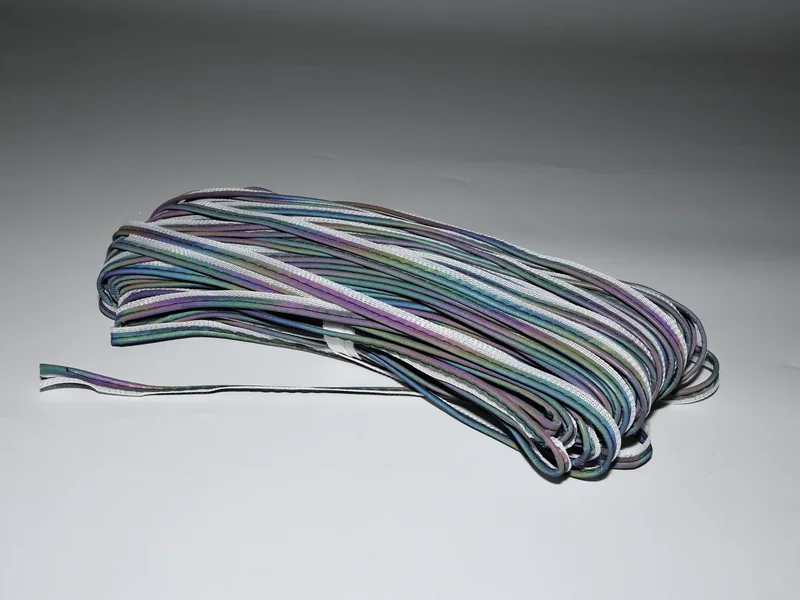
Rainbow reflective piping MP0103

Sew on reflective piping – Custom manufacturer

Colored reflective piping MP0102


