

Reflective piping lead time planning starts with the actual specification, approval dependencies and confirmed delivery requirements. This guide gives procurement teams a framework for recording those milestones, assigning responsibility and reviewing changes.
Reflective Piping Lead Time Planning: Define the Schedule
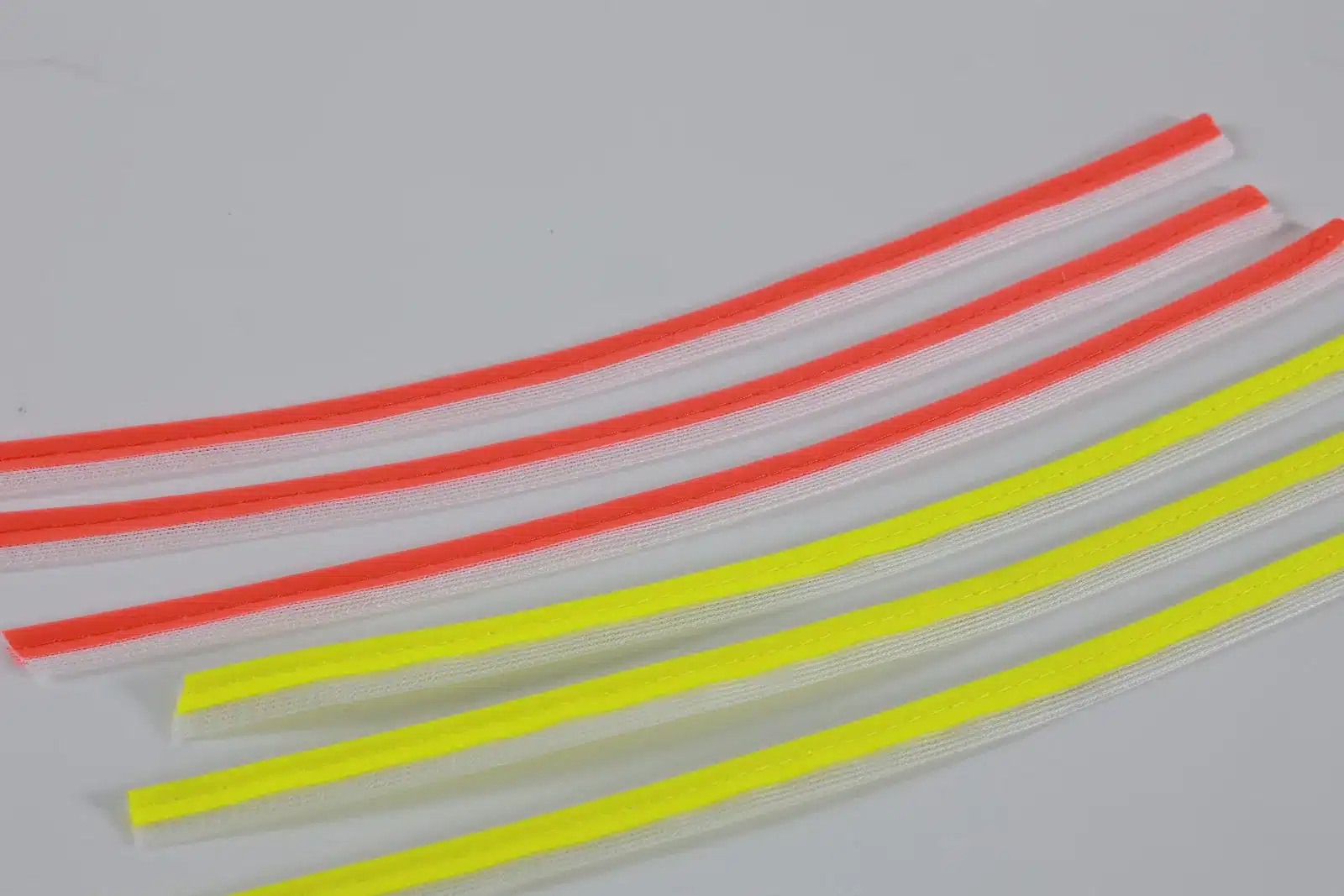
Define the start and end of the schedule before comparing suppliers. An inquiry-to-receipt estimate covers different activities from a production-ready-to-dispatch quotation. Record which definition each party uses and which approvals, materials and logistics assumptions are included.
Identify the selected piping construction, color, dimensions, quantity and intended application. Ask which materials are available and which items require procurement or development. Do not infer a delivery duration from a backing name or assume that every supplier follows the same production sequence.
Build the plan around confirmed dependencies. Sampling, review, material procurement, production and delivery may involve both sequential and parallel work. Ask what can proceed before a later approval and what remains on hold. Record any commercial or technical condition attached to that arrangement.
Work backward from the date the receiving team actually needs usable material. Include receipt and any required inspection before the downstream garment operation. Keep a requested date distinct from a supplier commitment and a forecast. If the proposed dates conflict, escalate the gap while there is still a concrete decision to make about specification, quantity or delivery scope.
Reflective Piping Wholesale Pricing, MOQ, and Unit Cost Efficiency
Compare quotations for the same specification and commercial scope. Identify the selected construction, quantity, customization, packaging, documentation and delivery arrangements. Ask the supplier to explain which charges are included and which depend on an unresolved requirement.
Where quantity options are relevant, request the actual price and minimum-order conditions for each option under consideration. Do not assume a universal economical batch size or that a larger order automatically receives an earlier production slot. Obtain the capacity and scheduling commitment separately from the quoted unit price.
For custom colors or printing, clarify the approval work, sample charges and any additional order conditions. Confirm which physical appearance reference or artwork revision will be used. Keep the commercial consequences of a requested change visible before approving it.
Compare the quotation with the sample and evidence requirements. A lower price does not resolve a missing report or an unsuitable specification. Likewise, a more expensive offer does not prove better performance. Record the basis of the purchasing decision and the items that must be confirmed before release.
Certification Standards and Market Compliance Requirements
Identify the evidence required for the intended finished product and market with the responsible product or conformity specialist. Keep material reports, supplier documents and finished-garment assessment separate; one does not automatically establish the scope of another.
Ask which documents already apply to the offered piping and which additional work is required. Check sample identity, method, conditions and stated scope before including a report in the approval pack. Do not assume every report has a universal validity period or that an unrelated certificate covers the selected color and construction.
Schedule the required review or testing with the responsible party. Confirm sample preparation, submission, review and decision dependencies, including what happens if more information is needed. A document being available does not by itself mean the buyer has accepted it.
Keep unresolved evidence requirements in the milestone record. Assign an owner and decision date so the supplier and buyer understand whether the issue affects sampling, production release or shipment. Avoid promising a shorter approval cycle merely because a supplier advertises certifications.
Lead Time Formula, Stage-by-Stage Calculation, and Key Types
Use a dated dependency plan rather than adding every quoted duration without checking overlap. A simple sum is useful only when the listed stages are sequential, share the same start-and-end definitions and do not already include one another.
Record the following items for each stage:
| Planning field | What to record |
|---|---|
| Start condition | Approval, information or material needed to begin |
| Responsible party | Person confirming the work and date |
| Planned completion | Requested date and confirmed commitment, shown separately |
| Dependency | Activity that cannot proceed until this item is complete |
| Evidence | Confirmation, sample decision or completion record |
| Forecast change | Revised date, reason and downstream effect |
Distinguish order acknowledgment from production release, dispatch from receipt, and receipt from acceptance where inspection is required. Ask the supplier which of those milestones its quoted lead time ends at.
Show parallel work explicitly. If documentation preparation can proceed during production, record that arrangement instead of counting it twice. If procurement is conditional on sample approval or a commercial release, show that condition before relying on an earlier start date.
Review the plan when an assumption changes. A revised specification, missing approval or altered delivery route should produce an updated forecast and a named decision, rather than an unexplained change to the final arrival date.
Define the Time Measurements Used in the Order

Agree terminology with the supplier before using a duration in the plan. For this purchasing record, distinguish elapsed order time from the duration of a particular operation. Ask whether a quoted production period includes queueing, material preparation, inspection and packing, rather than assuming those activities are excluded or included.
Keep the start and end event visible for each measurement. The time from sample request to receipt is different from the supplier's sample preparation time. Likewise, a dispatch commitment is different from arrival at the buyer's receiving location.
Use actual milestone dates when reviewing completed orders. Record delays and changes alongside the specification and order conditions so that later comparisons have context. Do not treat a past stock order as a universal forecast for a customized order with different evidence or logistics requirements.
When the buyer communicates a required delivery window, explain which supplier commitments and internal decisions are needed to support it. A shared definition of the milestone gives the teams a specific gap to resolve and avoids comparing durations that describe different portions of the work.
Phase 1: Requesting and Evaluating Samples
Prepare a sample brief tied to the intended application. Include the proposed construction, dimensions, appearance requirement, shell or assembly context and the evidence needed for the decision. Ask the supplier to identify any ambiguous term before preparing the sample.
Clarify what the sample will represent. It may be an available example, a customized development sample or material representative of the proposed order. Record those distinctions so a stock example is not mistaken for approval of every custom feature.
Confirm preparation, dispatch and expected transit dates with the responsible parties. Ask about the actual stock position and development work instead of assuming stock samples are immediately available or that customization always adds a fixed period. Record the address, recipient and information needed for delivery.
Plan the review before the sample arrives. Identify who will examine appearance, dimensions, application behavior and supporting documents, and which observations require specialist input. Agree the sample identification and recording method so comments from different reviewers refer to the same item.
If the sample needs revision, provide a consolidated description of the discrepancy against the requirement. Ask for the proposed change and revised milestone dates. Keep the earlier sample and decision history identifiable so the next review starts from a clear record.
Phase 2: Securing Approvals and Finalizing Orders
Define the approval criteria and responsible reviewers in advance. Agree which reviews may run together and which depend on an earlier result; parallel review is an option to plan, not a universal requirement. Set a realistic response date with each participant.
For appearance approval, use the agreed physical reference, viewing conditions and acceptance method. For dimensions or performance, identify the applicable specification and evidence. Avoid prescribing a particular light source or test condition without the requirement for the actual order.
According to MAX’s product pages, MP0108 is Reflective Piping Tape with Green Printed Stripes, with Silver and Green listed as colors; MP0110 is Segmented Reflective Piping Tape with Black Printed Stripes, with Silver and Black listed. At category level, MAX’s reflective piping FAQ lists custom colors and Logo/pattern printing, recommending simple, single-color geometric artwork and a wider reflective surface for printing alignment.
Use those website descriptions to frame an inquiry, then obtain the selected order's drawing, available options and supporting documents. The descriptions do not establish stock availability, a production duration or suitability for a particular finished product.
Record the accepted sample and document revision in the purchase specification. List any conditions still outstanding before procurement, production or shipment. Confirm quantities, price, payment and delivery terms with the parties responsible, including any release conditions the supplier applies. A sample arriving or a purchase order being issued is not by itself evidence that every prerequisite has been satisfied.
How to Compare Reflective Piping Supplier Quotes
Use a comparison sheet that keeps specification, evidence, price and schedule in separate fields. Ask each supplier to state what is included, which assumptions remain open and how long the offer or date commitment is applicable under its stated terms.
Request performance documentation appropriate to the selected construction and intended use. Examine the sample identity and test conditions; do not treat the word “guaranteed” as a substitute for evidence. Traceability can help connect material and records, but traceability alone does not prove compliance.
Compare milestone definitions as well as dates. An offer ending at dispatch cannot be directly compared with an offer covering delivery to the receiving location without accounting for the different scope. Ask who arranges each transport stage and which documents are included.
Record exceptions rather than forcing unlike offers into a single price ranking. Identify the questions that must be answered before selection, and obtain written confirmation of any change to scope or schedule that affects the buying decision.
Phase 3: Managing the Mass Production Process

Ask the supplier to confirm material readiness and the production release conditions for the selected order. Record the committed slot or start date and the activities it covers. Do not describe coating, slitting or sewing as an identical mandatory sequence for every piping construction.
Agree milestone updates that correspond to the supplier's actual process. Identify the completion evidence needed and the person responsible for reporting a deviation. Keep the specification revision attached to the update so the team can recognize which order conditions it describes.
Confirm the inspection and packaging requirements before the planned shipment date. Ask how product and lot identification will be maintained and which records will accompany the goods. Define any buyer review or release decision required before dispatch.
If a material, process or quantity change is proposed, record the effect on approval and schedule. Obtain the responsible review before applying the earlier sample acceptance to a changed construction. Keep the original commitment and revised forecast visible so the reason for the change remains traceable.
Parallel Workstreams to Run During Active Reflective Piping Production
Use the confirmed production period to prepare activities that can proceed without an unmade technical decision. Examples may include receiving arrangements, document review and preparation of product information, subject to the actual order requirements.
If photography or digital assets are part of the delivery scope, agree the sample identity, image requirements and completion date. A product photograph should not be presented as evidence of a test or an application trial that has not occurred.
Prepare customer-facing information only from the approved specification and supported claims. Keep unconfirmed performance, stock and delivery statements out of published material. Assign a reviewer to confirm which information can be released and when.
Coordinate the receiving and downstream production teams around the current forecast. Make clear which milestones are confirmed and which remain conditional, so preparation can proceed without turning a provisional date into an unsupported promise.
Phase 4: Coordinating Shipping and Delivery
Compare transport options using the actual shipment, destination and required receiving date. Obtain current service information and cost from the responsible logistics parties. Do not assume that a particular mode is always cheaper, faster overall or suitable for the order.
Confirm the agreed delivery term, named place and responsibility for each stage with the parties handling the transaction. Keep dispatch, main transit, destination handling and final receipt distinct in the schedule. Ask who will communicate a delay and who can authorize a change in routing or service.
Confirm the documents required for the actual shipment and destination with the supplier and relevant logistics or customs specialist. Commercial invoices and packing information should correspond to the goods and agreed transaction. Additional documents depend on the shipment; do not assume a single universal list guarantees clearance.
Track the current forecast against the required receiving date. If it changes, identify the downstream operation affected and the decision needed. Record the revised arrangement and any commercial implications before treating an expedited or split shipment as agreed.
Prepare receipt and inspection according to the buyer's process. Verify identification, quantity and apparent transport condition, then route discrepancies to the responsible contact with supporting records. Distinguish goods arrival from completion of any acceptance checks required before use.
Risk Mitigation, Timeline Optimization, and Contingency Planning
Build a risk record around the actual dependencies. Identify unconfirmed material availability, open sample decisions, missing evidence and logistics assumptions. Assign an owner and a date for resolving each item instead of adding an unexplained buffer to the end of the plan.
Use the supplier's actual holiday, closure and capacity information. Ask how the order is affected and which restart or dispatch dates are confirmed. Do not assume every facility follows the same calendar or that advance booking guarantees space.
Consider alternatives with their trade-offs recorded. A split delivery, available material option or changed quantity may help a particular schedule, but it may also require a new quotation, sample review or receiving arrangement. Obtain the relevant confirmations before treating an alternative as a recovery plan.
Decide any inventory buffer using demand, replenishment assumptions and inventory constraints. Keep the rationale visible and review it when conditions change. Buffer stock is a purchasing decision, not a substitute for an unresolved specification.
When a milestone slips, preserve the original date, record the cause as currently understood and obtain a revised forecast from the responsible party. Separate confirmed causes from assumptions. This makes the next action concrete and creates a useful record for future planning.
Build an Order-Specific Milestone Schedule
Use the following structure as a planning template. It contains no benchmark durations; enter dates only after confirming the work and dependencies for the actual order. Include both the requested date and the responsible party's commitment where they differ.
| Milestone | Start condition | Confirmation needed |
|---|---|---|
| Specification ready | Intended application and order scope defined | Buyer-approved brief and open questions |
| Sample preparation | Supplier accepts the sample scope | Preparation and dispatch plan |
| Sample review | Identified sample and documents received | Reviewer, criteria and decision date |
| Production release | Required technical and commercial conditions met | Accepted revision and release record |
| Material readiness | Procurement or allocation confirmed | Availability for the selected construction |
| Production completion | Confirmed process and capacity | Completion forecast and required checks |
| Shipment release | Required inspection and documents reviewed | Release decision and logistics arrangement |
| Dispatch and transit | Goods handed to the agreed carrier | Shipment details and current forecast |
| Receipt and acceptance | Goods reach the receiving location | Quantity, condition and required acceptance record |
Connect each milestone to the activity that depends on it. If material procurement and document preparation overlap, show both paths. If production cannot begin until a sample decision or payment condition is satisfied, keep that dependency visible.
Add a change column rather than replacing old dates without explanation. Record the revision, reason, responsible contact and decision needed. Review the impact on the required receiving date and the downstream garment operation.
Close the order with actual milestone dates and the relevant conditions. Use that record to ask better questions on repeat orders, while checking whether the new specification, quantity and logistics scope are comparable. A completed schedule provides evidence about that order; it is not a universal promise for the next one.
Frequently Asked Questions
What does a reflective piping lead time quotation need to specify?
Confirm the start condition, end milestone, order specification and included activities. Ask whether the quotation ends at production completion, dispatch or delivery, and which approvals or commercial conditions must be met before timing begins.
How should I plan time for a revised sample?
Record the requested change and ask the responsible parties for new preparation, review and transit dates. Check which earlier decisions remain valid. Do not add a universal revision allowance without reference to the actual work.
Does sample approval mean production can start immediately?
Not necessarily. Confirm material readiness, capacity and any commercial or documentation release conditions. Record the accepted sample and specification revision together with the supplier's actual start commitment.
Can stock materials shorten the schedule?
Ask the supplier to confirm actual availability and suitability for the specification. An available option may change the plan, but obtain the applicable sample, evidence, quantity and delivery commitments before relying on it.
How should a buyer compare different supplier lead times?
Compare equivalent specifications and milestone definitions. Separate confirmed commitments from forecasts, and account for approvals, transport and receiving scope. Resolve differences in included work before ranking offers by duration.
What should happen when a committed milestone changes?
Keep the original date, record the revised forecast and responsible contact, and identify the downstream impact. Obtain agreement on any specification, shipment or commercial change before treating it as the new plan.


Related blogs

Reflective piping FAQ

Healing the "Hidden Wounds": Scaling Quality in Reflective Piping Production

Sew on reflective piping – Custom manufacturer

Regular silver reflective edging piping MP0101
Related products

Colored reflective piping MP0102

High luster’s elastic reflective piping MP0104

Segmented silver reflective piping MP0105


