

Choose reflective piping for pet harnesses and jackets by reviewing the identified material on the intended assembly. This guide proposes a sample-evaluation procedure; it does not report completed tests. Agree acceptance criteria before reviewing construction, seam fit, visibility evidence, care documentation and supplier controls.
Reflective Piping for Pet Harnesses: Construction Basics
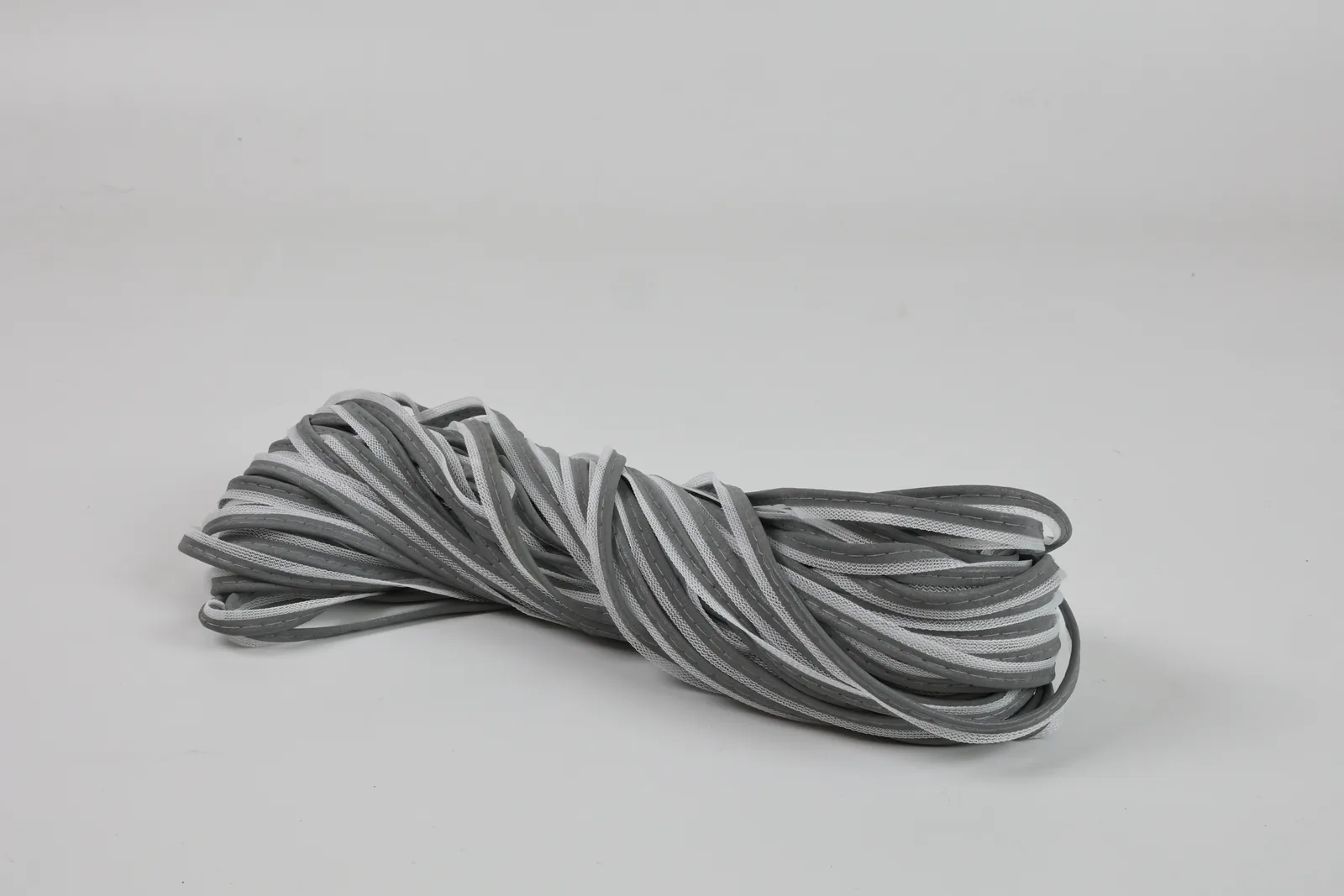
What reflective piping is
Reflective piping is a sew-on trim for fabric edges or seams. Construction varies by model, including whether it contains a core cord. Ask the supplier to identify the reflective face, carrier or flange, and any core in the selected sample.
For an inserted piping design, confirm how the flange fits between the fabric panels and how much of the reflective edge remains exposed. Distinguish this seam detail from tape applied on a surface or binding wrapped around an edge.
Mark proposed placements, such as harness necklines, jacket back seams or side panels, on the product drawing. Assess the visible profile on an assembled prototype rather than assuming that edge placement establishes visibility from every direction.
Why brands use reflective piping
Reflective trim is used on pet harnesses for low-light visibility. If a contrasting outline is part of the design brief, review its appearance alongside the visibility requirement. Treat pricing and product positioning as separate commercial decisions.
Polymer And Optical Structures: How They Drive Reflective Piping Performance
Polymer Substrate Behavior
Request the selected piping's construction description rather than assuming a universal layer arrangement. Identify the materials used in the carrier, reflective face, bonding system and any core. Where flexibility, adhesion or exposure resistance matters, request evidence for that construction and assess it on the intended assembly. Review harness attachment strength separately from the trim.
Check for separation between the reflective layer and its carrier, and request an investigation if it occurs. Do not assign the cause to the substrate without reviewing the material and process evidence.
Optical Reflection Structure
Ask the supplier to identify the selected optical construction and provide the relevant reflective-performance evidence. Do not rank performance from the technology name alone.
Review the documented components against your sewing process and intended use conditions. Confirm the applicable visibility requirements with the responsible product specialist, then check whether the material evidence and finished-product assessment address them.
How Reflective Piping Tape Is Manufactured
Use the following stages as questions for the supplier, not as a verified production sequence for every piping model. Ask which operations apply to the selected construction and how they are controlled.
Stage 1: Confirm Material Specifications
Confirm the selected construction and material specifications with the supplier before production.
Stage 2: Narrow Fabric Construction
Ask how the carrier or flange is produced and cut. Agree the relevant width, thickness and tolerance requirements, and request records showing how these dimensions will be checked for the order.
Stage 3: Reflective Coating and Lamination
Confirm whether coating or lamination applies to the selected piping and identify the materials involved. Request the relevant process checks and evidence for bond integrity. Do not assume that the harness shell or backing is also part of the piping construction.
Stage 4: Slitting and Cording
Confirm the applicable cutting and cording operations. Agree checks for dimensions, any pattern direction and core placement against the selected product drawing.
Evaluating Reflective Piping Samples: Proposed Review
Types of Reflective Piping to Review
Consider the following categories when requesting samples. Identify the model, color and construction of each sample before comparing them:
- Standard silver reflective fabric piping.
- Elastic reflective piping containing spandex. Assess the selected construction on the intended garment rather than assuming suitability from its composition.
- Colored reflective piping variations.
Key Evaluation Criteria
- Visibility and reflectivity performance.
- Durability under wear and weather exposure. Agree the relevant care and abrasion assessments for the intended use.
- Sewing compatibility and handling.
- Aesthetic integration with pet apparel designs.
- Manufacturing consistency and order readiness. Reliable supply chains require uniform batch quality.
Reflective Webbing Types For Pet Collars, Leashes, And Harnesses
When comparing reflective webbing and piping, identify the function assigned to each component. Review skin contact, structural requirements and reflective performance separately against the intended product brief.
Do not approve a load-bearing function from a reflective trim sample. Where the design assigns restraint loads to webbing or attachment points, obtain the separate evidence required for those components and their assembled connections.
Polyester Reflective Webbing: Request the specified construction and evidence relevant to its proposed function.
Nylon Reflective Webbing: Compare the selected product's strength and abrasion evidence with the design requirements rather than assuming superiority from the fiber name.
Composite Reflective Webbing: Ask which materials are combined and how the assembly is constructed. If stretch components are proposed, assess their implications for fit and structural performance; do not assume that stretch establishes comfort or load-bearing capacity.
Reflective Webbing Vs. Reflective Piping: Key Differences
Optical Performance Remains Independent
Identify the reflective construction of each offered component. Evaluate its documented optical performance separately from strength, attachment and seam requirements.
Selection Guidance
Select components according to their assigned functions and supporting evidence. If webbing is proposed instead of piping, review the resulting changes to profile, attachment, fit and structural requirements before accepting it as a substitute.
Reflective Piping Performance Evaluation: Visibility, Durability, and Weather Resistance
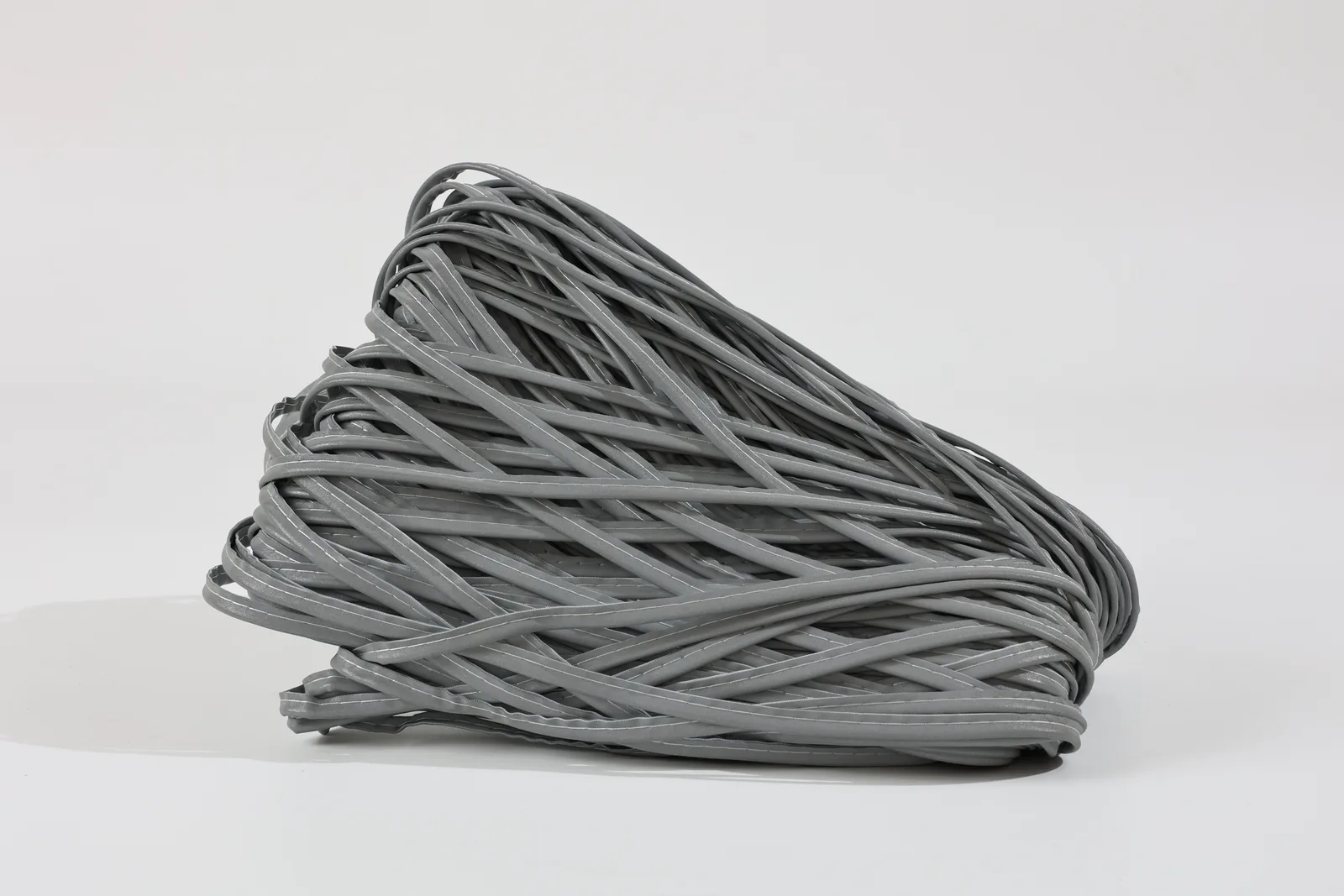
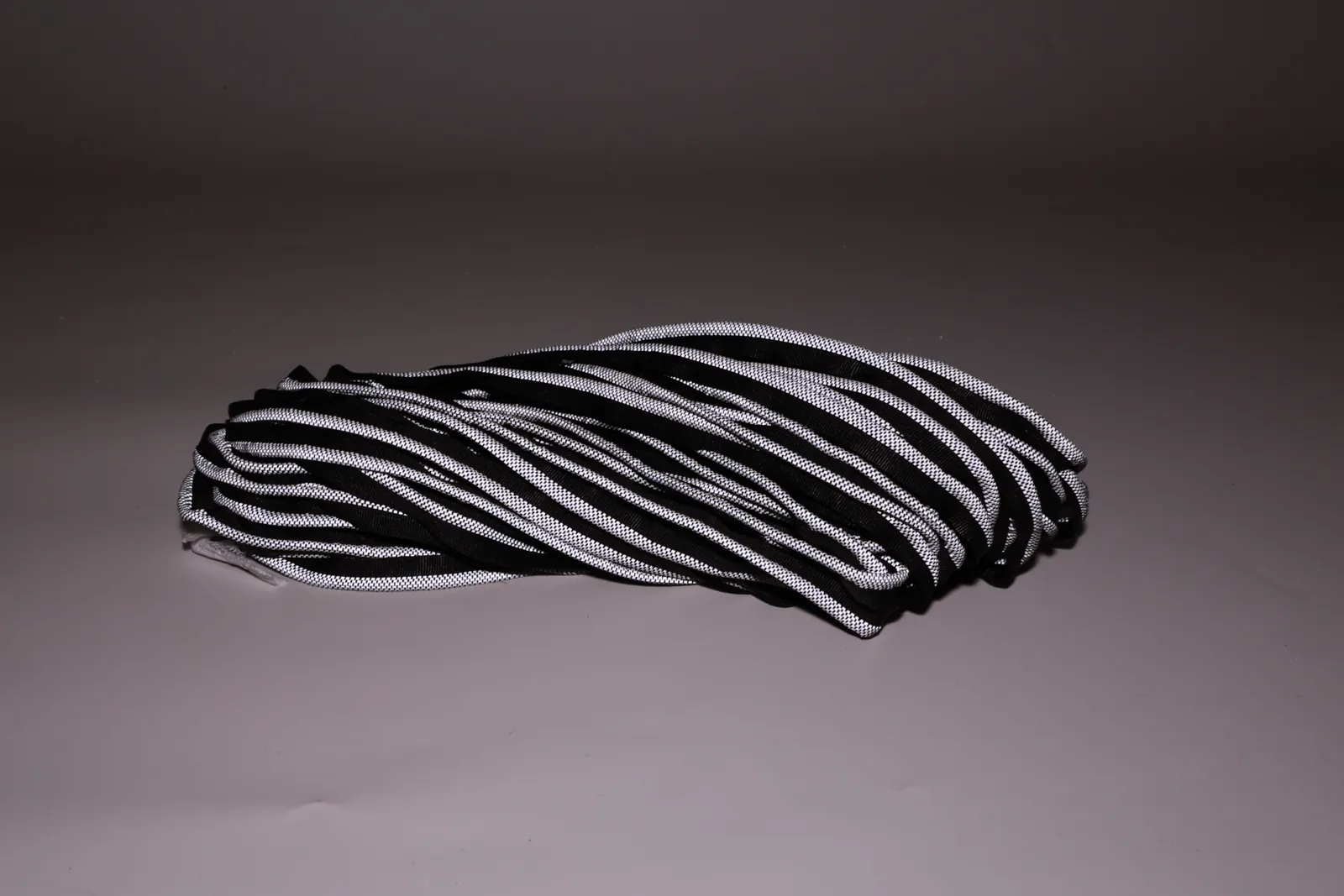
Visibility Performance and Safety Certifications
Evaluate daytime appearance separately from reflective performance. Compare colors against an agreed appearance reference. An informal light-source demonstration can document appearance under that setup, but it does not replace the required reflective measurements.
Record the lighting and viewing arrangement used for any comparison. No reflective material guarantees absolute visibility, and a bright sample photograph does not establish driver recognition or a safe stopping distance.
Request the selected material’s test report, sample identification and measurement conditions. Assess the finished product separately against its applicable requirements.
Durability and Wear Resistance
Identify the contact and movement conditions expected in the finished design. Agree how the following will be assessed and what evidence is needed for acceptance:
- Friction resistance from leash use and repeated movement
- Resistance to bending, folding, and tension
- Surface condition after simulated handling
Weather and Care Performance
Define the intended weather and temperature conditions, and request evidence applicable to the selected assembly. Follow the care label for the selected item and finished garment. Do not infer wet-weather or cold-weather suitability from the material name alone.
Hidden Failure Modes Behind Low-Price Reflective Piping For Pet Apparel
Retroreflective Material Instability
Inspect for uneven reflective appearance, loose surface material and layer separation. Record these as observations for investigation rather than assuming their frequency, cause or relationship to price.
Performance Variance Across Production Runs
Compare identified samples using the same agreed methods. Ask how the supplier will link the approved sample to production material and document any differences in reflective performance, adhesion or color against the acceptance criteria.
Evaluating supplier reliability requires testing samples under the actual use conditions your finished products will encounter, not merely reviewing pricing and visual appearance.
Reading Full Test Reports, Not Certificate Screenshots
Why Full Reports Matter
A test report for a different reflective tape, backing, or coating line does not automatically validate your specific piping order. Suppliers often hold certifications for their standard product lines, but custom constructions—altered thread counts, different substrate materials, or modified adhesive formulations—may fall outside the scope of existing approvals.
What to Require from Your Supplier
Request sufficient documentation to substantiate the proposed claim, not just a screenshot. Review the following information and resolve any unclear scope:
- Report identifier and tested sample description, including any batch or lot reference
- Test methods and stated measurement or environmental conditions
- Results relevant to the claimed performance or care process
- Issuing organization and any accreditation scope required by the buyer
- Test date and any stated validity conditions
- Limitations or exclusions noted by the laboratory
Distinguish a test report from a certificate or declaration. Do not assume that every report has an expiry date or identifies the production lot proposed for your order.
Request documentation during sampling and record unresolved evidence requirements before approving the order.
Sample Material and Construction Review
Outer finish and reflective surface
Inspect the outer reflective surface and record visible inconsistencies with photographs linked to the sample identification. Use the appropriate test evidence to assess reflective performance.
Compare the surface with the agreed appearance and handling reference. A textured surface alone does not establish poor adhesion or predict service life; request an explanation or relevant testing where an observation raises concern.
Compare silver piping with the approved appearance sample under agreed lighting conditions, and record any differences.
Core structure and flexibility
Where the piping contains a core, identify its material and dimensions. Assess bending and profile on the curves used in the intended pattern. Record kinking, stiffness or protrusion for design review without assuming that a particular cord material establishes comfort.
Measure the flange and any core against the agreed drawing. Review overall seam bulk on the assembled prototype, and refer contact or comfort concerns to the responsible finished-product reviewer.
Edge quality and manufacturing precision
Measure the flange width at agreed locations using a documented method. Compare the results with the specified tolerance.
Inspect cut edges and alignment against the approved construction. Check feeding through the intended guide or tooling during the sewing trial rather than assuming that visual inspection establishes workability.
Agree an appropriate flexing or handling assessment before testing. Record surface cracking, separation, loose threads or flange fraying against the acceptance criteria, keeping the sample identification and test conditions with the observations.
Sewing and Manufacturing Workability
Flexibility on Harness Curves and Corners
Run a sewing trial with the intended shell, lining, reinforcement and piping construction. Include the curves, joins and layered transitions used in the production pattern.
Record the machine, compatible foot or guide, needle, thread and settings. Compare the resulting reveal, seam distortion and surface condition with the agreed requirements rather than ranking cord materials by presumed sewing advantages.
If an elastic construction is proposed, assess it on the actual seam. Document any adjustment and repeat the relevant operation before approving the setup.
Needle Penetration and Fraying
Assess whether the flange can be held and fed consistently with the intended equipment. Record edge fraying, stitch formation and surface marking during a production-matched trial.
If feeding or stitch problems occur, review the material, alignment, tooling and setup before assigning a cause. Follow equipment guidance when fitting or adjusting tooling.
Do not prescribe a universal needle size, speed or tension setting from the piping's fiber or coating description. Have the production team establish and retain an acceptable setup for the selected assembly.
QC Checkpoints Across The Reflective Piping Production Cycle
Pre-Production and Material Inspection
Where the piping includes artwork, agree checks for pattern direction, logo position and visible placement against the approved drawing before sewing. Record discrepancies and the required corrective action.
In-Process Control Points
Ask which process checkpoints apply to the selected piping, including bonding checks where relevant. Keep trim inspection separate from the finished harness's structural checks, such as attachment security, reinforced areas and buckle orientation.
Agree finished-product dimensional and fit checks with the responsible design team. Request applicable batch records and confirm how the approved trim and assembly specification will be linked to the bulk order; documentation alone does not establish consistent fit.
Design Versatility and Application
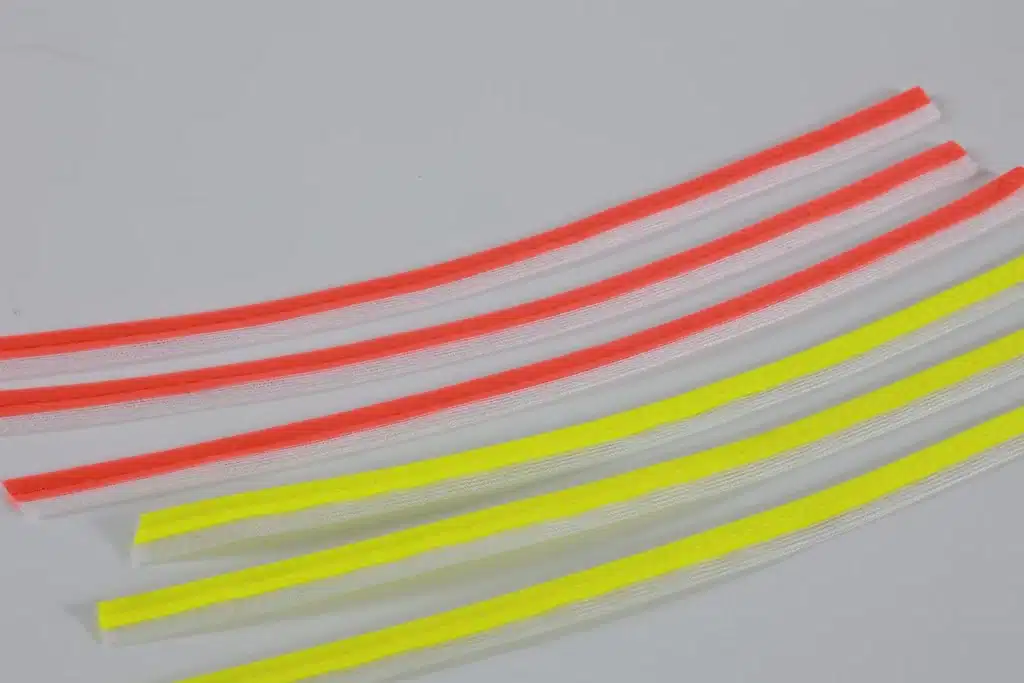
Color Matching and Brand Aesthetics
Compare candidate piping on the selected base fabric, including any lining or reinforcement. Confirm compatibility through the sewn trial rather than assigning a trim type from the shell fabric name alone.
Review daytime color and reflective performance separately. For a changed color or printed surface, request evidence applicable to that version rather than transferring results from an unmodified or differently colored product.
Application on Pet Harnesses
Inspect the proposed route for contact with D-rings, adjustment buckles and other moving components. Check whether hardware or overlapping panels obscure the intended reflective edge.
Select flange dimensions and profile against the actual harness seam stack. Assess feeding, reveal and bulk on the assembled prototype.
Record stiffness, protruding ends or contact points for design review. A piping sample cannot establish animal comfort or restraint safety; those require an appropriate finished-product evaluation plan.
Application on Pet Jackets
Consider hems, collars, sleeves and back panels as placement options, then assess the visible profile on the assembled jacket.
Review the piping's weight and bulk with the intended garment shell and seam construction. Do not assume suitability from whether the jacket is lightweight or insulated.
Include areas of repeated bending in the agreed assessment. Record cracking, distortion or interference rather than predicting failure from placement alone.
Seasonal Material Selection For Pet Apparel
Warm-Weather Constructions
If breathability or moisture management is required, request evidence for the intended assembly rather than inferring it from mesh or perforations.
Rainy-Season Requirements
Define the wet-weather requirements and request applicable evidence. Do not assume that a water-repellent treatment establishes waterproofness or reflective performance during precipitation.
Cold-Weather Specifications
Assess insulation, flexibility and reflective performance as separate requirements for the selected cold-weather assembly.
Ask the supplier to identify the actual backing and reflective construction offered, then review the relevant evidence against the intended seasonal use conditions.
Manufacturing, Sourcing, and Purchasing Considerations
MOQ, sample lead time, and production readiness
Agree the required adhesion and reflective-performance checks for the selected material. Request order-specific minimum quantities, sample dates and production milestones. Confirm stock availability and customization dependencies rather than assuming that standard widths are held in inventory.
Customization options
Specify the required profile, color reference and reflective performance, and ask which customization options are available. Agree how the selected color system and physical sample will be used for approval; a color reference alone does not establish consistency across different fabrics or batches.
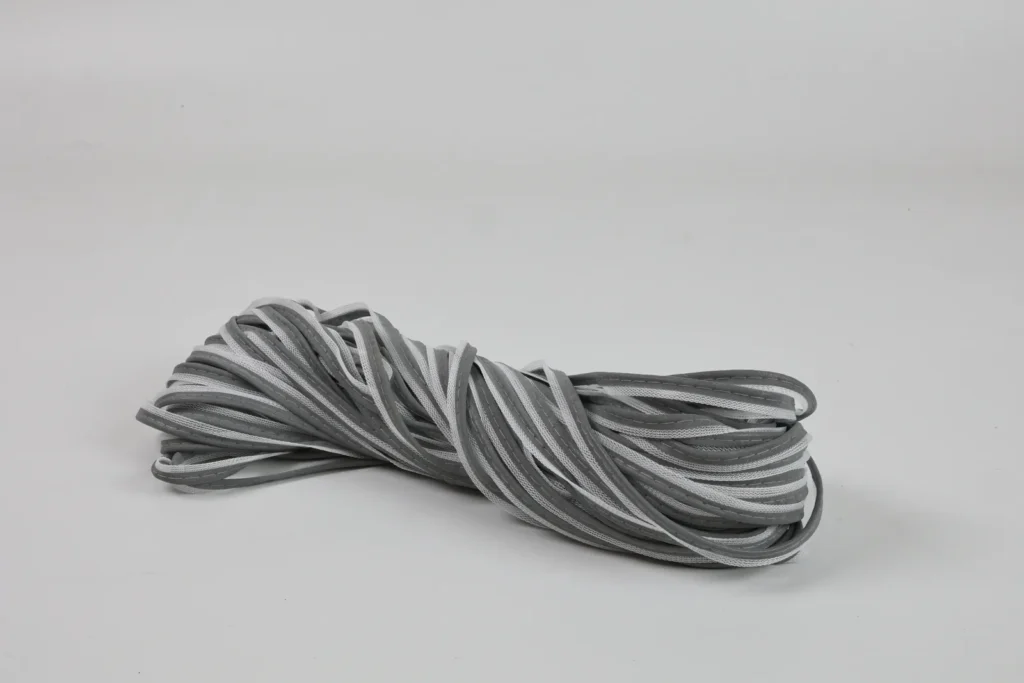
The MAX website lists MP0104 (High Luster’s Elastic Reflective Piping) as polyester and spandex, in Gray / Silver luster, with a customizable width of 15–30 mm. Separately, MAX’s reflective-piping category FAQ lists logo and pattern printing, recommending simple, single-color geometric designs and a wider reflective surface to facilitate print registration.
Quality control questions to ask the supplier
Demand transparency from your supply partner. Ask specific questions before placing bulk orders:
- How do you ensure consistency across sample and production lots?
- What testing standards support your compliance claims?
- What are your replacement, defect, and tolerance policies?
Possible limitations
Review seam bulk, stiffness, surface distortion and any differences between the unsewn and assembled sample. Do not infer reflective performance from softness or appearance. Confirm the selected model’s specification and assess a representative sample before production.
Who Should Consider This Product
Best-fit buyers include pet apparel brands and private-label retailers. Integrate piping into specific product categories:
- Night-walk harnesses
- Outdoor and rain jackets
- Seasonal safety collections
Reject or request revisions on any sample that fails brand finish standards, flexibility requirements, seam integration, or minimum reflectivity benchmarks.
What to verify before ordering
Before issuing an RFQ, define the required dimensions, reflective coverage, color and tolerances, along with any strength requirement relevant to the component's assigned function. Agree appearance-comparison conditions and the supporting evidence needed. Then conduct a final review before issuing purchase orders. Evaluate the following criteria:
- Sample appearance and hands-on feel
- Reflective performance in real-world lighting
- Compatibility with target garments and sizing
- Unit cost versus perceived value
- Production consistency and supply reliability
- Potential margin impact and retail appeal
Verifying Supplier Credentials and Quality Assurance Practices
Request Third-Party Test Documentation
Before committing to a bulk order, require full retroreflectivity test reports.
Distinguish Between Manufacturers and Traders
Verify whether your potential supplier operates their own production facility or acts as a middleman.
Conduct Physical Sample Testing
Request sample piping sewn onto actual pet harness or jacket prototypes in your intended colors and materials.
Review Batch Quality Control Data
Ask suppliers for applicable batch QC procedures and representative production records. Review how the records identify the material, methods, acceptance criteria and results, and how these controls will apply to your order.
Supplier Vs. Trading Company: What Buyers Must Know
Ask the supplier which production stages it performs and which are handled by other parties. Confirm who is responsible for specifications, traceability, inspection and resolving discrepancies, rather than inferring control from the supplier's business label.
Verification Checklist:
- Ask for lamination and coating process documentation specific to your piping specification.
- Demand access to internal batch QC records, not aggregated supplier certificates.
- Request references from other OEMs using the same production line.
Evaluate the proposed supplier relationship through documented responsibilities, access to relevant evidence and agreed communication procedures. Do not assume that a sourcing channel guarantees faster resolution or better quality.
Red Flags When Sourcing Reflective Piping
Pricing Anomalies Without Justification
Compare quotations on the same specification, quantity, customization and delivery basis. An unexplained price difference warrants questions about scope and material evidence, but does not by itself establish a hidden defect or superior quality.
Certificate Screenshots Instead of Full Test Reports
A certificate image or partial report may leave the proposed claim unresolved. Obtain enough documentation to review the tested sample, methods, results and limitations. Confirm the link to the offered material rather than assuming that a full report necessarily contains order-specific batch data.
Mismatched Test Documentation
A test report for a different reflective tape, backing, or coating line does not validate your specific piping order.
Frequently Asked Questions
What specific evaluation metrics should manufacturers check before approving colored reflective piping for bulk production?
Review reflective-performance results alongside the tested sample identity, method and measurement conditions. Agree any adhesion assessment and dimensional tolerances for the selected construction rather than imposing an unsupported universal test unit or threshold. Record the evidence and sewn-trial results before approval.
How should suppliers evaluate piping on different harness constructions?
Identify the actual shell, lining, reinforcement and seam stack rather than assuming the complete construction from a material name. Trial the piping on the intended assembly and record its profile, feeding behavior and surface condition. Assess fit, attachments and load-bearing requirements separately from the trim.
Should pet harness manufacturers choose polyester or nylon substrate for reflective piping, and what durability trade-offs exist?
Compare nylon and polyester substrates for flexibility, abrasion resistance, dimensional stability and cost rather than assuming either is preferable for every design. Request comparative durability data from suppliers on your specific harness construction.
How should buyers investigate concerns in reflective piping samples before bulk commitment?
Record visible inconsistencies, separation, fraying or sewing problems against the agreed criteria. Do not infer their cause or reflective-performance impact from appearance alone. Request applicable testing or a supplier investigation, and confirm how representative production material will be checked against the approved sample.
How should a manufacturer validate that a reflective piping sample's color will match approved Pantone references across different lighting conditions before production?
Agree a physical appearance reference, viewing conditions and acceptance method with the supplier. If instrumental color measurement is required, define the method and tolerance before comparison. Link the approved reference to the order specification and representative production material. Review any changed color, construction or process before applying the earlier approval.

Related blogs

Colored reflective piping MP0102

Regular silver reflective edging piping MP0101

High luster’s elastic reflective piping MP0104

Grid style reflective heat transfer vinyl piping MP0107
Related products

Common Reflective Piping Problems and How to Avoid Them

Healing the "Hidden Wounds": Scaling Quality in Reflective Piping Production

Reflective piping FAQ


