

To compare polyester vs T/C reflective piping backing, identify the complete construction, trial both candidates on the intended seam and review the required care evidence. Select against the buyer’s acceptance criteria. The backing name alone does not establish which sample will sew better or last longer.
This polyester vs T/C reflective piping backing decision is made at the specification stage, not after the first bulk run.
What Reflective Piping Backing Materials Are and How They Work
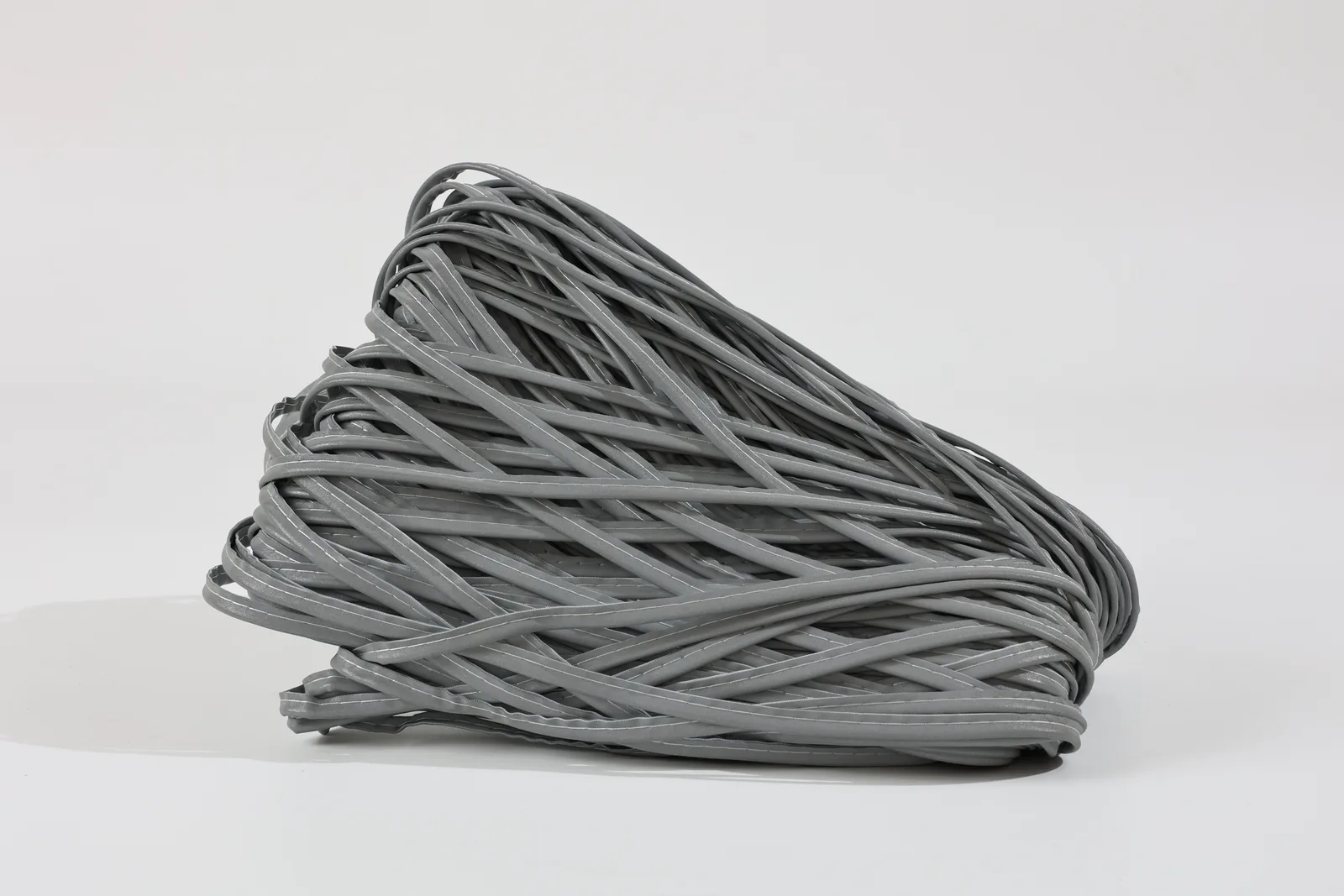
Reflective piping is a sewn trim with a reflective face and a carrier construction. Identify the selected assembly and its intended placement before comparing backing options. Optical performance and durability require product-specific evidence.
Core Architecture of Reflective Piping
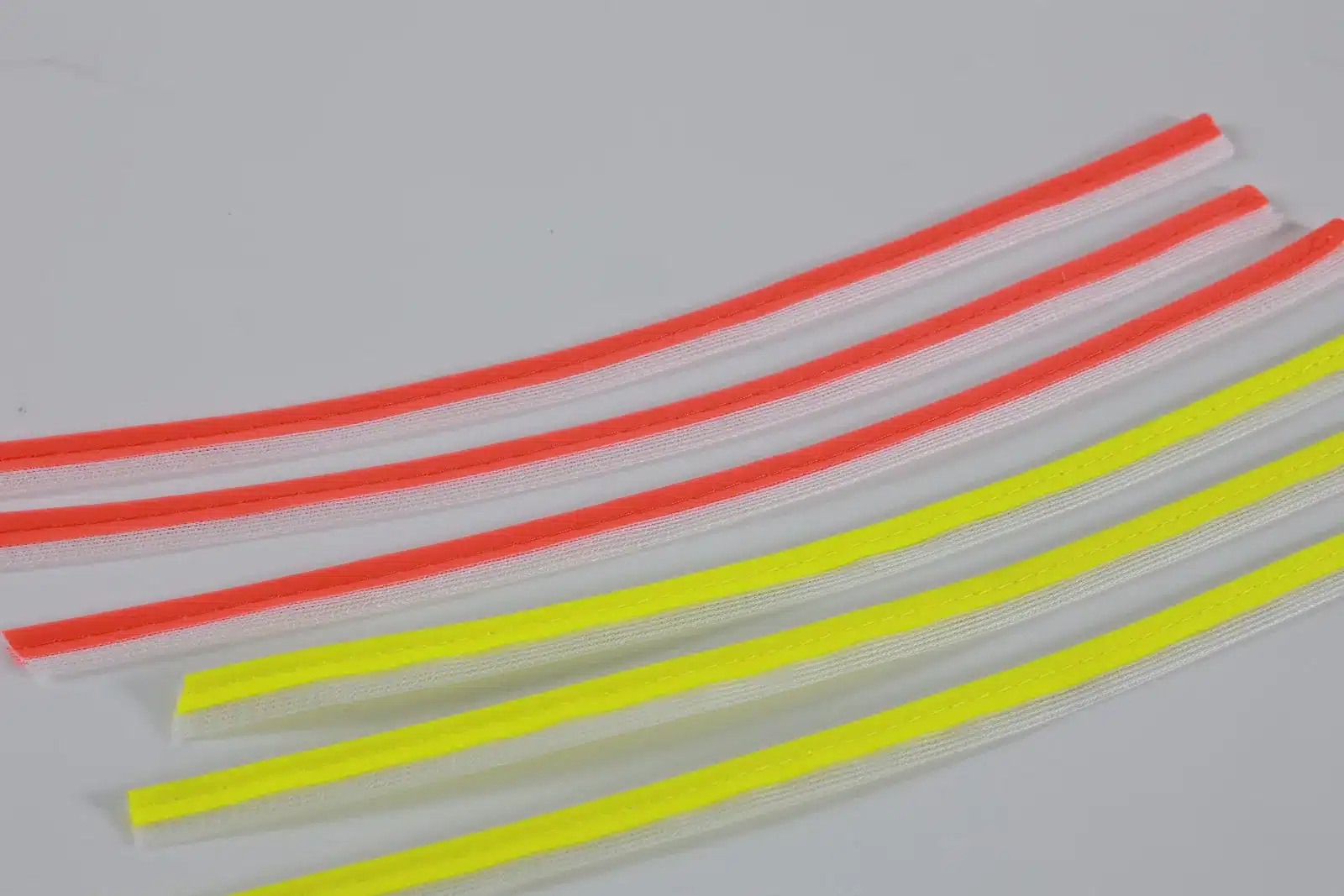
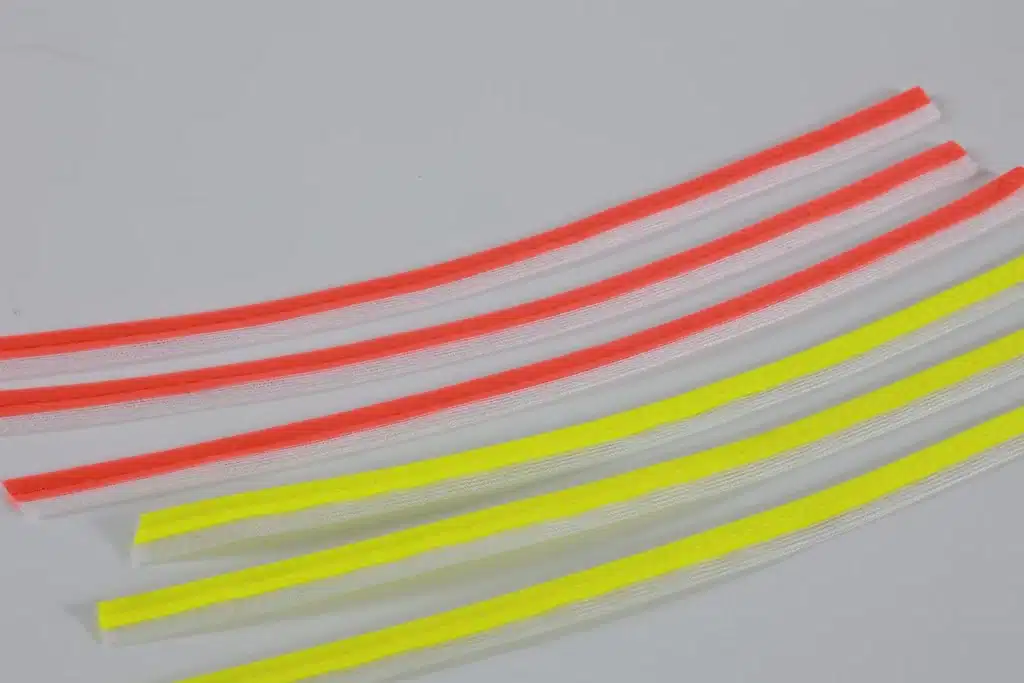
Identify the actual construction before comparing backing names. A piping assembly may combine a reflective face, a textile carrier and a cord, while some constructions are flat. The material layers and bonding method depend on the selected product. Ask for a cross-section or drawing showing the visible edge, sewing flange and any core.
Do not confuse the reflective fabric backing with a separate flange or mesh carrier. A product described as polyester/cotton may refer to one layer rather than the complete assembly. Record which layer the composition statement covers, how the reflective face is attached and which edge will be sewn into the garment. This avoids comparing unlike constructions under a single backing label.
Material Composition and Physical Properties
Polyester Backing Characteristics
Polyester backing identifies the fiber family; it does not by itself establish weave, coating, thickness, stiffness or sewing behavior. Ask the supplier to identify the backing composition separately from the cord, flange and reflective face. Confirm whether the description applies to the complete piping assembly or only the reflective fabric.
Examine a representative sample for handling and feed behavior on the intended shell fabric. Record whether it holds the required fold, drapes around the seam curve and feeds without slipping or marking. If the strip feels firm or slick, treat that as a property of the sample being assessed, not a rule for every polyester-backed product.
When considering polyester backing for workwear, hi-vis vests, outdoor sportswear, or bag trim, confirm suitability against the specific product requirements.
Checks to include:
- Verify mechanical performance against the buyer’s requirements.
- Inspect the finished seam shape on representative curves.
T/C (Tetron/Cotton) Backing Characteristics
T/C (Tetron/Cotton) is a polyester-cotton blend construction; confirm the blend ratio and finish, and evaluate hand feel and heat behavior for the selected backing.
Request the layer that the blend specification describes; the abbreviation alone does not define the complete piping structure or its performance. Compare the finished assembly, including the reflective coating, bond, flange and any cord.
Cotton content is a reason to investigate handling and care behavior, not evidence that a candidate is automatically softer, cooler or easier to sew. Assess hand feel, edge behavior and drape on the intended shell fabric. For a skin-adjacent placement, evaluate the completed seam, since exposed edges, seam bulk and garment fit also affect contact.
Use the same sample review procedure for T/C and polyester candidates. Record the observed differences and their production implications. Where a buyer needs specific comfort, care or dimensional performance, obtain the applicable documentation and trial results before choosing either backing. A blend name cannot substitute for those acceptance criteria.
Why the Backing Choice Matters: Regulatory, Safety, and Workflow Consequences
Regulatory Standards and Performance Thresholds
Review bond integrity and dimensional stability where they are part of the applicable product requirements. Match each test result to the actual material, construction and conditions assessed. Confirm finished-garment requirements with the responsible assessor; a backing description or trim test does not by itself establish garment compliance.
Manufacturing Workflow Propagation
An unsuitable material and machine combination can create handling or quality problems. Compare trial results before assigning the cause to backing composition. Record the operation, setup, observed defects and corrective actions so any production decision has a traceable basis.
Sewing Performance and Manufacturing Efficiency: Polyester vs T/C on the Production Floor
Stitching Efficiency and Needle Performance
Evaluate needle penetration for each candidate backing; validate needle type, size, and speed in a sewing trial before bulk production.
Compare candidates on the same fabric stack and seam design before attributing a difference to backing composition. Begin with equipment-compatible needles, thread and tooling, following the machine and material guidance. Keep the setup record with each sample so the team can distinguish a material change from a machine adjustment.
Observe feed stability, strip tracking, stitch formation and surface marking. If slippage or puckering occurs, check alignment, flange support, tension and the interaction with the shell fabric. Change one variable at a time and document the result. Neither a cotton blend nor a polyester label establishes a universal feed advantage.
If needle heating, skipped stitches or thread breakage is suspected, stop and investigate the complete setup. A larger needle eye or sharper point is not an automatic remedy; the selected needle system and point must suit the equipment, thread and material stack. Do not infer a safe production speed from the backing name.
Check straight runs, curves and thickness transitions that represent the actual operation. Record operator corrections and rejected seams using an agreed observation method. Compare productivity only after both candidates meet the same appearance and seam acceptance requirements; faster sewing with unacceptable samples is not a useful production result.
Edge Stability and Fraying Control
Inspect the cut edge before sewing and again after handling and the specified care assessment. Record loose yarns, edge distortion and changes around the stitch line. Blade condition, cutting method, coating and construction can influence the result, so do not rank fraying resistance from fiber content alone.
Trial the piping on the lightest or most difficult shell fabric in the intended range. Check whether the layers creep, whether the seam puckers and whether the visible reveal remains consistent. Agree the permitted variation with the buyer rather than assuming either backing will produce flatter seams.
For curves and corners, compare the assembled piping profile and bending behavior. A useful candidate should follow the intended geometry without requiring the operator to stretch or force it into position. Confirm that result on samples before selecting a backing for armholes, yokes or other curved placements.
Compatibility with Shell Fabrics and Garment Types
Use the shell fabric as a trial condition rather than an automatic backing-selection rule. Matching fiber names does not establish compatible drape, moisture behavior or seam stability. Compare actual weight, stretch, finish and thickness together with the piping profile.
- For a lightweight synthetic shell, inspect distortion, slippage and visible seam bulk with each candidate.
- For canvas, denim or another heavier woven shell, check fold formation, needle clearance and transitions through layered sections.
- For stretch applications, assess the complete assembly and its recovery under the intended use conditions.
- For skin-adjacent placements, inspect exposed edges and evaluate contact in the finished garment.
Retain the accepted assembly and document the relevant observations. Do not apply a backing decision from one shell fabric to a different construction without checking the new combination.
Production Consistency and Quality Control
Treat batch consistency as a supplier and product question for both backing types. The presence of one fiber family or a blend does not establish which supplier will hold tighter tolerances. Ask how the selected construction is identified and how changes to materials or processing are communicated.
Define incoming checks around the approved specification. These may include the identified model and lot, width and profile, color and surface appearance, flange condition, and evidence for the required performance tests. Agree the sampling approach and acceptance limits with the buyer and supplier; this guide does not set universal tolerances.
Use a representative sewing trial when a new lot or material change could affect the operation. Compare it with the retained assembly under the documented setup. Investigate differences in feeding, surface marking, seam shape or post-care appearance before releasing material into the production run.
Apply the same evidence requirements to both polyester and T/C candidates. Neither should receive a reduced inspection plan merely because of its fiber label. Keep the supplier’s test documentation linked to the exact product and lot where applicable, and record any limitations in the test conditions.
When a result is outside the agreed criteria, hold the affected material and document the discrepancy. Confirm corrective action with the supplier and reassess the sample before release. Traceable observations are more useful than an unsupported assumption that one backing type is inherently more consistent.
Durability and Wash Care Performance: How Each Backing Holds Up Over Time
Home Laundering vs. Industrial Wash Resistance
Inspect bonded constructions for separation between layers, changes in appearance and damage around the seam. Confirm the reflective technology and construction of the selected material; not all piping uses the same coating or layer arrangement. Compare results after the agreed care assessment with the retained untested sample.
For garments cycled through commercial cleaning, backing adhesion behavior should be verified against the care label and the specific program's wash protocol.
Tear Strength and Wear Resistance
Assess mechanical loading at the intended seam location using the buyer’s requirements. The piping, stitches and adjacent shell form an assembly, so examine the completed seam rather than treating backing tensile strength as the only determinant of durability.
Cost-Effectiveness, Sourcing, and Supply Chain Factors
Raw Material and Production Costs
Compare current quotations for equivalent specifications and order conditions. Backing name alone does not establish which option costs less. Ask each supplier to identify the product construction, quantity, customization, packaging and delivery scope included in its price.
Separate quoted unit price from costs observed in your own trial. Record material use, rejected samples, operator corrections and any additional processing needed to meet the same acceptance criteria. Do not assume that a cotton blend reduces rework or that polyester always gives a lower total cost.
Where the quotation or trial conditions differ, make the difference visible before drawing a conclusion. A cheaper offer may describe another width, coating, care specification or service scope. Use the approved sample and written specification as the comparison baseline, then confirm the commercial terms for the selected order.
Supplier Availability and Lead Time
Availability depends on the supplier’s current inventory, selected construction and order requirements. Ask whether the quoted material is stocked or made to order, and identify which approvals or inputs must be complete before the delivery schedule starts. Do not assume a shorter lead time solely because a backing is polyester.
For either candidate, confirm how color, width or construction changes affect sampling and production planning. Request a schedule tied to the agreed specification and quantity, with responsibilities for sample approval and any required documentation.
If the order depends on matching an earlier lot, provide the retained sample and relevant specification. Ask the supplier to confirm what will be matched and how differences will be handled. Verify supply and timing directly rather than inferring stock availability or process capability from the backing description.
Minimum Order Quantity and Customization
OEM and private label buyers should confirm order conditions for each candidate directly with the supplier. MAX's reflective piping FAQ states that standard silver or stocked colors have no fixed MOQ, while custom colors and non-standard specifications depend on upstream reflective fabric minimums; confirm terms for the specific order. Neither polyester nor T/C should be assumed to have a lower MOQ without a current quotation.
Buyers should confirm MOQ thresholds, colorway minimums, and lead time for custom widths directly with their supplier before finalizing the product specification — these variables shift between suppliers and can affect launch timelines if they surface late in the development cycle.
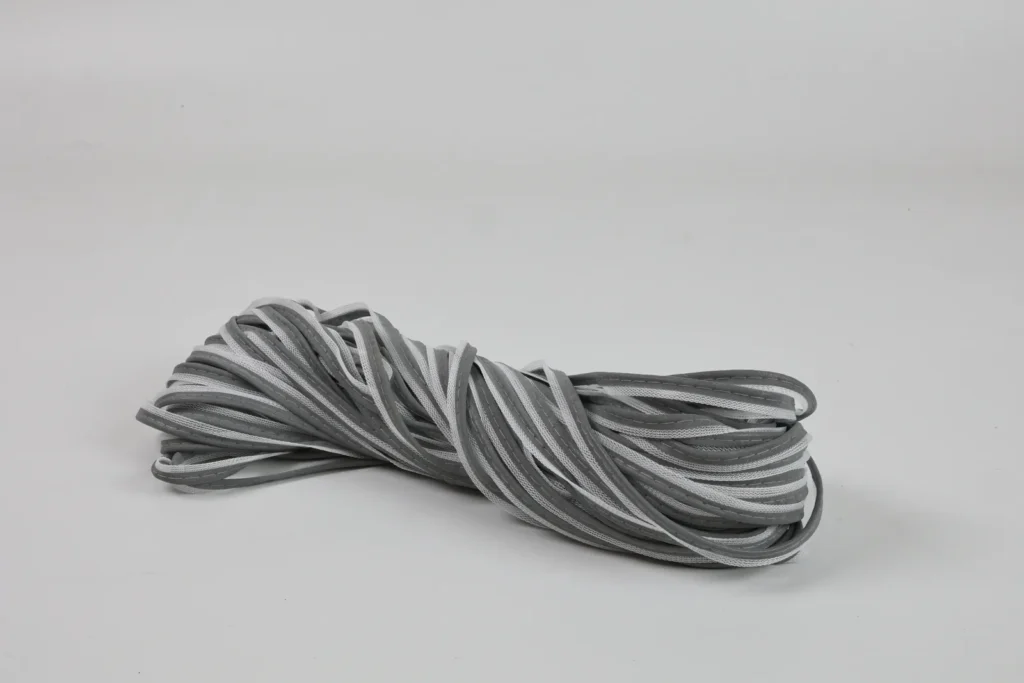
For an order inquiry, MAX’s product page lists MP0104, High Luster’s Elastic Reflective Piping, with polyester & spandex material, Gray / Silver luster’s colors, and a customizable width of 15–30 mm. The page describes elasticity, softness and flexibility, naming yoga pants, running tights and sports bras as applications. These listed material, color and width options provide a model-specific starting point for the inquiry. This website description is not verified test evidence. MP0104 is an elastic construction and should not be treated as a controlled comparison between polyester and T/C backings. Ask MAX to identify the candidate backing construction and required supporting documentation for your order.
Compliance and Buyer Specification Checklist
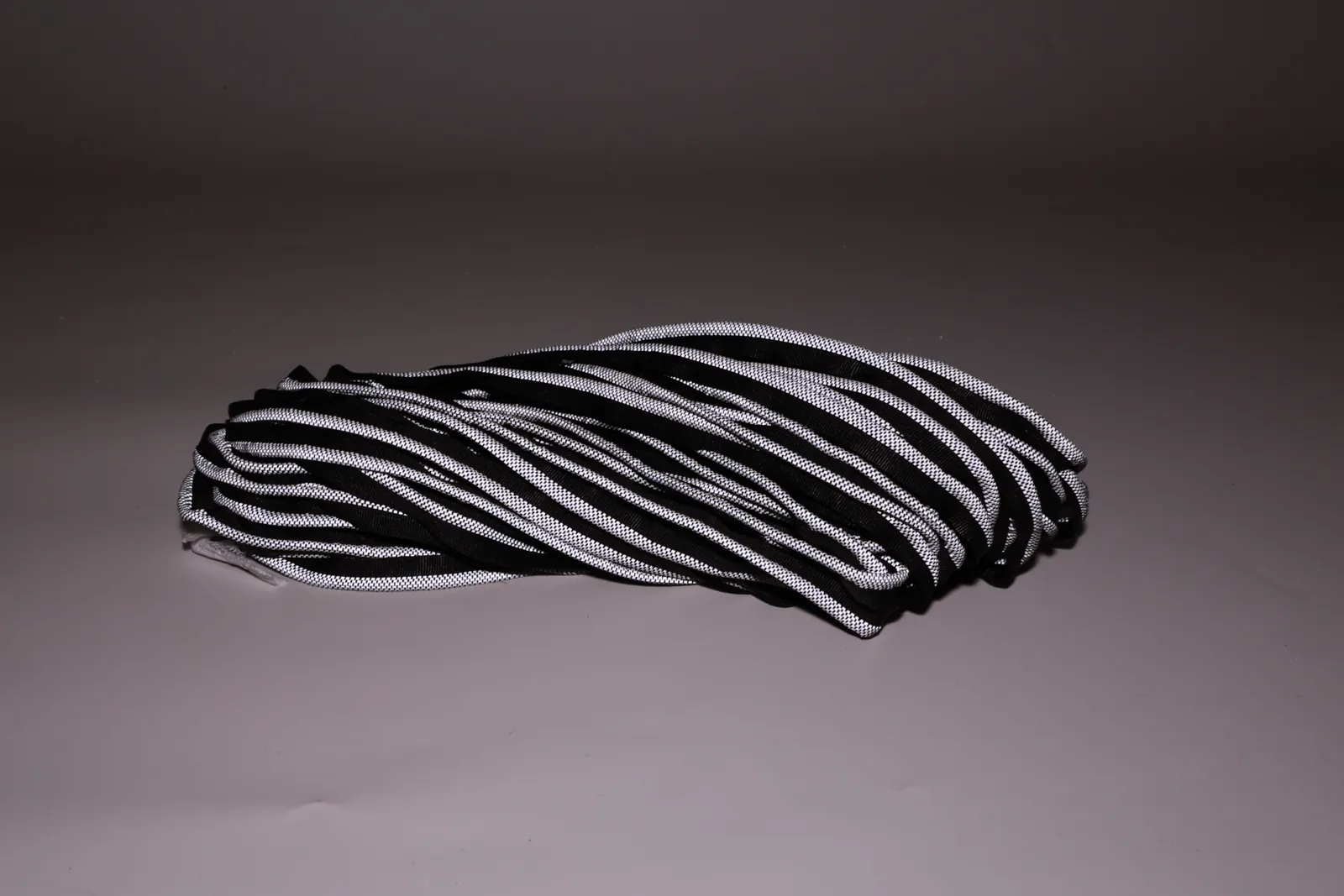
Target Market Standards and Compliance
For programs specifying EN ISO 20471 or ANSI/ISEA 107, ask the responsible assessor which requirements apply to the proposed piping and finished garment. Obtain documentation for the selected model, color and construction. Do not assume that a narrow trim counts toward a required area or that backing composition establishes certification.
Confirm which standard your end customer requires — EN ISO 20471 for European markets or ANSI/ISEA 107 for North American programs — before selecting a backing, as approval under one does not satisfy the other.
Eco-certification requirements add another layer. If a buyer requests recycled polyester (rPET) backing, confirm the material documentation for the selected product. If OEKO-TEX certification is required, request the certificate and verify its validity and scope for the selected backing. Verify which certification your buyer's program actually requires — rPET and OEKO-TEX address different concerns and are not substitutes for each other.
Request the full technical specification sheet from your buyer before finalizing backing selection, as branded programs often add wash cycles, color fastness thresholds, or approved supplier requirements beyond published standards.
Performance Requirements to Define in Advance
Define mechanical wear and abrasion requirements in relation to seam placement and garment end use. Ask which abrasion or durability assessments the buyer requires, and compare representative assemblies under those agreed conditions. Placement is an input to assessment, not proof of a universal wear ranking.
State the intended visibility function and applicable evidence requirements before comparing candidates. If a buyer proposes counting piping toward a garment requirement, obtain the assessor’s determination for that design. Identify the product and conditions in any post-care test report, and do not transfer results from a different trim or assembly.
Quality Documentation to Request from Suppliers
Request full material composition details in writing. This means fiber content percentages for the backing, adhesive type, and reflective film construction.
- Pre-production sample approvals with signed-off color, width, and reflective performance benchmarks
- Lot traceability records linking each production batch to its raw material inputs and test results
Lot traceability allows rapid isolation of affected batches when field quality issues arise. Suppliers unable to provide this documentation introduce compliance risk into your production line.
Polyester vs T/C Reflective Piping: Choose Backing for Your Sewing Line
Selecting the right backing before a single meter is cut requires a structured evaluation across end use, substrate, process, and cost.
Step 1: Define the Product's End Use
Define the garment type, placement and intended exposure. Record the shell fabric, seam geometry, contact with the wearer and required appearance before requesting samples.
- Confirm the comfort requirements for the selected garment and seam placement.
- Confirm the mechanical durability and visibility requirements for the intended use.
- Request the applicable care and test documentation for the selected material and finished assembly.
Use these requirements to select the trial conditions and evidence checklist. Do not begin with an assumption that either backing name establishes suitability.
Step 2: Evaluate the Fabric and Sewing Process
- Fabric weight and hand: Compare fabric weight, finish, stretch and hand against the actual piping assembly. Check whether the chosen profile creates excess bulk or distortion in the intended seam. Matching fiber content alone is not an acceptance criterion.
- Machine speed and needle type: Use the documented needle, thread, foot and feeding arrangement for each trial. Confirm equipment compatibility before making changes, and follow the equipment manual when adjusting or servicing the machine. Record any changes needed for a candidate to meet the seam requirements.
- Seam construction: Include representative curves, joins and layered transitions. Check the visible reveal, stitch formation and reflective face after sewing. Confirm that the backing width and edge stability suit your seam type before committing to bulk.
If a defect appears, investigate alignment, material handling and the setup before assigning the cause to the backing label.
Step 3: Analyze the Substrate Before Comparing Cost or Wash Performance
Use the shell and seam design to define what the sample comparison must resolve.
| Sample condition | Compare on both backing candidates |
|---|---|
| Lightweight synthetic shell | Distortion, feeding, seam bulk and finished appearance |
| Heavier woven shell | Fold formation, layered transitions and edge condition |
| Curved placement | Tracking, even reveal and the need for operator correction |
| Care requirement | Evidence and results for the selected product and finished assembly |
Record an observation against each relevant condition. The table is a trial checklist; it does not assign a backing type to a fabric family or establish a performance guarantee.
Step 4: Compare Cost Against Performance
Unit price is the wrong metric; evaluate total cost across the production cycle and the product's full service life.
Before approving a backing on cost grounds, ask: what is the failure-rate risk, and what does one rework cycle cost in labor and material? If those answers are uncomfortable, the cheaper backing is not actually cheaper.
Step 5: Determine the Right Backing for Your Product Line
Choose the candidate that meets the documented requirements on the complete assembly. Keep the decision tied to evidence from the actual shell fabric, seam design and care conditions rather than to a general ranking of polyester and T/C.
For a lightweight garment, prioritize acceptable seam shape and handling on the selected shell. For a heavier construction, compare bulk transitions, fold formation and the finished profile. For skin-adjacent placements, include the completed seam in the comfort assessment. For a stretch design, review the complete assembly under the intended use conditions.
Record the reason for selection alongside the retained sample. State which requirements were demonstrated, which documents were reviewed and which supplier confirmations remain outstanding. If both candidates meet the same criteria, compare current commercial terms and the practical results of the production trial.
Do not extend that choice automatically across the product line. A new shell, revised seam geometry or different care requirement may change the outcome and should trigger a proportionate reassessment.
Step 6: Test Samples Before Bulk Order
Wear testing confirms that the backing performs as expected against the body. Have operators or end users wear the sample garment through a representative shift and report on comfort at the seam line — stiffness, ridge effect, and breathability are the variables most likely to surface at this stage.
Sewing-line trials confirm processability under production conditions. Feed the sample backing through your actual equipment at production speed, with your standard needle and thread combination, and measure first-pass yield, thread breakage rate, and operator correction time. Approval criteria should include a maximum acceptable puckering rate, a thread-break threshold per hundred meters, and a dimensional tolerance check on finished seam width. If the sample does not meet those criteria, resolve the issue at trial stage — not after bulk material has been cut.
Choosing the Right Backing Is a Production Decision, Not a Preference
Choose the backing that meets the agreed requirements on the actual assembly. Keep the specification, retained sample, trial record and supplier documentation together so repeat orders can be checked against the same basis.
Before committing to a full production run, request physical samples from your supplier, run them through your actual wash and press conditions, and evaluate how each backing behaves on your specific sewing equipment.
Frequently Asked Questions
How should I assess backing for cold-weather or high-heat applications?
Do not assume that T/C outperforms polyester in extreme temperatures. Request evidence for the selected material and the intended temperature exposure. Check the complete assembly and any protective requirements with the responsible specialist. Do not infer heat protection or cold-weather suitability from the presence of cotton or polyester.
How do I know if my chosen backing will maintain reflectivity after the garment's expected wash and wear cycle?
Validate wash and care performance against the specific product's test protocol and the garment care label. Request retroreflection retention data (measured in candelas per lux per square meter) after the specific number of wash cycles your garment will experience.
Does my choice of polyester or T/C backing affect compliance with ANSI/ISEA 107 or EN ISO 20471 standards?
Do not infer compliance with ANSI/ISEA 107 or EN ISO 20471 from backing type or initial reflectivity alone. Confirm the applicable requirements and test documentation for the selected trim and complete garment assembly.
Can I switch from polyester to T/C backing mid-production without re-qualifying my sewing line, or do I need to run new needle and tension tests?
Assess the proposed change before releasing bulk material. Compare the new backing on the actual seam and equipment, checking whether the documented setup still meets the acceptance criteria. Record any required adjustments and sample results. Do not assume that every change requires a different needle or that unchanged settings are automatically suitable.
Should I use reflective piping (sewn fabric) or heat-transfer reflective tape, and how does backing material factor into that decision?
Reflective piping is a sew-on product, not a heat-transfer tape; a TPU reflective layer does not mean the finished piping can be heat-applied to a garment. Backing material choice matters only within the sew-on category. Evaluate the application first, then select backing.

Related blogs

Regular silver reflective edging piping MP0101

High luster’s elastic reflective piping MP0104

Common Reflective Piping Problems and How to Avoid Them

Sewn type VS High-frequency hot-pressing type reflective piping
Related products

Healing the "Hidden Wounds": Scaling Quality in Reflective Piping Production
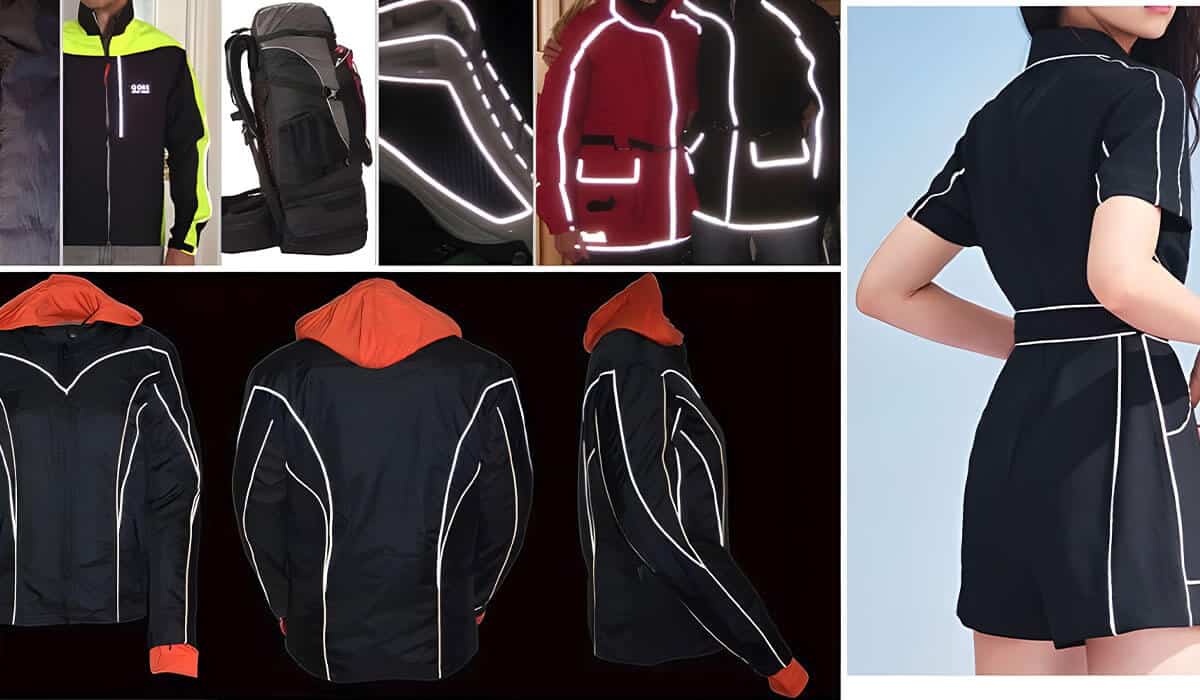
Reflective Piping for Clothing

Reflective piping FAQ


