Reflective Piping for Clothing
MAX Reflective Accessories Design Director
What is reflective piping for clothing — and why is it everywhere?
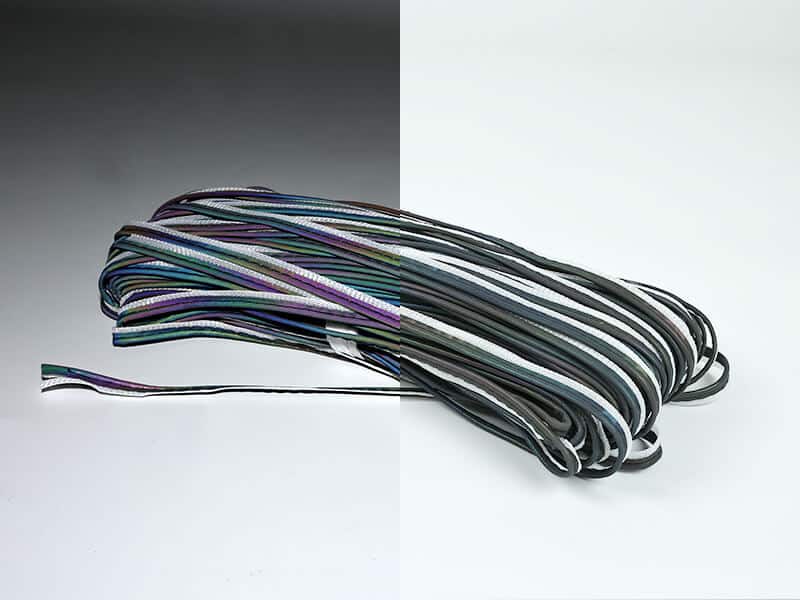
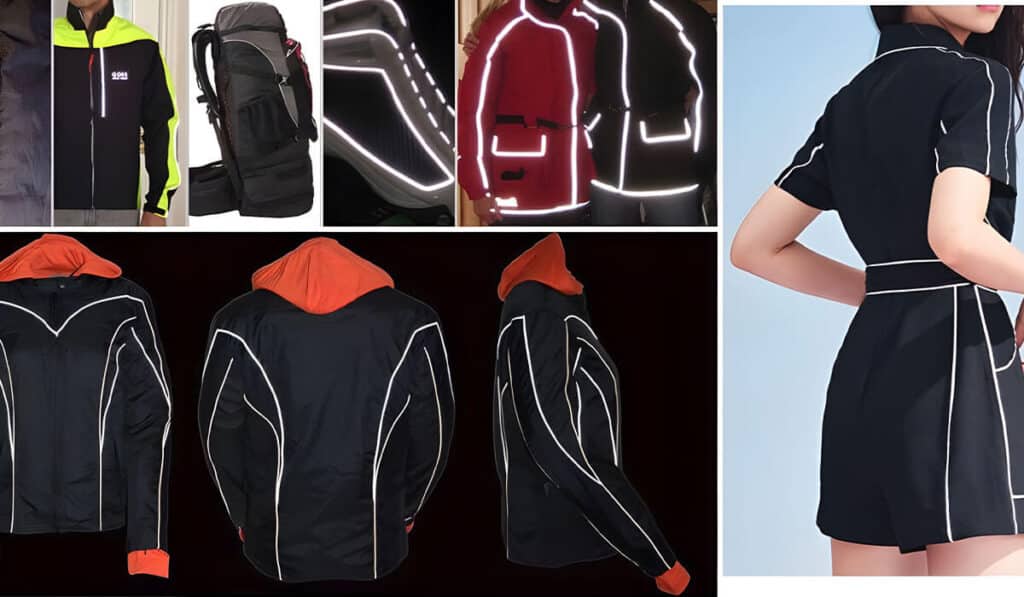
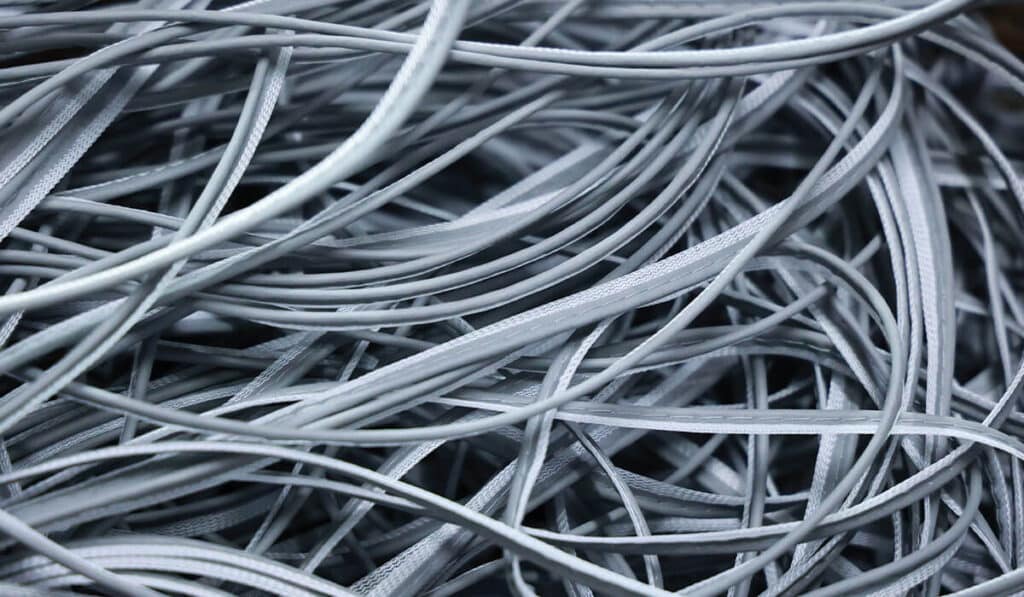
Walk through any outdoor gear aisle or scroll a running apparel brand’s lookbook and you’ll notice it immediately: thin, luminous strips sewn along seams, collar edges, and sleeve cuffs. That’s reflective piping — sometimes called reflective trim, reflective binding, or reflective edging — and it has quietly become one of the most sought-after functional details in modern garment construction.
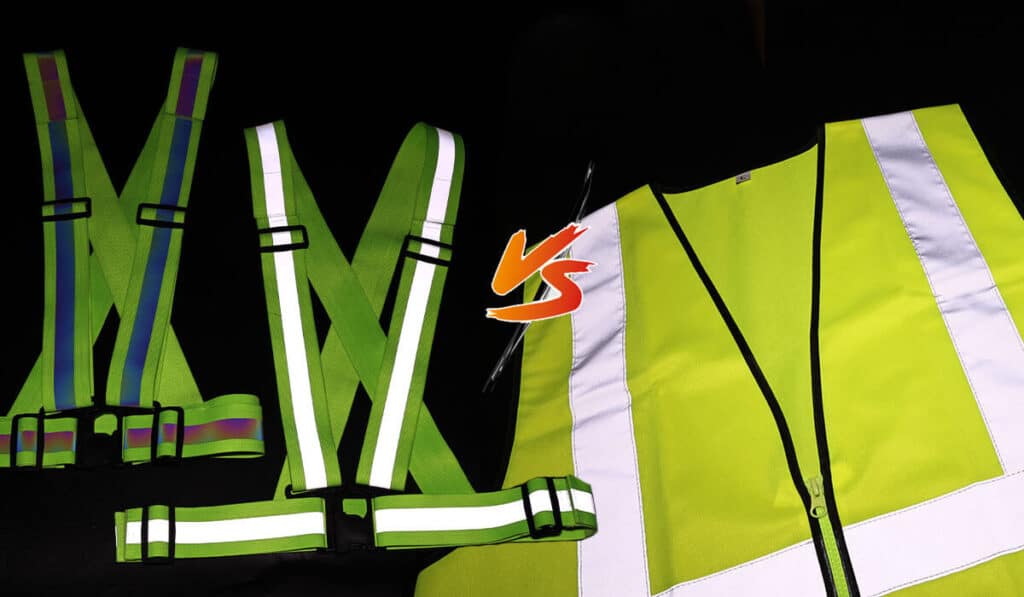
Unlike the wide, boxy reflective panels you might associate with old-school safety vests, reflective piping for clothing is slim and integrated. It follows the natural lines of a garment, acting as both a safety feature and a design element. That dual role is exactly why demand has grown so rapidly across workwear, athletic wear, and outdoor lifestyle categories.
Three major forces driving growth
- Road safety awareness: This has pushed brands and regulatory bodies to integrate high-visibility materials into everyday workwear and athletic clothing — particularly for construction workers, traffic police, cyclists, and runners who share roads with vehicles in low-light conditions.
- Global regulatory standards: Standards such as EN ISO 20471 (Europe) and ANSI/ISEA 107 (North America) increasingly specify minimum retroreflectivity requirements for occupational clothing, and piping-style trim is one of the most efficient ways to meet those specs on garments that need to remain wearable.
- Aesthetic appeal: High-visibility piping offers genuine aesthetic appeal that broad reflective panels simply cannot match.
Naming the category: A quick glossary
One challenge when sourcing reflective trim for clothing is that manufacturers, buyers, and designers use several overlapping terms. Understanding them helps you communicate clearly with suppliers and search more effectively for the exact product you need.
Common names for reflective piping
- General terms: Reflective trim, reflective binding, reflective edging, reflective tape trim
- Industry / safety terms: Hi-Vis piping, high-visibility piping, reflective grosgrain trim, reflective seam tape, luminescent piping
- Material-based terms: Glass bead reflective trim, prismatic reflective edging, TPU reflective piping
- Colloquial / variant terms: Retroreflective trim, safety reflective edging, glow-in-the-dark piping
Note that “glow-in-the-dark” is technically inaccurate for most products: True retroreflective trim returns light back toward its source (such as a car headlight) rather than emitting its own light. Always confirm the mechanism with your supplier to ensure compliance with any relevant safety standards.
How reflective piping is made: Materials and manufacturing
Understanding how reflective piping for clothing is constructed makes it far easier to evaluate quality, choose the right product for your application, and anticipate potential durability issues.
Core components
Every piece of reflective piping for clothing has three functional layers or components working together:
The reflective layer
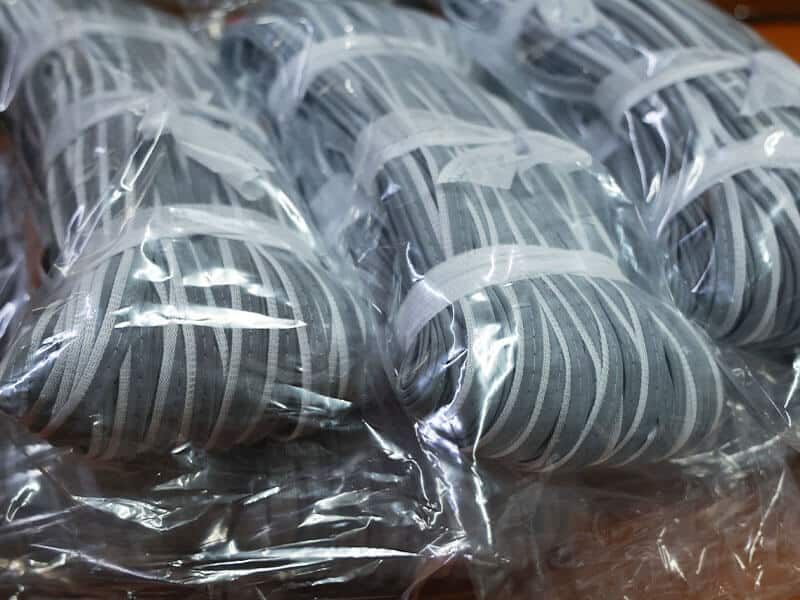
This is the surface fabric that carries the retroreflective technology — either glass bead reflective fabric or prismatic lenses. Common base fabrics include reflective polyester, reflective T/C (polyester-cotton blend), elastic reflective fabric, and flame-retardant reflective cotton fabric. The most popular finished widths for piping applications are 15 mm to 25 mm (roughly 1.5 cm to 2.5 cm), folded in half during construction.
The inner core
For sewn-type piping, a cotton cord (typically 2 mm–3 mm diameter, white or gray) is encased inside the folded reflective fabric to give the piping its characteristic rounded profile. For high-frequency hot-pressing type piping, a small PVC tube (0.2 cm–0.3 cm diameter) is used instead, which provides a crisper, more defined edge finish.
The auxiliary fabric
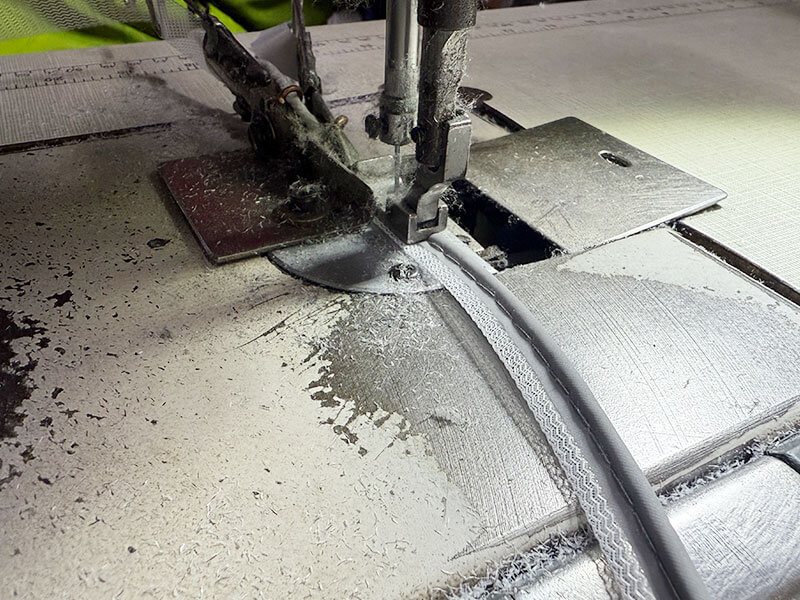
A polyester or nylon mesh strip is attached to the sewn edge of the piping. This increases the sewing allowance width and makes it significantly easier for garment manufacturers to attach the piping cleanly to seams and edges.
Two production methods compared
| Feature | Sewn type | High-frequency hot-pressing type |
| Inner core | Cotton cord (2–3 MM) | Pvc tube (0.2–0.3 CM) |
| Production method | Sewing machine / edge strip sewing machine | Htv heat curing + high-frequency press |
| Edge profile | Softer, rounder finish | Sharper, more defined finish |
| Best for | Traditional seam finishing, sportswear, workwear | Technical outerwear, seamless or bonded constructions |
| Wash resistance | Good with proper stitch reinforcement | Very good; bonded construction resists delamination |
Premium applications sometimes call for 3M Scotchlite™ or reflective TPU films as the reflective carrier, offering superior wash resistance and retroreflective performance. MAXReflect supplies equivalent high-performance materials at highly competitive price points — an important consideration for brands scaling production.
Choosing the right reflective piping for your application
The right product depends on the garment’s end use, wash requirements, and any applicable safety certifications. Here are the key variables to consider when specifying reflective trim:
Selection checklist
- Width: Standard range is 15 mm–25 mm. Narrower widths suit athletic and lifestyle wear; wider widths maximize retroreflective area for occupational safety garments.
- Reflective technology: Glass bead for general commercial use; prismatic for higher retroreflectivity requirements or premium products.
- Base fabric: Match the reflective fabric’s stretch and hand to the garment — use elastic reflective fabric on stretch panels, FR (flame retardant) fabric for industrial PPE.
- Construction type: Sewn type for conventional manufacturing; hot-press type for bonded or seam-sealed garments.
- Colour: Silver is the standard; custom colour tints are available for fashion-forward applications.
- Compliance: Confirm whether the end product must meet EN ISO 20471, ANSI/ISEA 107, or other regional standards — specify this to your supplier upfront.
Common issues — and how to prevent them
Even high-quality reflective piping for clothing can underperform if it’s not sewn or cared for correctly. Here are the three most common failure points and how to address each one:
Stitching weakness
- Problem: Piping applied with a basic straight stitch can peel away at stress points — particularly at sleeve heads, pocket openings, and hem corners — during normal wear and washing.
- Solution: Use a zigzag stitch or bar tacking at all stress points. The auxiliary mesh fabric provides extra sewing allowance, which makes reinforced stitching easier and more secure.
Reflective coating damage from washing
- Problem: Aggressive washing — especially industrial machine washing with high-alkalinity detergents — can dislodge glass beads from the reflective carrier, causing a noticeable drop in retroreflective performance.
- Solution: Hand wash or use a gentle cycle at 30°C or below. Avoid bleach and strong detergents. Air-dry rather than tumble drying. For industrial PPE that requires frequent laundering, specify a TPU-based reflective fabric with enhanced bead adhesion — and discuss your specific wash cycle requirements with your supplier before placing an order.
Adhesive failure in heat-applied piping
- Problem: Excessive heat during application of hot-press type piping can weaken or burn through the adhesive layer, causing premature delamination.
- Solution: Always follow the manufacturer’s recommended temperature and dwell-time settings. For HTV materials, ensure there are no sparks or open flame in the pressing environment. Conduct a wash test on production samples before committing to full runs.
Conclusion
Reflective piping for clothing sits at the intersection of safety engineering and fashion-forward design. Whether you’re equipping road workers with EN ISO 20471-compliant workwear, kitting out a running brand’s new autumn line, or adding functional detail to a technical cycling jacket, the right hi-vis trim elevates both the garment’s performance and its visual identity.
The key to success lies in choosing the correct material specification for your application, working with a supplier who can provide both the product and the compliance documentation you need, and ensuring that your production and care processes are set up to preserve the reflective coating over the garment’s lifetime.
At MAXReflect, we specialize in reflective accessories and trim for clothing manufacturers worldwide. From standard glass bead piping to premium TPU reflective binding, we offer high-performance materials at competitive prices — with the technical expertise to help you get it right the first time.
FAQs
What is reflective piping for clothing, and how does it differ from regular reflective tape?
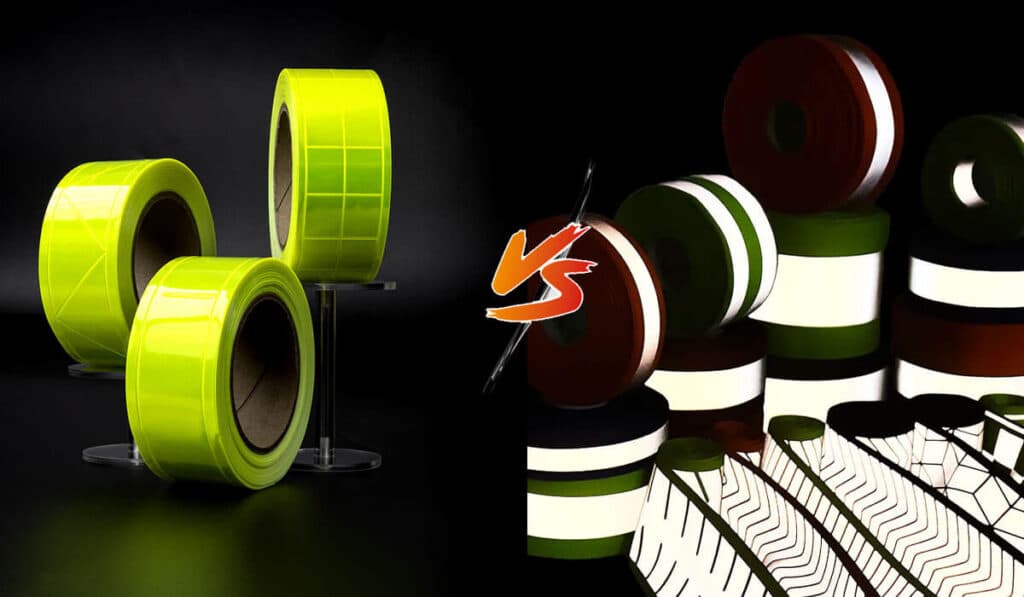
Reflective piping (also called reflective trim or reflective binding) is a narrow strip of retroreflective fabric folded around a cotton cord or PVC tube core, sewn along seams and edges of garments. Unlike flat reflective tape — which is applied as a wide, visible band on the surface of a garment — reflective piping is integrated directly into seams and edges, giving it a sleek, structural appearance. It functions as both a safety feature and a design detail, which is why it’s widely used in sportswear and premium workwear where aesthetics matter alongside visibility.
Does reflective piping meet EN ISO 20471 or ANSI/ISEA 107 safety standards?
It depends on the specific material specification and how it’s applied. Reflective piping made from certified retroreflective fabrics — particularly prismatic or high-grade glass bead materials — can contribute to EN ISO 20471 (European high-visibility standard) and ANSI/ISEA 107 (North American standard) compliance, provided the total retroreflective surface area on the finished garment meets the minimum thresholds defined in each standard. When sourcing reflective piping for occupational safety garments, always request test certification data from your supplier and confirm the material’s retroreflectivity value (measured in cd·lx⁻¹·m⁻²) before placing production orders.
How wide should reflective piping be for my garment?
The most popular widths are 15 mm to 25 mm (finished, folded width). As a general guide:
- 15 mm: Suits slim, fashion-forward applications—running jackets, cycling jerseys, lifestyle outerwear—where a subtle detail is preferred.
- 20–25 mm: Better for workwear and safety apparel, where maximising the retroreflective surface area is a priority for regulatory compliance.
- For garments that must meet EN ISO 20471 or ANSI/ISEA 107, consult your supplier about the total reflective area requirements—width alone is not the only variable.
Custom widths: Custom widths outside this range are available on request from specialist manufacturers like MAXReflect.
How should garments with reflective piping be washed to maintain performance?
Reflective piping is durable, but the retroreflective coating can degrade if laundered incorrectly. Best practice is to:
- Wash temperature: Machine wash on a gentle/delicate cycle at 30°C or below.
- Detergent selection: Avoid bleach, fabric softeners, and strong alkaline detergents—these can dislodge glass beads from the reflective carrier.
- Surface protection: Turn the garment inside out before washing to reduce abrasion on the reflective surface.
- Drying method: Air-dry rather than tumble dry—prolonged high heat weakens adhesion.
Industrial laundering requirements: For workwear subjected to industrial laundering, specify a TPU-based reflective fabric with enhanced bead adhesion when placing your order—and share your exact wash cycle parameters with your supplier so they can recommend the most durable material.
Related blogs