Reflective Armbands vs. Reflective Vests

A Complete B2B Buyer's Guide to High-Visibility Safety Gear

- Published by MAX Reflect | Your Trusted Reflective Accessories Manufacturer

Picture of Mary WANG
Mary WANG

MAX Reflective Accessories Design Director

Table of Contents

Every year, thousands of workplace injuries and road fatalities involve workers or pedestrians who were simply not visible enough. For procurement managers, HSE officers, and safety equipment distributors, selecting the right high-visibility personal protective equipment (PPE) is not just a compliance checkbox — it is a critical decision that directly affects workforce safety and organizational liability.

Among the most commonly sourced high-visibility products are reflective armbands and reflective vests. On the surface, both serve the same fundamental purpose: to make the wearer visible in low-light or high-traffic environments. However, these two products differ significantly in their design, compliance certifications, application suitability, and total cost of ownership.

This guide is designed for B2B buyers — including safety managers, fleet operators, event organizers, and wholesale distributors — who need a clear, data-informed framework for choosing between reflective armbands and reflective vests, or determining when a dual-product strategy makes the most sense.

Key question this guide answers: Which solution delivers better visibility, regulatory compliance, and total procurement value for your specific workforce needs?

reflective-armbands-vs.-reflective-vests

Understanding the products

What are reflective armbands?

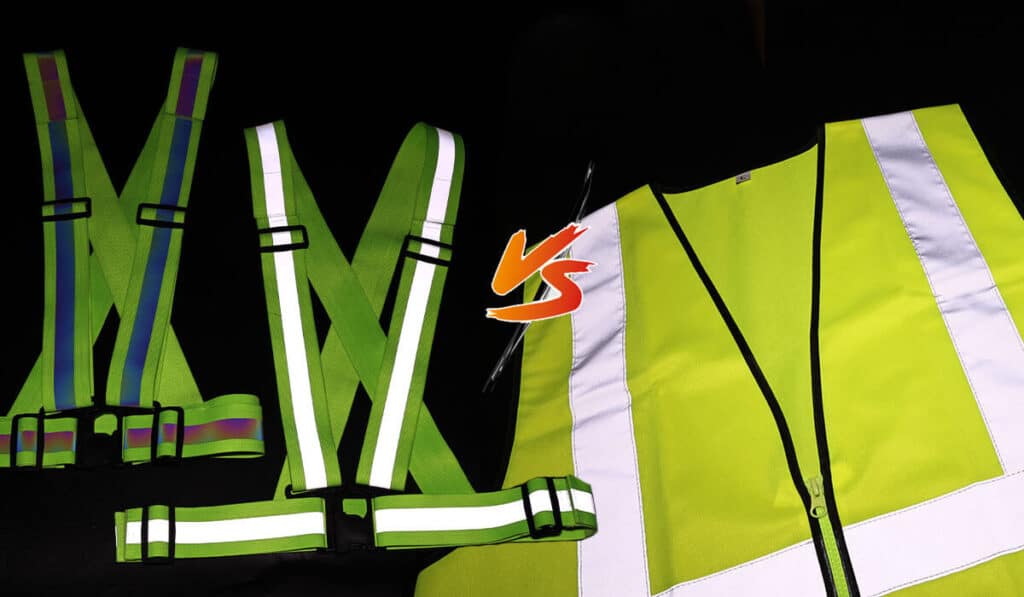
Reflective armbands (also known as high-visibility arm bands, reflective wristbands, or safety armbands) are wearable bands fitted with retroreflective strips or materials, typically worn on the upper or lower arm. They are designed to catch and redirect light from vehicle headlights and other sources back toward the driver or observer, dramatically increasing the wearer’s visibility at night or in poor weather.

Common materials include elastic fabric with sewn-on retroreflective tape, PVC or silicone bands with embedded reflective elements, and LED-integrated variants for active-light visibility. Closure systems range from Velcro fasteners and snap buttons to elastic stretch fits and adjustable buckles.

Typical commercial applications include road running and cycling safety, construction site identification, event staff and volunteer management, traffic marshaling and parking control, and school safety programs for children.

What are reflective vests?

Reflective safety vests (also called high-visibility vests, hi-vis jackets, or ANSI safety vests) are sleeveless garments made from fluorescent base fabric — typically yellow-green, orange, or red — combined with retroreflective tape strips positioned across the chest, back, and shoulders to maximize 360-degree visibility.

Reflective vests are classified by performance levels under international safety standards. Under EN ISO 20471 (European standard) and ANSI/ISEA 107 (North American standard), vests are rated Class 1, Class 2, or Class 3 based on their total retroreflective and fluorescent material area. Class 3 represents the highest level of protection, required in the most hazardous environments such as highway construction.

Common industry applications include road and highway construction, warehousing and logistics operations, railway and airport ground crew, emergency and first-responder services, and oil and gas facility workers.

Key Differences at a Glance

FeatureReflective armbandsReflective vests
Coverage areaArms only (~30–50 CM²)Torso + shoulders (~500–800 CM²)
Retroreflective areaLimited (may not meet class 2/3)Meets en ISO 20471 class 1–3
WeightLightweight (~20–50g)Heavier (~100–300g)
Ease of wearSeconds, NO adjustment neededRequires donning/doffing
Worker complianceVery highModerate (often removed)
Customization (logo)Good (print/weave on band)Excellent (large print area)
Unit cost (wholesale)$0.50–$3.00 usd$2.00–$15.00 usd
Moq (typical)500–1,000 pcs200–500 pcs
Compliance levelClass 1 equivalent (varies)Class 1 / 2 / 3 (certified)
Best use caseEvents, cycling, light-dutyConstruction, road work, logistics
reflective-armbands
reflective-vest

Safety & visibility performance

Retroreflectivity standards: what B2B buyers must know

For procurement teams sourcing safety PPE, compliance with international retroreflectivity standards is non-negotiable in many industries. The two primary standards are:

  • EN ISO 20471:2013+A1:2016 (European Standard) — Specifies minimum retroreflective material areas for Class 1, 2, and 3 garments. Class 2 requires a minimum of 0.50 m² fluorescent material and 0.13 m² retroreflective material. Class 3 requires 0.80 m² and 0.20 m², respectively.
  • ANSI/ISEA 107-2020 (North American Standard) — Similar tiered classification system. Type R (Road) Class 2 and Class 3 products are mandatory on FHWA-funded road projects in the United States.

Reflective vests are specifically designed and certified to meet these minimum material area requirements. Reflective armbands, by contrast, provide a much smaller retroreflective surface and typically cannot satisfy Class 2 or Class 3 requirements on their own. This distinction is critical for buyers sourcing PPE for regulated environments such as highway construction or railway operations.

Compliance Summary for Buyers

If your workforce operates in environments governed by EN ISO 20471 Class 2/3 or ANSI/ISEA 107 Type R Class 2/3 requirements, reflective vests are mandatory. Reflective armbands alone are not a compliant substitute in these high-risk settings. However, armbands can supplement vest-wearing workers to improve limb visibility and are fully appropriate for non-regulated environments.

Visibility in real-world conditions

While certification standards define minimum performance thresholds, real-world visibility involves additional variables that procurement teams should consider:

  • Retroreflective surface area: Vests offer 5–15x more retroreflective material than armbands, making them significantly more visible to approaching drivers from a distance.
  • Dynamic visibility (movement): Armbands have an underappreciated advantage — the movement of arms during walking or running creates a distinctive, dynamic light pattern that human vision is particularly sensitive to. Research in pedestrian detection indicates that limb-mounted reflectors can improve recognition distance compared to static torso-only reflectors.
  • Weather conditions: Both products rely on retroreflective tape performance, which can degrade in heavy rain or when fabric becomes saturated. High-quality retroreflective materials (e.g., 3M Scotchlite Grade or equivalent) retain performance better in adverse conditions. Buyers should request test certifications for wet retroreflectivity.
  • Fluorescent base material: Vests benefit from large fluorescent fabric areas that provide excellent daytime visibility even without direct light. Most armbands lack this fluorescent element, limiting their effectiveness during dusk or overcast conditions.
customization-and-branding-potential

Customization & branding potential

For distributors, event organizers, and corporate buyers, the branding potential of safety PPE is an increasingly important procurement criterion. Custom reflective gear serves a dual function: it meets safety requirements while simultaneously reinforcing brand identity or organizational affiliation.

Reflective armbands

Reflective armbands offer excellent branding opportunities for their size. Custom options include:

  • Screen-printed or heat-transfer logos on the fabric face
  • Woven labels with brand colors
  • Custom retroreflective pattern cuts
  • Full-color sublimation printing on non-reflective sections

They are particularly effective as promotional safety items for sporting events, community programs, and corporate wellness initiatives.

Reflective vests

Reflective vests provide a larger canvas for branding, making them ideal for corporate uniforms that require prominent logo placement across the back panel. Custom color combinations (within compliant fluorescent options), embroidered patches, and reflective logo transfer are all widely available from quality manufacturers.

Requesting custom samples

When requesting custom samples, always confirm:

  • Minimum order quantities (MOQ) for custom versions
  • Sample lead time (typically 7–14 days)
  • Color-matching accuracy for brand compliance
  • Wash-fastness of printed logos

Industry-specific sourcing recommendations

The optimal choice between reflective armbands and reflective vests — or a combination of both — depends heavily on the specific industry, risk environment, and workforce profile. The table below provides evidence-based recommendations for key B2B buyer segments:

IndustryRecommended productKey reason
Construction / road workReflective vest (class 2/3)Mandatory compliance; high traffic exposure risk
Warehousing / logisticsBoth (combined)Vests for forklift zones; armbands for general staff
Event management / volunteersReflective armbandsLow cost, fast distribution, easy to brand
Security / parking controlReflective vestAuthority image + high visibility requirement
Cycling / running eventsReflective armbandsLightweight, non-restrictive, excellent brand exposure
School safety / childrenReflective armbandsAdjustable fit for all body sizes; low risk environment
Emergency responseReflective vest (class 3)Maximum visibility in all conditions required
Oil & gas / utilitiesReflective vest (fr-rated)Flame-resistant compliance; class 2 minimum

Conclusion: making the smarter procurement decision

The debate between reflective armbands vs. reflective vests does not have a single universal answer. The right choice depends on a structured analysis of four key factors: regulatory compliance requirements, specific application environment, total cost of ownership, and brand or customization needs.

For regulated, high-risk environments — highway construction, railway operations, emergency response — EN ISO 20471-certified reflective vests are not optional; they are a legal and safety imperative. For lower-risk applications — event management, cycling programs, general site access — reflective armbands offer an economical, highly compliant, and brandable solution that achieves excellent real-world safety outcomes.

For organizations managing diverse workforces across multiple risk environments, a dual-product strategy that combines certified vests with supplementary reflective armbands delivers the best balance of regulatory compliance, cost efficiency, and practical safety performance.

The bottom line for B2B buyers: There is no universally ‘better’ product — only the product that best matches your specific operational requirements, compliance obligations, and procurement budget.

Ready to Source? Get a Custom Quote from MAX Reflect

Request a free sample kit, compliance documentation, or a bulk pricing quote for reflective armbands and vests. Our B2B team responds within 24 hours.

Share:

MAX business

Hot Blogs

reflective-armbands-vs.-reflective-vests

Reflective Armbands vs. Reflective Vests

the-difference-between-hi-vis-and-reflective-materials

The difference between Hi-Vis and reflective materials

reflective-ribbon-tape-vs-other-reflective-materials

Reflective Ribbon Tape vs. Other Reflective Materials

Related blogs

ansi-hi-vis-standard

ANSI Hi-Vis Standard

The ANSI (American National Standards Institute) Hi-Vis Standard provides guidelines for the design and performance of high-visibility apparel, ensuring workers are easily seen in environments with low visibility
reflective-ribbon-tape-process-iron-on-and-sew-on

Reflective ribbon tape process: iron-on and sew on

In this blog, let’s break down how these tapes are made and the two primary application methods: iron-on and sew-on.
the-difference-between-fluorescent-and-retroreflective

The Difference Between Fluorescent and Retroreflective

In this blog, we’ll break down two key players in visibility technology: fluorescent and retroreflective materials.
high-visibility-safety-apparel

High-Visibility Safety Apparel

This blog dives into the science, standards, and trends behind high-visibility safety apparel (HVSA)—and how our solutions keep your team safe without compromising on style.

Related products

reflective-tape-for-clothing

Reflective Tape For Clothing

Reflective tape is a must-have for improving the visibility of your clothing.
reflective-heat-transfer-tape

Reflective Heat Transfer Vinyl

It's easy to apply and sticks effortlessly to a variety of fabrics, making it perfect for customized straps, hats and fashion logos.
pvc-reflective-tape

PVC Reflective Tape

Known for its durability and versatility, our PVC reflective tape is highly resistant to abrasion, weathering and aging.
reflective-ribbon-tape

Reflective Ribbon Tape

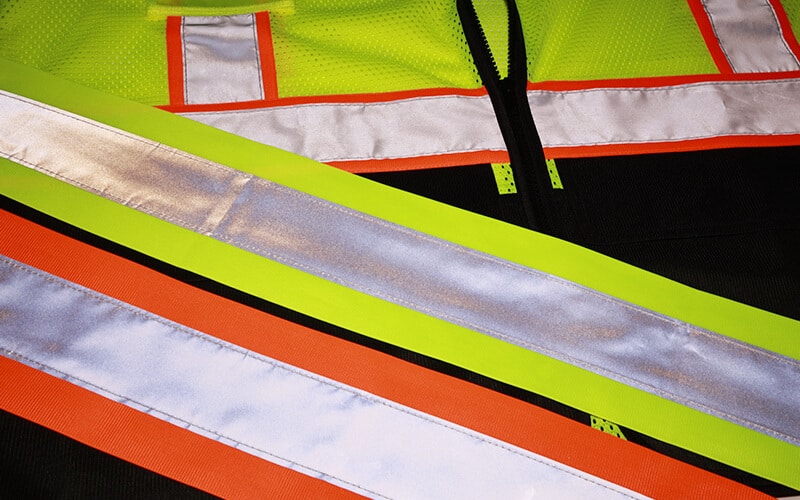
Reflective ribbon tape, recognized for its vivid color contrast and innovation, is a product derived from the reflective material industry.

Send Your Inquiry Now