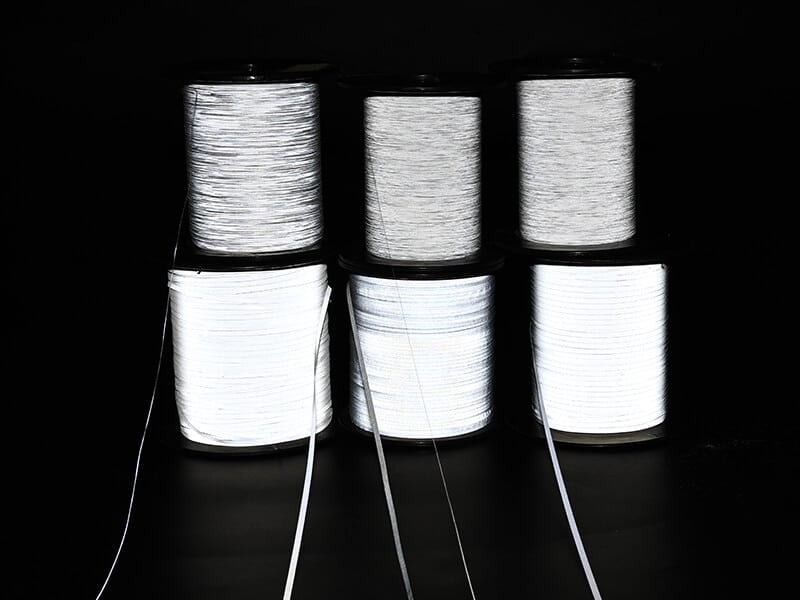
Reflective knitting thread product knowledge Q&A
Reflectivity · Customized · Colors · Quality · Ordering
Home>> Reflective Yarn>> FAQ
Product overview
Q1. What is reflective knitting thread?
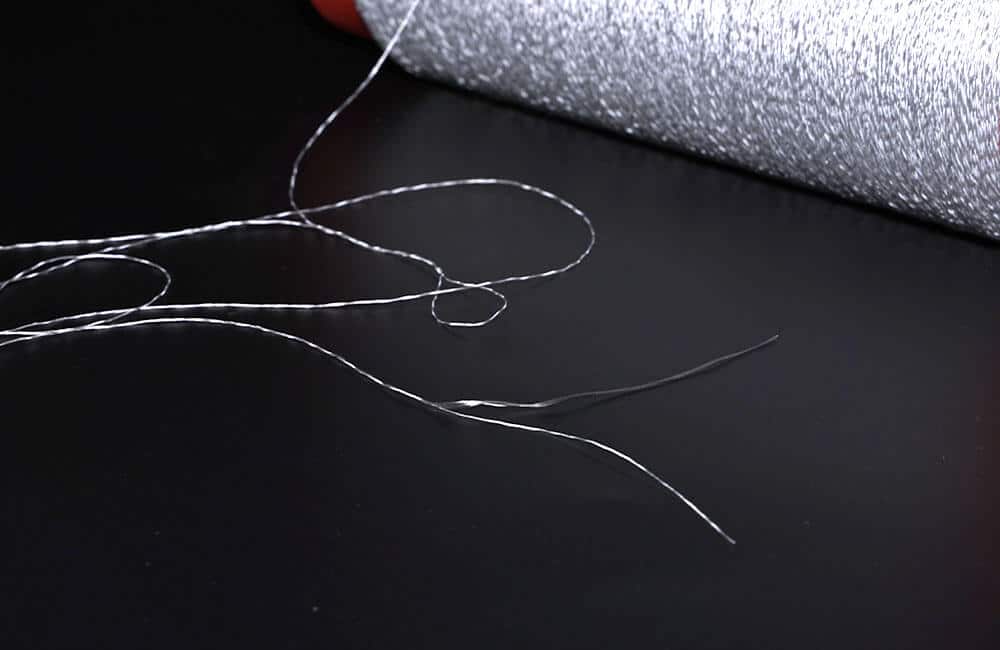
A: Reflective knitting thread is a functional composite yarn produced by twisting conventional knitting yarn together with reflective film strips or reflective fabric strips. The surface of these strips is densely coated with micro glass beads, which precisely redirect incoming light back toward its source — a phenomenon known as retroreflection.
Compared to standard yarn, reflective knitting thread enables wearers to be clearly identified in low-light or nighttime conditions, significantly enhancing personal safety. At the same time, it retains the excellent knittability, sewability, and flexibility expected of conventional yarn.
Q2. How is the reflective effect created?
The reflective performance of reflective knitting thread comes entirely from the reflective film strips or reflective fabric strips incorporated into its structure. The manufacturing process involves three key steps:
Step 1 — Manufacturing the reflective film or fabric
A specialized reflective film or fabric is produced using advanced optical coating technology. (Technical details of this step are omitted due to process complexity.)
Step 2 — Precision slitting into strips
The reflective film or fabric is precision-slit into extremely fine strips — referred to as reflective film strips or reflective fabric strips — giving them the fineness and flexibility required to be twisted together with yarn.
Step 3 — Twisting with knitting yarn
The reflective strips are twisted together with conventional knitting yarn at a controlled ratio. The strips are distributed evenly throughout the yarn structure: the reflective strips provide all optical functionality, while the knitting yarn contributes strength, elasticity, and processability.
When light strikes the finished yarn, the micro glass beads on the strips focus and reflect the light back toward its source, producing a clear and visible retroreflective effect.
Q3. What is the difference between reflective knitting thread and standard reflective fabric strips?
| Reflective fabric strips | Reflective knitting thread | |
|---|---|---|
| Construction | Full-width reflective fabric precision-slit into fine strips | Reflective strips twisted directly into yarn structure |
| Hand feel | Firm, with noticeable stiffness | Soft and natural |
| Flexibility | Limited — does not flex easily with fabric | Flexes and stretches with the fabric |
| Design freedom | Restricted | High |
| Compatible processes | Limited | Knitting, weaving, sewing, embroidery, and more |
| Best for | Industrial trim applications | Garments where comfort and aesthetics are priorities |
In summary, reflective knitting thread offers a more versatile, comfortable, and design-friendly alternative to standard reflective fabric strips, making it particularly well-suited for apparel applications.
Specifications
Q1. What specifications are available for reflective yarn?
Reflective knitting thread is available in a full range of denier (D) specifications, from ultra-fine to heavy-weight:
| Specification | Estimated diameter | Typical application |
|---|---|---|
| 30D / 70D | 0.05 – 0.10 mm | Fine embroidery, lightweight fabric decoration |
| 150D | ~0.15 mm | Lightweight garments, sportswear inlay stitching |
| 200D / 210D | ~0.20 mm | General knitting, decorative sewing thread |
| 300D (single-ply) | ~0.20 – 0.25 mm | Heavy-duty sewing, woven fabric inlay |
| 300D/2, 300D/3 | ~0.30 – 0.38 mm | High-strength sewing, structural woven inlay |
| Flat | Width: 0.10 – 0.25 mm | Weaving, braiding, jacquard applications |
Note: Diameter values are estimated references only. Actual dimensions are subject to individual product specification sheets. Sample testing is strongly recommended prior to bulk ordering.
Q2. How do I convert Denier (D) to millimeters (mm)?
Denier (D) is a weight-based unit, while millimeters (mm) measure diameter. They cannot be directly converted — the following estimation formula can be used as a reference (results vary depending on material density).
Estimation formula
d ≈ √D ÷ 30 (mm)
Denier-to-diameter reference table
| Denier | Estimated diameter | Reference |
|---|---|---|
| 30D | ~0.06 mm | Ultra-fine; comparable to a human hair |
| 150D | ~0.15 mm | Lightweight embroidery thread |
| 210D | ~0.20 mm | Standard sewing thread |
| 300D (single-ply) | ~0.20 – 0.25 mm | Standard knitting yarn |
| 300D/3 (3-ply) | ~0.38 mm | Heavy thread (measured reference) |
Note: Because reflective knitting thread contains glass-bead-coated film strips, the actual diameter may be slightly larger than standard yarn of the same denier rating. Always refer to supplier-measured data for accuracy.
Q3. How do I convert Denier (D) to dtex?
| Conversion | Formula / Value |
|---|---|
| D → dtex | dtex = D × 1.111 |
| dtex → D | D = dtex × 0.9 |
| 300D equals | ~333 dtex |
| 1000 dtex equals | ~900D ≈ 3 × 300D |
Practical tip: If you are currently using 1000 dtex yarn, a 3×300D twisted specification is a direct functional substitute. This configuration typically offers better machine compatibility and is recommended as the starting point for trial testing.
Q4. What level of reflective brightness can be achieved?
The coefficient of retroreflection (cd/lx·m²) is the standard measure of reflective brightness performance:
| Indicator | Value |
|---|---|
| Premium retroreflection coefficient | > 420 cd/lx·m² |
| Maximum night visibility distance | ~300 meters |
| Wash durability | Stable after 50+ wash cycles |
| Highest brightness color | Silver |
Q5. What colors are available?
- White
- Silver
- Yellow
- Gold
- Blue
- Red
- Dark grey
- Chameleon (multi-color)
White delivers the strongest retroreflective performance of all available colors and is the recommended choice for safety-critical applications requiring maximum visibility.
Custom color options are available upon request. Please contact our sales team for further details.
Processing & applications
Q1. What processing techniques are compatible with reflective knitting thread?
Reflective knitting thread is engineered for broad process compatibility:
| Process | Notes |
|---|---|
| Sewing thread | Compatible with industrial sewing machines; needle size 90/14 or 100/16 recommended |
| Circular knitting | Knittable into fabric structures; note minor needle wear due to glass bead coating |
| Flatbed / V-bed knitting | Suitable for sweaters and stretch fabrics |
| Weaving / Jacquard | Used as weft or warp inlay; flat film strip specification recommended |
| Embroidery | Ideal for brand logos, decorative stripes, and graphic accents |
| Braiding / webbing | Suitable for safety ropes, pet leashes, and functional tapes |
| Hand crochet / hand knitting | Well-suited for handcrafted items such as beanies, wool hats, and knitted garments |
⚠️ Important: Avoid alkaline or acidic treatments during processing. Standard yarn dyeing processes are not applicable to reflective knitting thread, as they may damage the integrity of the reflective film strip layer.
Q2. What industries and products is reflective knitting thread used in?
Safety & protective workwear
- Road construction workwear
- High-visibility warning vests
- Railway and port operation uniforms
- Firefighting gear
Sports & outdoor
- Night running apparel
- Cycling jerseys
- Outdoor jackets
- Sports bags
- Mountaineering equipment
Fashion & decoration
- Brand logo embroidery
- Decorative stripe detailing
- Bag and accessory accents
- Fashion-forward streetwear
Specialty & other applications
- Pet leashes and harnesses
- Children’s safety clothing
- Military and law enforcement gear
- Cycling gloves and helmets
Purchasing guide
Q1. How do I select the right specification for my production process?
To ensure the best product match, we recommend providing the following information before placing a bulk order:
- Current yarn specification: denier (D) or dtex rating
- Processing equipment type: sewing machine, knitting machine, loom, etc.
- Tension setting range: this affects twist structure selection
- End-use application: safety/high-visibility or decorative/fashion
We strongly recommend conducting sample machine trials before committing to a bulk order to confirm full process compatibility.
Q2. Are samples available?
Yes. We offer free samples for customers to test and evaluate on their own equipment.
To request samples, simply provide:
- Your delivery address
- The specification(s) you wish to test
We will arrange shipment promptly. Once your sample trial is complete and results are satisfactory, we can move forward to discuss bulk pricing, minimum order quantities (MOQ), and lead times.
Please contact our sales team to get started.
Reflective knitting thread products
Reflective film yarn
- REF: MP0501/MP0502
- Material: PA, PMMA, PU, TPU, Reflective beads.
- Performance: High-temperature resistant, Strong toughness, reflective, and fashionable.
- Color: Reflective silver, Gray.
- Size: widths starting at 0.35mm and customizable from there.
- Style: single-sided or double-sided, depending on the base material and intended use.
- Packing: 1500m-5000m/roll.
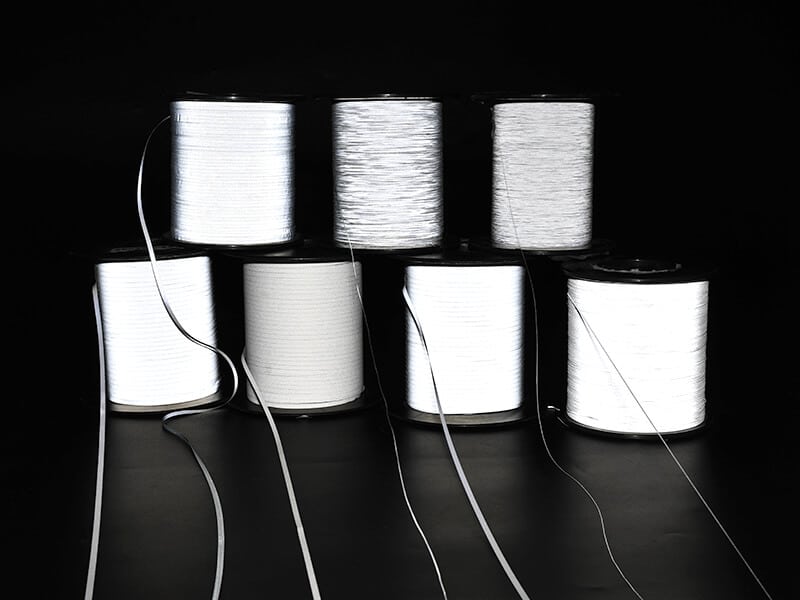
Reflective fabric yarn
- REF: MP0503/MP0504
- Material: 100% cotton, 100% polyester, Reflective beads.
- Performance: Soft, reflective, fashionable.
- Color: Reflective silver, gray, fluorescent yellow, fluorescent orange.
- Size: widths starting at 0.25mm and customizable.
- Style: single-sided or double-sided, depending on the base material and intended use.
- Packing: Plastic roll packaging.
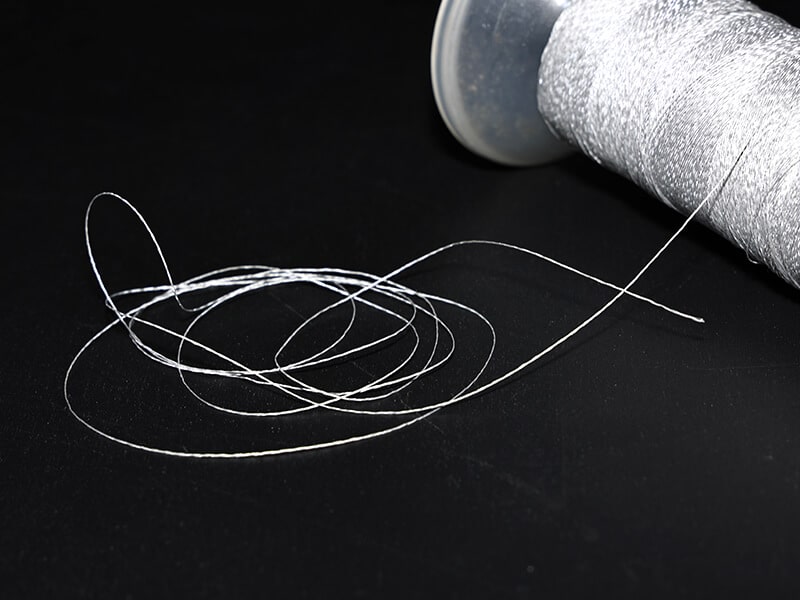
Reflective sewing thread
- REF: MP0505
- Material: Reflective yarn and sewing thread.
- Performance: Soft, reflective, fashionable.
- Color: Reflective Silver, white, gray, blue, red...
- Size: 200D, 300D
- Main usage methods: embroidery or sewing.
- Packing: Plastic roll packaging.
- Applications: Ribbons, sewing thread, and knitted fabrics. Sportswear branding, reflective knit hats, socks, shoelaces, or shoe uppers.